


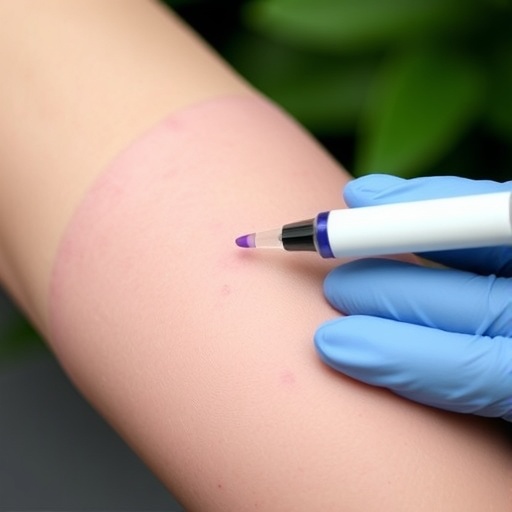
In a groundbreaking study led by Nofal et al., researchers have delved into the intricate world of dermatology, focusing particularly on multiple verrucae, commonly known as warts. This research has brought to light a promising approach to treatment by examining the efficacy of combined intralesional immunotherapy. The project’s core hypothesis posits that amalgamating different therapeutic agents could produce superior clinical outcomes compared to traditional methods. As warts are notoriously stubborn and recurrent, new methods of treatment are desperately needed.
Warts are benign epithelial tumors triggered by the human papillomavirus (HPV). They can appear anywhere on the body and often have a significant psychosocial impact on individuals. Current treatment modalities include cryotherapy, surgical excision, and topical agents, yet many patients suffer from recurrences. Therefore, the impetus for alternative therapies is essential in dermatological practices globally. The combination of existing therapeutic strategies within immunotherapy presents an innovative avenue to enhance patient outcomes.
Intralesional immunotherapy has surfaced as a promising alternative for managing multiple verrucae, leveraging the body’s immune response to combat HPV-infected keratinocytes. This strategy consists of introducing immunostimulatory agents directly into the wart tissues. The expectation is that by stimulating a local immune response, the body can effectively eradicate the viral particles. The research by Nofal et al. systematically investigates this possibility and has led to significant enthusiasm within the field.
The study focuses on various immunotherapeutic agents, comparing their efficacy when used concurrently versus when they are administered individually. The rationale behind a combined approach is rooted in the theory that different agents can target various pathways in the immune response, leading to a more robust and comprehensive fight against viral infections. As HPV has multiple genotypes, this multifaceted approach is crucial for successful outcomes in treating multiple verrucae.
Preliminary findings from the research are compelling, indicating that patients who received combined intralesional immunotherapy exhibited accelerated healing rates. Moreover, the data suggests that these patients experienced lower recurrence rates compared to those who opted for standard treatments. This revelation is monumental, as it points to a new standard of care that could replace or augment existing practices. The implications extend beyond mere aesthetics; they touch on fundamental aspects of patients’ quality of life.
Importantly, the relaxation of psychological burdens cannot be overstated. The stigma and stress attached to visible skin conditions such as warts can lead to social withdrawal and decreased self-esteem. Success in treating these conditions with effective methodologies can significantly enhance a patient’s emotional wellbeing. By utilizing combined intralesional immunotherapy, the potential exists to foster both physical health and psychological resiliency.
As the medical community begins to unravel the complexities surrounding HPV and its manifestations, this research underscores the importance of understanding host-pathogen interactions. The ability of a therapeutic agent to engage and enhance the host’s immune capabilities is paramount, paving the way for future innovations in wart management. The results of this study may catalyze additional clinical trials, broadening the horizon of research into alternative therapies for warts.
In addition to the therapeutic implications, this study opens up discussions regarding cost-effectiveness in treatment plans. Existing treatments can be costly and may require multiple sessions, leading to increased healthcare expenditures for patients. If combined intralesional immunotherapy proves effective, it could drastically reduce treatment costs and time, aligning with the growing emphasis on value-based healthcare. An economically feasible solution that enhances patient care is likely to gain traction not only in dermatology but across multiple specialties.
The research conducted is not just a scientific endeavor but also a call to establish a paradigm shift in how dermatologists approach treatment for verrucae. With the capabilities of modern science at their fingertips, dermatologist practitioners need to consider evolving treatment protocols that incorporate the latest research findings. This research exemplifies the collaborative nature of medical science, emphasizing that breakthrough solutions stem from collective efforts aimed at addressing lingering issues in patient care.
Looking ahead, efforts need to focus on dissemination and implementation strategies, ensuring that practitioners are well-informed about the benefits of combined intralesional immunotherapy. Continued education and awareness will be instrumental in integrating this innovative treatment approach into routine clinical practice, setting the stage for improved patient outcomes.
In summary, Nofal et al.’s research presents an exciting leap forward in the quest to combat warts through combined intralesional immunotherapy. By harnessing the body’s immune capabilities, this approach demonstrates promise not only in achieving cosmetic improvements but also in reinforcing psychological well-being. As the landscape of dermatological treatments evolves, such studies underscore the importance of finding new solutions tailored to the multifaceted challenges presented by viral infections like HPV.
The anticipation surrounding this study’s publication has emphasized the significance of ongoing research in dermatology, inviting stakeholders to join the conversation. The evolution of treatment protocols based on scientific evidence is crucial in designing effective therapeutic interventions. The journey now continues toward a future where healthier skin translates to healthier patients with enhanced life quality.
As the findings of this research stimulate interest and discussions within the medical community and beyond, it is essential to remain vigilant regarding the potential of emerging treatments. The implications for clinical practice are profound, suggesting that with continued inquiry and innovation, there may soon be a comprehensive solution to the problem of multiple verrucae, offering hope to countless individuals worldwide.
Subject of Research: Combined intralesional immunotherapy for multiple verrucae.
Article Title: Multiple verruca: can combined intralesional immunotherapy improve the clinical outcomes?.
Article References:
Nofal, A., Essam, R., Khater, M.W. et al. Multiple verruca: can combined intralesional immunotherapy improve the clinical outcomes?.
Arch Dermatol Res 318, 28 (2026). https://doi.org/10.1007/s00403-025-04472-9
Image Credits: AI Generated
DOI: 10.1007/s00403-025-04472-9
Keywords: Warts, HPV, intralesional immunotherapy, dermatology, clinical outcomes.
Tags: alternative therapies for verrucaeclinical outcomes in wart therapycombined therapies for verrucaedermatological immunotherapy advancementseffective wart treatment optionsefficacy of immunostimulatory agentsHPV treatment strategiesimmune response to HPVinnovative dermatological treatmentsintralesional immunotherapy for wartspsychosocial impact of wartsrecurrent wart management



