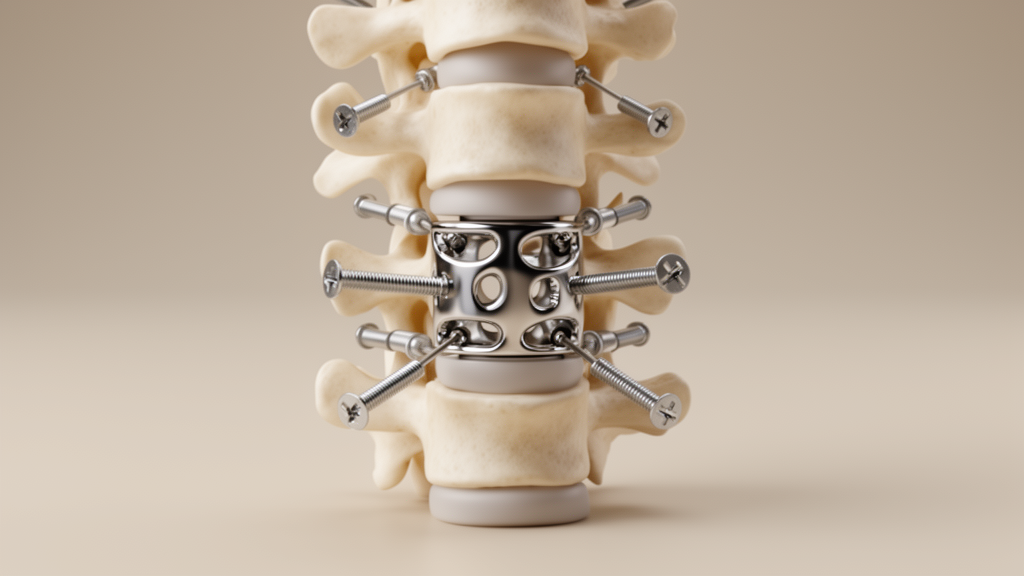
A new retrospective single-center study reports outcomes for a combined approach that addresses both in one operation, using the oblique lateral interbody fusion corridor to reach the infected anterior lesion through the pre-psoas space, paired with posterior percutaneous transpedicular screw fixation.
The study, published in BMC Musculoskeletal Disorders, analyzed 27 patients with complicated lumbar pyogenic spondylodiscitis who underwent the combined procedure between 2018 and 2021. The authors argue that anterior retroperitoneal access is advocated for this condition precisely because it targets the anterior spondylodiscal pathology directly, and that the OLIF corridor offers that access with minimal complications and morbidity, successful debridement and fusion, while also respecting surgeon preference, equipment availability and the learning curve associated with the technique.
Each patient was assessed before and after surgery with a standardized battery of clinical and functional measures. Back and leg pain were scored with the Visual Analog Scale, and the team also tracked sensory or motor deficit, the Arabic-validated Oswestry Disability Index, and modified Prolo scores. Radiological evaluation relied on plain X-rays, multidetector computed tomography and magnetic resonance imaging. Perioperative data and complications were recorded, and all patients were followed regularly for 26 months.
The reported results point to substantial recovery across the measured domains. The study found significant postoperative improvement in VAS scores for both back and leg pain, in ODI scores, and in modified Prolo scores, with statistically significant differences between the preoperative period, the intermediate assessments during follow-up, and the final follow-up examination.
Radiological fusion outcomes were also reported. The mean fusion time was 10.52 plus or minus 1.24 months, and 25 of the 27 patients, or 92.6 percent, achieved definitive grade 5 fusion according to Lee and Suh’s classification criteria. The authors conclude that the combined surgery is an effective method for treating lumbar pyogenic spondylodiscitis, providing adequate canal decompression, radiological correction and functional recovery.
Important caveats temper the findings. The study was retrospective and conducted at a single center, so the outcomes reflect the experience of one surgical team in a selected cohort of 27 patients. The authors themselves note that the choice of approach must account for surgeon preference, available equipment and the learning curve of the technique.
Nevertheless, the 26-month follow-up with significant gains in pain, disability and functional scores, together with a fusion rate above 90 percent, describes the reported outcomes of this one-stage combined approach in this cohort. In this study of patients with complicated lumbar pyogenic spondylodiscitis, simultaneous OLIF debridement and posterior percutaneous fixation was associated with fusion typically achieved in just over ten months.
Subject of Research: Combined oblique lateral interbody fusion and posterior transpedicular screw fixation for lumbar pyogenic spondylodiscitis
Article Title: Simultaneous Oblique Lateral Interbody Fusion (OLIF) and posterior transpedicular screw fixation in treatment of lumbar pyogenic spondylodiscitis
Article References: Omran, K., Abdel-Fattah, A. S., & Hassan, M. Y. (2026). Simultaneous Oblique Lateral Interbody Fusion (OLIF) and posterior transpedicular screw fixation in treatment of lumbar pyogenic spondylodiscitis. BMC Musculoskeletal Disorders. https://doi.org/10.1186/s12891-026-10491-y
Image Credits: AI Generated
DOI: 10.1186/s12891-026-10491-y
Keywords: lumbar pyogenic spondylodiscitis, OLIF, transpedicular screw fixation, spinal infection, spinal fusion, Oswestry Disability Index, VAS pain score, retrospective study, debridement, Lee and Suh fusion criteria, Simultaneous, Oblique
News Source: Kristina Jarvis. (October 27, 2026). Combined OLIF and Screw Fixation Shows Strong Fusion Rates in Lumbar Spine Infection Study. Scienmag.