• HOME
  • NEWS
  • EXPLORE
    • CAREER
      • Companies
      • Jobs
    • EVENTS
    • iGEM
      • News
      • Team
    • PHOTOS
    • VIDEO
    • WIKI
  • BLOG
  • COMMUNITY
    • FACEBOOK
    • INSTAGRAM
    • TWITTER
Saturday, June 27, 2026
BIOENGINEER.ORG
No Result
View All Result
  • Login
  • HOME
  • NEWS
  • EXPLORE
    • CAREER
      • Companies
      • Jobs
        • Lecturer
        • PhD Studentship
        • Postdoc
        • Research Assistant
    • EVENTS
    • iGEM
      • News
      • Team
    • PHOTOS
    • VIDEO
    • WIKI
  • BLOG
  • COMMUNITY
    • FACEBOOK
    • INSTAGRAM
    • TWITTER
  • HOME
  • NEWS
  • EXPLORE
    • CAREER
      • Companies
      • Jobs
        • Lecturer
        • PhD Studentship
        • Postdoc
        • Research Assistant
    • EVENTS
    • iGEM
      • News
      • Team
    • PHOTOS
    • VIDEO
    • WIKI
  • BLOG
  • COMMUNITY
    • FACEBOOK
    • INSTAGRAM
    • TWITTER
No Result
View All Result
Bioengineer.org
No Result
View All Result
Home NEWS Science News

Collisions generate gas in debris disks

Bioengineer by Bioengineer
April 12, 2017
in Science News
Reading Time: 2 mins read
0
Share on FacebookShare on TwitterShare on LinkedinShare on RedditShare on Telegram
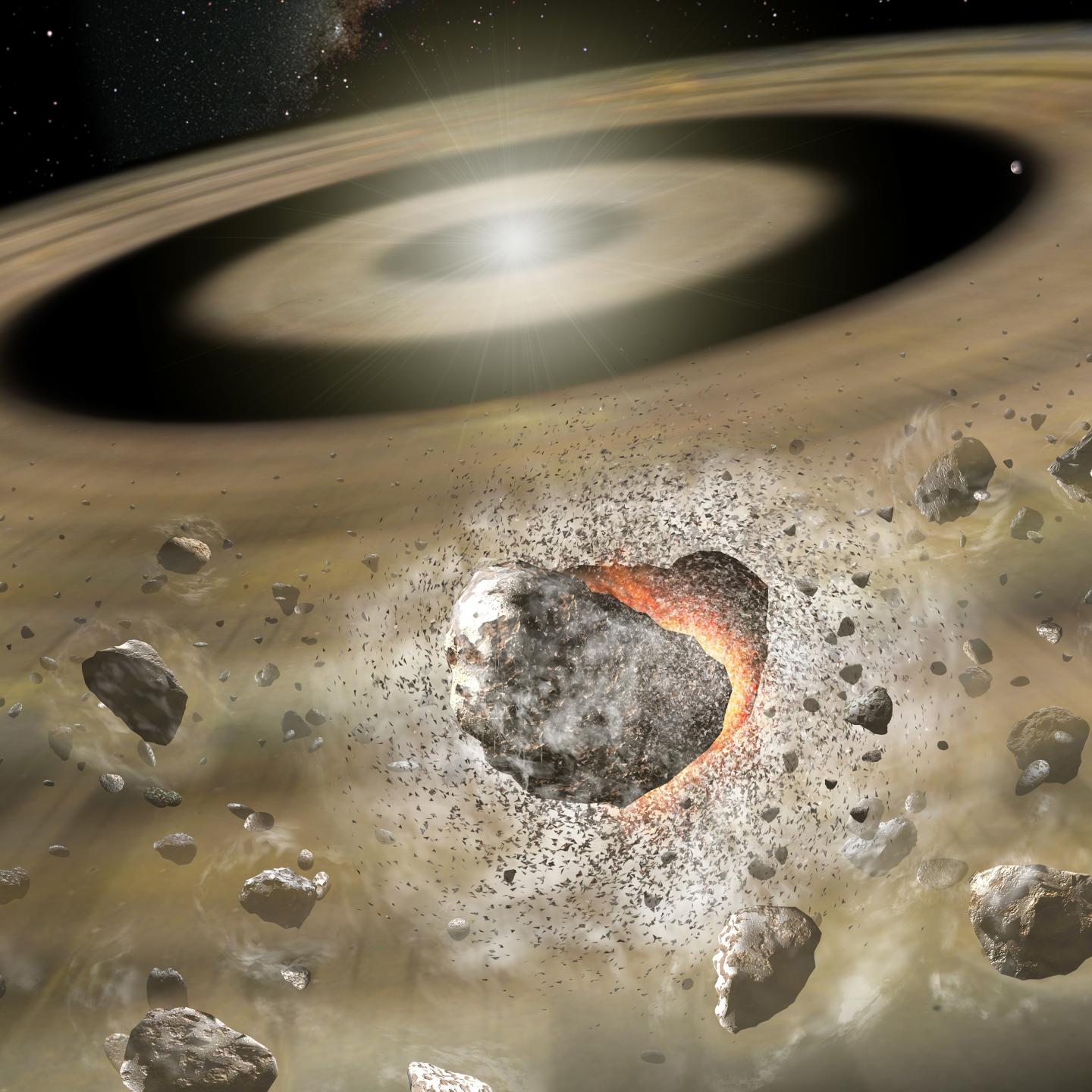
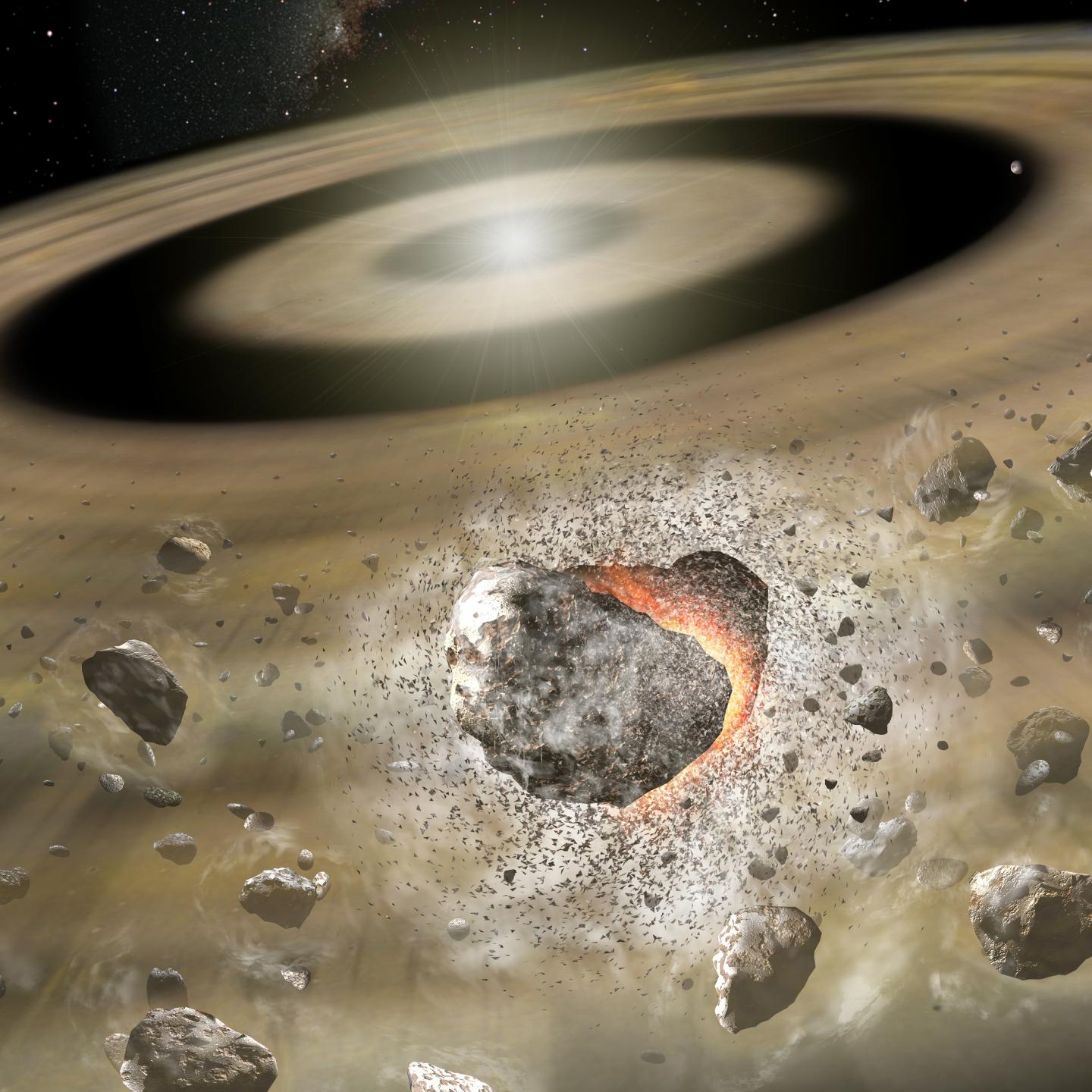
IMAGE

Credit: RIKEN

Many young stars, as well as more middle-aged stars like our sun, have "debris disks"–like the Oort Cloud in our own solar system–that are believed to be remnants of the system's formation. Recently, radio observations have detected gas within a number of such discs, but it was not clear why the gas was there. There are two major hypotheses: either the gas is primordial gas from the original gas cloud that formed the star, or it originates from collisions between objects in the disk.

In search of a solution to this problem, a team from the RIKEN Star and Planet Formation Laboratory decided to look at emissions of carbon, which are important as they can provide clues to the origin of the gas. Normally, carbon will exist mostly in a molecular form, as carbon monoxide. Ultraviolet light from the central star will "dissociate" the atoms, creating free atomic carbon, but normally a chemical reaction–mediated by hydrogen–recombines the carbon into CO. However, if there is no hydrogen, then the reaction does not take place and the carbon remains in its atomic state.

Aya Higuchi, the first author of the paper, published in Astrophysical Journal Letters, was able to use the ten-meter Atacama Submillimeter Telescope Experiment (ASTE) in Chile to examine the atomic carbon line from two young star systems–49 Ceti and Beta Pictoris–that are known to have debris disks. They then compared this from data on CO taken by the Atacama Large Millimeter/submillimeter Array (ALMA), an array of telescopes in the same facility. "We were surprised," she says, "to find atomic carbon in the disk, the first time this observation has been made at sub-millimeter wavelength. But more so, we were surprised at how much there was. It was about as common as the carbon monoxide."

The implication, at least for these two star systems, is that there is very little hydrogen to drive the carbon back into CO. Because hydrogen makes up most of the gas in protoplanetary clouds, this hints that the gas is not primordial, but rather is generated from some process taking place in the debris disk. Gas has been found in other debris disks, but is not found in all. Higuchi says, "If we can perform similar measurements on other young stars, it will help to clarify the origin of the gas in debris disk. Our data here suggests that the gas is secondary."

Looking to the future, she continues, "This work will also help to understand how a protoplanetary disk evolves into a debris disks by distinguishing the origin of the gas in the disks."

###

The work was done in collaboration with scientists from Ibaraki University and Nagoya University.

Media Contact

Jens Wilkinson
[email protected]
81-484-621-225
@riken_en

http://www.riken.jp/en/

############

Story Source: Materials provided by Scienmag

Share12Tweet8Share2ShareShareShare2

Related Posts

Tracking Lanthanide-Labeled Microplastics in Plants

June 25, 2026

POSTECH Researchers Slash Cost of Reconstituted Cell-Free Systems by 95%

June 25, 2026

AI and Physics Collaborate to Design Advanced Hydrogen Storage Materials

June 25, 2026

Natural Hallucinogens: Evolution’s Ecological Tools, Not Mere Chemical Byproducts

June 25, 2026
Please login to join discussion

POPULAR NEWS

  • Saying Goodbye to PGY-6: Pediatric Fellowship Realities

    103 shares
    Share 41 Tweet 26
  • Multi-Hospital Study Reveals Long Covid Burden Is Twice as High as Current Estimates

    92 shares
    Share 36 Tweet 23
  • Detection of EDCs in Breast Milk and Infant Urine Up to Six Months Highlights Early Exposure Risks

    77 shares
    Share 31 Tweet 19
  • New Drug Candidate Developed at McMaster Shows Potential for Treating Brain Cancer

    58 shares
    Share 23 Tweet 15

About

We bring you the latest biotechnology news from best research centers and universities around the world. Check our website.

Follow us

Recent News

Tracking Lanthanide-Labeled Microplastics in Plants

POSTECH Researchers Slash Cost of Reconstituted Cell-Free Systems by 95%

AI and Physics Collaborate to Design Advanced Hydrogen Storage Materials

Subscribe to Blog via Email

Success! An email was just sent to confirm your subscription. Please find the email now and click 'Confirm' to start subscribing.

Join 82 other subscribers
  • Contact Us

Bioengineer.org © Copyright 2023 All Rights Reserved.

Welcome Back!

Login to your account below

Forgotten Password?

Retrieve your password

Please enter your username or email address to reset your password.

Log In
No Result
View All Result
  • Homepages
    • Home Page 1
    • Home Page 2
  • News
  • National
  • Business
  • Health
  • Lifestyle
  • Science

Bioengineer.org © Copyright 2023 All Rights Reserved.