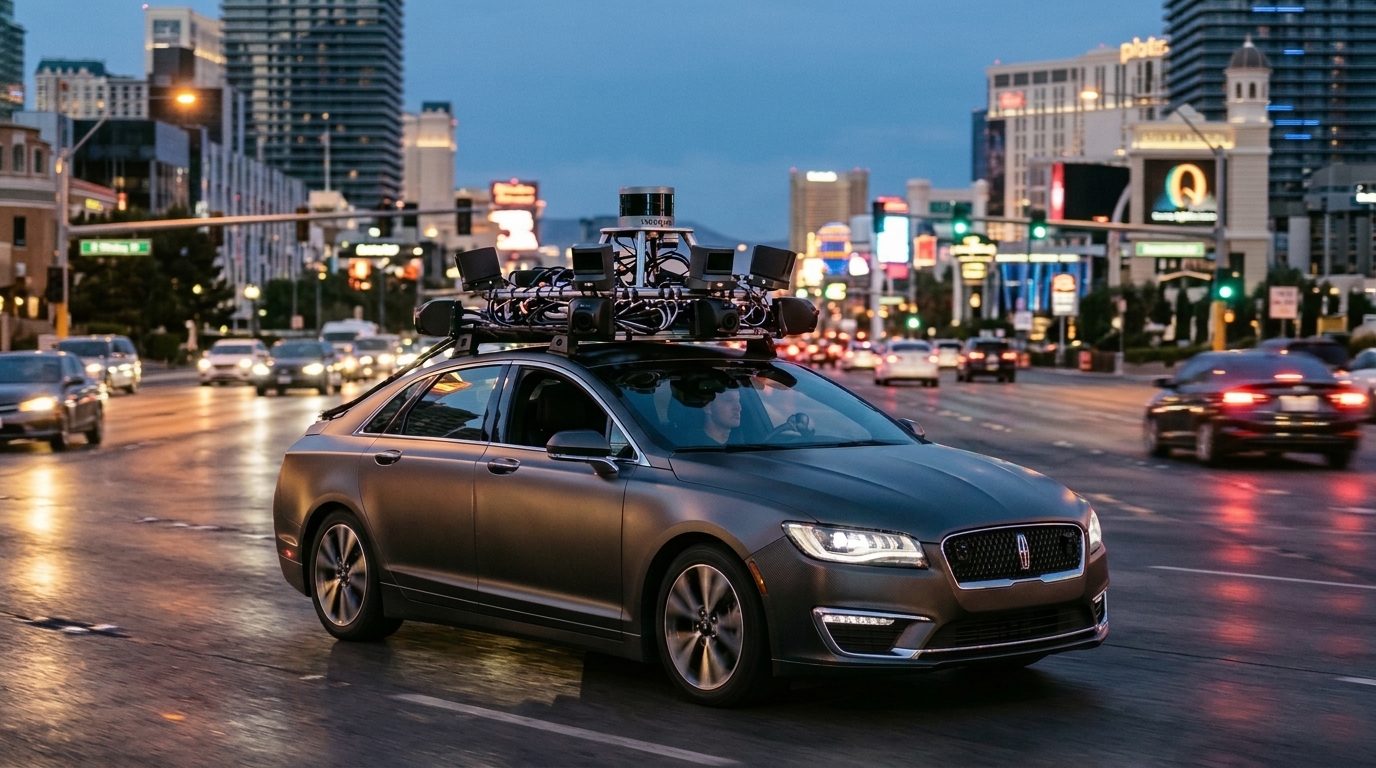
A study published in Frontiers in Mechanical Engineering demonstrates that integrating structured knowledge distillation with multi-domain attention mechanisms improves the accuracy and operational stability of three-dimensional object detection for automated driving systems. Engineering researchers Shujian Zhang and Subing Liu from the School of Information Engineering at Zhengzhou Professional Technical Institute of Electronics and Information evaluated the new architecture across benchmark driving sequences, achieving a mean average precision of 69.09 percent and a nuScenes Detection Score of 72.13 percent. These benchmarks reflect measurable gains of 4.41 percentage points and 3.77 percentage points, respectively, over an optimized baseline pipeline. The investigation addresses persistent perceptual bottlenecks in dynamic vehicle environments, where camera imagery frequently suffers from unreliable depth projection and Light Detection and Ranging sensors produce sparse geometric point returns. By transforming disparate sensory inputs into a synchronized overhead spatial framework, the system bridges the gap between semantic image context and raw physical measurements without requiring prohibitive manual supervision during real-time deployment.
Accurate spatial environmental perception remains a foundational safety prerequisite for autonomous vehicles navigating open roadways alongside cars, trucks, cyclists, and pedestrians. Automated driving platforms must accurately determine object categories, three-dimensional bounding coordinates, spatial extents, and instantaneous velocity vectors under dynamic conditions to execute reliable collision avoidance and path trajectory planning. While multi-view optical cameras provide dense chromatic textures and rich classification cues, single-perspective optical streams inherently lack direct spatial depth. Conversely, pulsed LiDAR returns capture precise physical surfaces but yield spatially sparse point distributions that degrade rapidly as target distance increases. Previous research explored bird’s-eye-view representations, temporal-spatial Transformers, fully sparse interaction networks, and middle-fusion mechanisms to reconcile these disparate modalities. However, existing architectures frequently struggle to reconcile semantic image boundaries with sparse physical points, leaving internal foreground instance relationships underutilized and lacking contextual consistency across complex road environments.
To overcome these structural limitations, Zhang and Liu proposed the Bird’s Eye View-based Instance-Context Collaborative Distillation and Multi-domain Transformer Fusion architecture, abbreviated as BICD-MTF. The operational pipeline organizes sensor processing into four continuous stages: unified data space alignment, cross-modal modal feature enhancement, cross-domain feature fusion, and transformer-based object decoding. The framework ingests visual data from six surround-view cameras resized to 704 by 256 pixels alongside ten cumulative LiDAR sweeps. Image feature maps are extracted through a ResNet-50 convolutional neural network backbone, while spatial point clouds undergo geometric pillarization using a PointPillars encoder. To establish a shared representation framework, camera features are projected into three-dimensional frustum volumes using estimated depth distributions and aggregated into a common bird’s-eye-view horizontal grid covering 102.4 by 102.4 meters with a 0.40-meter spatial cell resolution, resulting in a balanced 256 by 256 feature grid.
Feature enhancement prior to fusion is driven by a two-part collaborative distillation framework designed to transfer geometric spatial understanding from the LiDAR stream into the optical image stream. In the foreground instance structural relationship distillation stage, point cloud bird’s-eye-view features serve as a structural guidance teacher, while the corresponding image features act as the enhancement student. For every foreground instance marked by ground-truth annotations during training, the network samples nine specific spatial points comprising the bounding box center, four geometric corners, and four boundary edge midpoints. The architecture constructs explicit channel relationship matrices and sample point relationship matrices across these nine coordinates, forcing the image branch to learn internal structural correlations and semantic channel distributions. Crucially, ground-truth annotations are restricted entirely to supervision loss calculation during training, and the entire distillation guidance branch is deactivated during vehicle inference.
Complementing individual instance constraints, the architecture introduces a bird’s-eye-view context response collaborative distillation mechanism to enforce global scene coherence across expansive roadway environments. The network constructs low-level activation response maps across both sensory branches to gauge energy intensity across drivable road surfaces, foreground objects, and potential obstacle regions. Because LiDAR returns maintain true physical depth and concrete coordinate measurements, the LiDAR response map serves as a spatial reference anchor. Applying consistency loss between these maps compels the visual processing branch to focus activation resources on valid spatial targets while suppressing extraneous background clutter and mitigating errors caused by camera depth estimation uncertainty. In validation experiments measuring feature-level alignment, cosine similarity between image and LiDAR bird’s-eye-view representations rose from an initial 0.612 to 0.674 following instance distillation, reaching 0.731 when instance and context distillation operated concurrently, accompanied by an increase in Pearson correlation from 0.584 to 0.708.
Following collaborative distillation, enhanced image and LiDAR representations enter a specialized multi-domain collaborative attention fusion module designed to filter complementary signals across three mathematical domains. The aligned representations are concatenated and transformed into a unified 256-channel candidate tensor through convolution, batch normalization, and nonlinear activation operations. Within this shared representation, a channel-domain attention mechanism isolates prominent semantic channels associated with object category, dimensional scale, and dynamic motion states. Concurrently, a spatial-domain attention branch sharpens structural boundaries and object centroids across the horizontal plane. To stabilize detection against sparse returns and distant obstacles, a frequency-domain attention branch applies a two-dimensional discrete cosine transform to candidate feature maps, separating spectral coefficients into low-, middle-, and high-frequency bands that receive adaptive response weighting before being mapped back to the spatial domain via an inverse discrete cosine transform.
The fused feature maps are passed to a Transformer decoding module that executes end-to-end detection through iterative attention queries. The decoder operates with six decoding layers and 900 learnable object query vectors that interact through self-attention before extracting localized features from the fused bird’s-eye-view tensor via cross-attention operations. Decoded query vectors subsequently branch into specialized prediction heads responsible for object category classification, three-dimensional bounding box coordinates, orientation angles, and velocity vectors. The complete network is trained end-to-end using an AdamW optimizer with an initial learning rate of 0.0002, a weight decay coefficient of 0.01, and a global batch size of eight across 24 training epochs on a single NVIDIA RTX 3090 graphics processing unit. The joint optimization loss balances classification, box regression, orientation prediction, velocity estimation, and distillation components, requiring approximately 28.6 hours of training time.
Experimental validation on the official nuScenes validation split demonstrated systematic quantitative gains across every measured localization and detection index. In addition to elevating mean average precision to 69.09 percent and nuScenes Detection Score to 72.13 percent, the complete model reduced mean translation error to 0.284 meters, mean orientation error to 0.312 radians, and mean velocity error to 0.254 meters per second. Ablation experiments isolating individual modules revealed progressive enhancements: incorporating instance distillation increased baseline precision from 64.68 percent to 65.91 percent; adding scene response distillation lifted precision to 67.12 percent; and introducing partial channel-spatial attention raised performance to 68.17 percent before full multi-domain attention achieved the peak 69.09 percent score. Parameter sensitivity evaluations confirmed that setting the distillation loss weighting factor to 0.50 and maintaining a 0.40-meter bird’s-eye-view grid resolution yielded the optimal balance between spatial localization accuracy and computational throughput, achieving an inference speed of 8.64 frames per second.
Comparative evaluations against established autonomous driving benchmarks demonstrated robust performance across varied distances and severe environmental perturbations. Benchmarked under identical preprocessing splits and backbone settings, the model showed favorable stability compared to BEVFusion, SparseBEV, and StreamPETR, though the authors emphasize that SparseBEV and StreamPETR operate exclusively on camera inputs while BEVFusion utilizes multimodal camera and LiDAR data. In distance-stratified testing across cumulative ranges up to 100 meters, the architecture maintained a mean average precision of 56.94 percent and a detection score of 65.28 percent, benefiting from structural stabilization provided by frequency-domain filtering. Robustness evaluations under controlled synthetic degradation demonstrated that increasing target occlusion from 0 to 80 percent reduced precision from 72.16 percent to 55.62 percent, outperforming comparative frameworks. Similarly, scaling sensor observation retention down from 100 percent to 20 percent maintained a stable detection score of 63.16 percent, while velocity errors remained constrained at 0.331 meters per second when target speeds reached 20 meters per second.
Detailed class-level evaluations across all ten official nuScenes object categories confirmed balanced perceptual capabilities across disparate object dimensions and kinematic behaviors. Detection precision reached 87.31 percent for cars, 72.13 percent for buses, 69.42 percent for pedestrians, 66.82 percent for motorcycles, and 65.48 percent for bicycles, confirming that instance-level structural sampling preserves geometric definition for vulnerable road users as well as heavy passenger vehicles. Static roadway elements also maintained consistent detection rates, with traffic cones achieving 75.11 percent precision and barriers recording 70.46 percent. Lower precision marks observed for trailers at 61.37 percent and construction vehicles at 58.74 percent were attributed to limited training sample frequencies, irregular geometric profiles, and recurring physical occlusions. Furthermore, continuous temporal evaluation over a consecutive 300-frame sequence showed detection scores consistently bounded between 72.03 and 72.38 percent, indicating strong sequential stability.
Despite the demonstrated perceptual improvements, the authors noted specific architectural and practical limitations that delineate avenues for future engineering development. Integrating multi-domain attention and dual collaborative distillation branches increases computational complexity, resulting in a model parameter footprint of 49.1 million weights and a floating-point computation volume of 286.70 gigas, operating at 8.64 frames per second on desktop hardware. This computational demand presents deployment trade-offs when contrasted against lightweight, camera-only sparse architectures like SparseBEV, which achieved faster processing speeds at the expense of absolute geometric accuracy. Furthermore, because empirical evaluations were conducted exclusively within the controlled confines of the nuScenes dataset, comprehensive cross-domain generalization across unseen geographical environments and adverse weather conditions remains unverified. The authors concluded that subsequent research must prioritize structural model compression, historical multi-frame temporal feature propagation, and extensive on-vehicle testing under real-world embedded computing constraints.
Subject of Research: Multimodal 3D object detection for autonomous driving
Article Title: BEV-based collaborative distillation and multi-domain transformer fusion for autonomous driving 3D object detection
Article References: Zhang, S., & Liu, S. (2026). BEV-based collaborative distillation and multi-domain transformer fusion for autonomous driving 3D object detection. Frontiers in Mechanical Engineering, 12, Article 1937227. https://doi.org/10.3389/fmech.2026.1937227
Image Credits: AI Generated
DOI: 10.3389/fmech.2026.1937227
Keywords: autonomous driving, 3D object detection, sensor fusion, bird's-eye view, knowledge distillation, transformer architecture, LiDAR, computer vision, BEV-based, collaborative, distillation, multi-domain
News Source: Denise Maddox. (November 6, 2026). Collaborative Distillation and Multi-Domain Fusion Advance Autonomous Driving 3D Object Detection. Scienmag.