• HOME
  • NEWS
  • EXPLORE
    • CAREER
      • Companies
      • Jobs
    • EVENTS
    • iGEM
      • News
      • Team
    • PHOTOS
    • VIDEO
    • WIKI
  • BLOG
  • COMMUNITY
    • FACEBOOK
    • INSTAGRAM
    • TWITTER
Sunday, May 10, 2026
BIOENGINEER.ORG
No Result
View All Result
  • Login
  • HOME
  • NEWS
  • EXPLORE
    • CAREER
      • Companies
      • Jobs
        • Lecturer
        • PhD Studentship
        • Postdoc
        • Research Assistant
    • EVENTS
    • iGEM
      • News
      • Team
    • PHOTOS
    • VIDEO
    • WIKI
  • BLOG
  • COMMUNITY
    • FACEBOOK
    • INSTAGRAM
    • TWITTER
  • HOME
  • NEWS
  • EXPLORE
    • CAREER
      • Companies
      • Jobs
        • Lecturer
        • PhD Studentship
        • Postdoc
        • Research Assistant
    • EVENTS
    • iGEM
      • News
      • Team
    • PHOTOS
    • VIDEO
    • WIKI
  • BLOG
  • COMMUNITY
    • FACEBOOK
    • INSTAGRAM
    • TWITTER
No Result
View All Result
Bioengineer.org
No Result
View All Result
Home NEWS Science News Biology

Cockroach mating habits and developmental features help uncover insect evolution

Bioengineer by Bioengineer
November 6, 2020
in Biology
Reading Time: 2 mins read
0
IMAGE
Share on FacebookShare on TwitterShare on LinkedinShare on RedditShare on Telegram

Researchers from the University of Tsukuba find that a “lost” family of cockroaches may be the missing link in the evolution of insects from prehistoric times to the present day
IMAGE

Credit: University of Tsukuba

Tsukuba, Japan – Often associated with dirty living conditions and the spread of disease, cockroaches understandably have a bad reputation. But of the 4,600 cockroach species alive today, only a few are considered pests, with most choosing to live in leaf litter, rotten logs, or caves, well away from human habitation.

Despite the discovery of fossils dating to the Carboniferous period ~320 million years ago, the evolution of modern cockroaches from these prehistoric ancestors remains a little hazy. To better understand the relationships among modern cockroaches and potentially shed light on their evolutionary history, researchers led by the University of Tsukuba turned to an often-overlooked group of predominantly cave-dwelling cockroaches called the Nocticolidae.

“Previous work indicated that Nocticolidae are a sister group to Corydiidae (sand-dwelling cockroaches), and that these two families, together with Lamproblattidae, are the most basal subgroups of the order Blattodea, which comprises cockroaches and termites,” explains senior author of the study Professor Ryuichiro Machida. “Interestingly, similarities in wing design suggest that Nocticolidae species may also be the closest relatives of the extinct insect order Miomoptera, which is often thought to be the common ancestor of many present-day insects.”

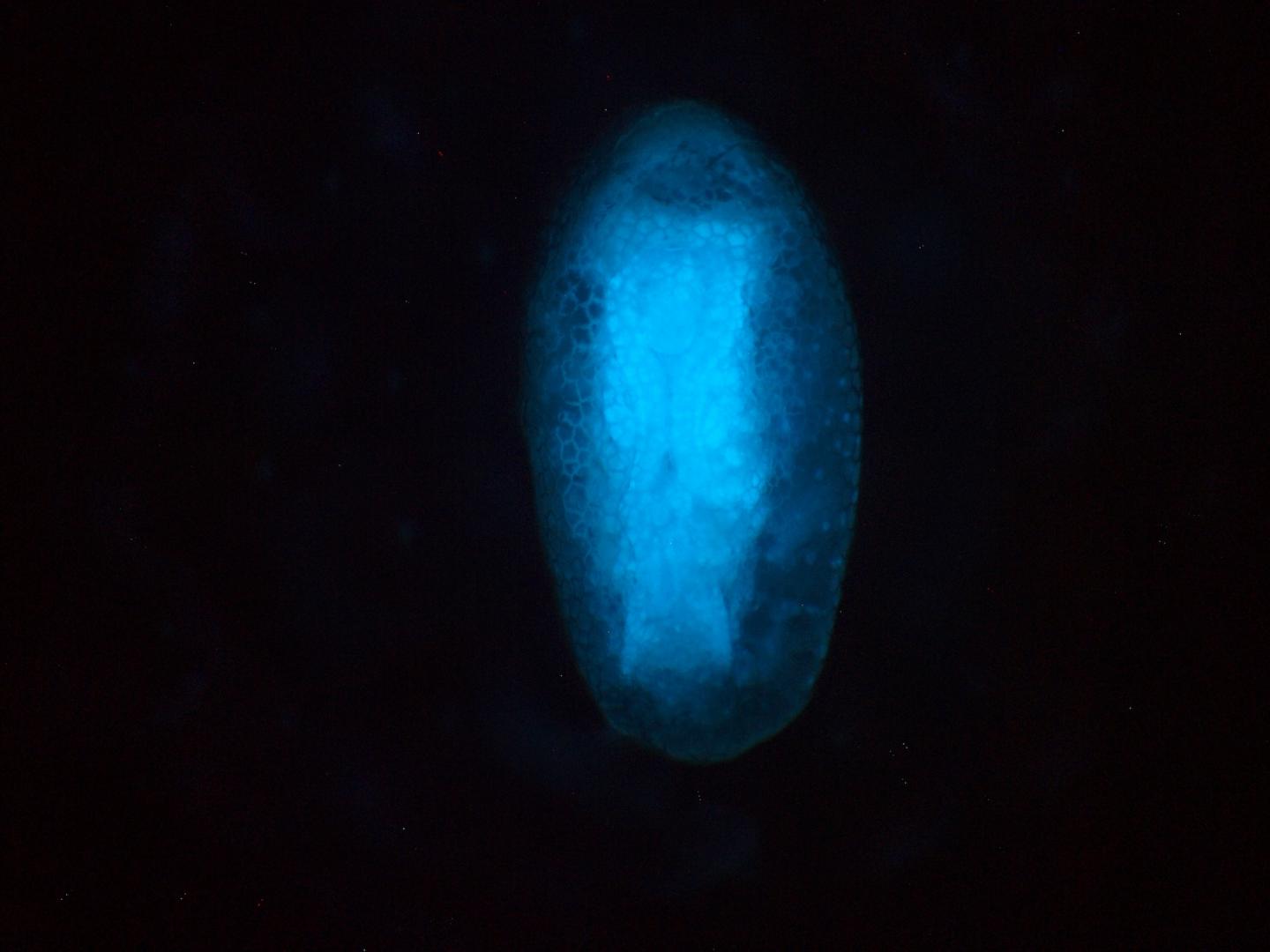
Somewhat unusually, mating habits and embryonic development can be used to classify and distinguish the various cockroach families. The researchers therefore examined the mating behavior, ootheca (egg sac) handling, and embryonic development of Nocticola sp. cockroaches, which belong to the family Nocticolidae.

Publishing their findings in a recent issue of Arthropod Systematics & Phylogeny, the researchers observed that short-winged male Nocticola sp. cockroaches rapidly flapped their wings near females before entering into end-to-end copulation. After copulation, females produced an ootheca, which they carried for several days before depositing on the ground. Although such a unique wing-flapping behavior has not previously been observed in cockroaches, the other observed behaviors are consistent with the mating and ootheca handling of Corydiidae species, suggesting a close evolutionary relationship.

Notably though, symbiotic bacteria, which are common to other cockroach families, were not observed in Nocticola sp. However, the egg shape and embryonic development, with the embryo’s orientation remaining unchanged, in Nocticola sp. were again consistent with Corydiidae.

“Given the consistencies in mating behavior, egg structure, ootheca handing, and embryonic development between Nocticola sp. and Corydiidae, we predict that there is a close association between Nocticolidae and Corydiidae, supporting a shared common ancestor,” says Professor Machida. “Furthering our understanding of the phylogenetic position of Nocticolidae within Blattodea is essential for inferring the higher phylogeny and evolution of insects.”

###

The article, “Reproductive biology and embryonic development of Nocticola sp. (Blattodea: Nocticolidae),” was published in Arthropod Systematics & Phylogeny at DOI: 10.26049/ASP78-3-2020-03.

Media Contact
Naoko Yamashina
[email protected]

Related Journal Article

http://dx.doi.org/10.26049/ASP78-3-2020-03.

Tags: BiologyDevelopmental/Reproductive BiologyEntomologyEvolution
Share12Tweet8Share2ShareShareShare2

Related Posts

Ancient Plant Populations Reveal Fresh Insights into Climate Resilience — Biology

Ancient Plant Populations Reveal Fresh Insights into Climate Resilience

May 8, 2026
Rare Brain Disorders in Children Linked to Mutations in Lesser-Known Protein Complex — Biology

Rare Brain Disorders in Children Linked to Mutations in Lesser-Known Protein Complex

May 8, 2026

From Odd Insect to Underwater Predator: The Remarkable Evolution of a Bloodthirsty Fruit Fly

May 8, 2026

SNU Professor Sangwoo Seo’s Team Develops Next-Generation CRISPR Biocontainment Technology to Control Microbial Survival Without DNA Cleavage

May 8, 2026
Please login to join discussion

POPULAR NEWS

  • Research Indicates Potential Connection Between Prenatal Medication Exposure and Elevated Autism Risk

    840 shares
    Share 336 Tweet 210
  • New Study Reveals Plants Can Detect the Sound of Rain

    727 shares
    Share 290 Tweet 181
  • Scientists Investigate Possible Connection Between COVID-19 and Increased Lung Cancer Risk

    68 shares
    Share 27 Tweet 17
  • Salmonella Haem Blocks Macrophages, Boosts Infection

    61 shares
    Share 24 Tweet 15

About

We bring you the latest biotechnology news from best research centers and universities around the world. Check our website.

Follow us

Recent News

Evaluating Digoxin Use in Patients with Symptomatic Rheumatic Heart Disease

Evaluating the Effectiveness and Safety of Digitalis Glycosides in Treating Heart Failure

Urdu Fall Risk Questionnaire Adapted for Elderly

Subscribe to Blog via Email

Success! An email was just sent to confirm your subscription. Please find the email now and click 'Confirm' to start subscribing.

Join 82 other subscribers
  • Contact Us

Bioengineer.org © Copyright 2023 All Rights Reserved.

Welcome Back!

Login to your account below

Forgotten Password?

Retrieve your password

Please enter your username or email address to reset your password.

Log In
No Result
View All Result
  • Homepages
    • Home Page 1
    • Home Page 2
  • News
  • National
  • Business
  • Health
  • Lifestyle
  • Science

Bioengineer.org © Copyright 2023 All Rights Reserved.