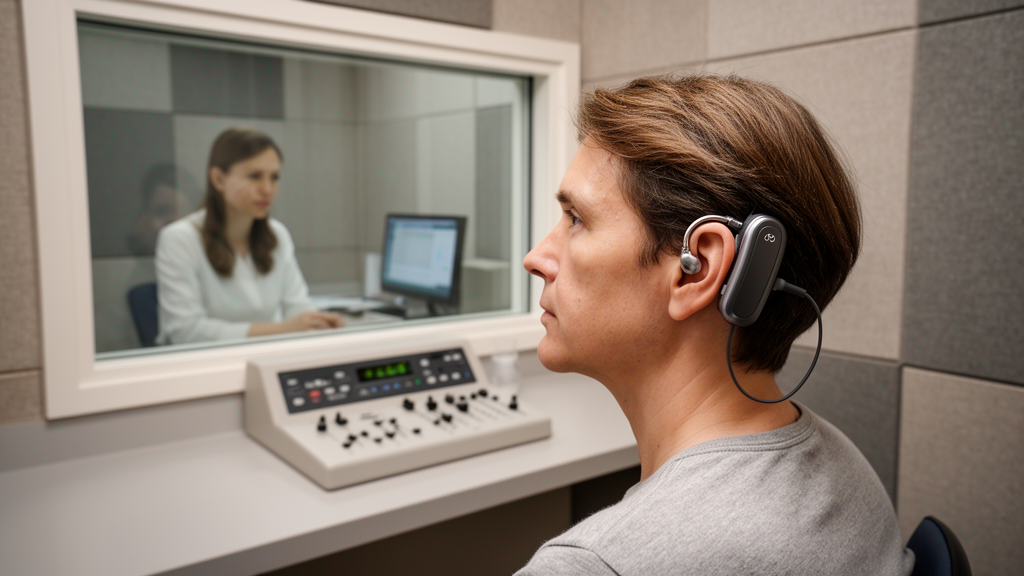
Standard speech-recognition measures do not reliably capture perceived sound quality in adult cochlear implant users, demonstrating that subjective listening quality and conventional speech performance are not interchangeable clinical metrics. Researchers evaluated whether descriptor-based reports of perceived sound quality correspond with speech-recognition performance, preoperative monosyllabic word recognition, and various patient- or device-related characteristics.
The retrospective single-center investigation was conducted by investigators at Hannover Medical School in Germany and Arizona State University in the United States. The research cohort comprised 249 adult cochlear implant users who completed a structured 25-item descriptor-based sound-quality assessment. This evaluation documented both retrospectively recalled early listening experiences, designated as T1, and current listening experiences, designated as T2.
To evaluate these perceptual reports, individual descriptor profiles and superordinate descriptor groups were linked to objective clinical benchmarks. These endpoints included preoperative maximum monosyllabic word recognition as well as postoperative speech-recognition outcomes evaluated in both quiet and noise conditions.
The statistical framework incorporated group comparisons, univariate logistic regression, and multiple linear regression analyses applied to rank-transformed objective outcomes. Significance thresholds were adjusted across testing procedures using false-discovery-rate correction to account for multiple comparisons.
The results demonstrated that individual sound-quality descriptors were not robustly associated with concurrent or later speech-recognition performance. Furthermore, preoperative maximum monosyllabic word recognition was not robustly associated with subsequent descriptor profiles, while patient- and device-related factors displayed only selective associations with descriptor endorsement.
In adjusted models, nominally significant associations between descriptors or superordinate groups explained only 1.5 to 3.2 percentage points of additional variance in speech-recognition outcomes and 1.8 to 3.3 percentage points in preoperative word recognition beyond patient- and device-related factors. Structured sound-quality assessment may add clinically relevant information beyond standard speech testing, particularly when subjective listening experience and conventional outcome measures do not align.
Subject of Research: Perceived sound quality and speech recognition in adult cochlear implant users
Article Title: Perceived sound quality and speech recognition are not interchangeable outcome measures in adult cochlear implant users
Article References: Buczak, N., Dorman, M. F., Leichtle, A., & Büchner, A. (2026). Perceived sound quality and speech recognition are not interchangeable outcome measures in adult cochlear implant users. Frontiers in Human Neuroscience, 20, Article 1968712. https://doi.org/10.3389/fnhum.2026.1968712
Image Credits: AI Generated
DOI: 10.3389/fnhum.2026.1968712
Keywords: cochlear implants, sound quality, speech recognition, patient-reported outcomes, subjective hearing, speech recognition in noise, speech recognition in quiet, monosyllabic word recognition, descriptor-based assessment, retrospective analysis, adult cochlear implant users, listening experience, patient-related factors, device-related factors, otolaryngology, human neuroscience
News Source: Ophelia Keating. (November 11, 2026). Cochlear Implant Speech Tests Fail to Capture Perceived Sound Quality. Scienmag.