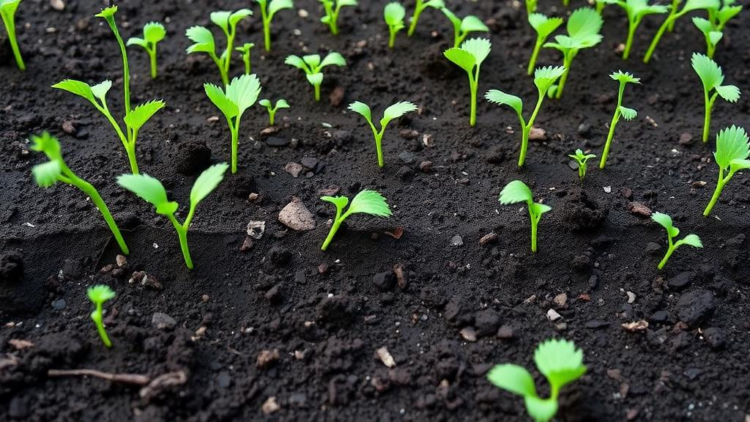
Decades after industrial waste stops flowing, the damage it leaves behind can keep working quietly underground. A new study of floodplain soils at the Savannah River Site in the United States shows that legacy contamination from coal ash does not simply kill off soil microbes. Instead, it reshapes entire microbial communities, favoring hardy generalist bacteria and archaea over specialized species, and reorganizes the genetic machinery that governs how nitrogen moves through the ecosystem. The findings, published in the journal Microbial Ecology, suggest that long-polluted floodplains may retain nitrogen differently than clean ones, with consequences for water quality, greenhouse gas emissions, and ecosystem recovery that could persist for generations.
The research team, led by Max Kolton of Ben-Gurion University and Florida A&M University together with colleagues at the Savannah River Ecology Laboratory, compared floodplain soils with a long history of coal-ash contamination to nearby reference soils that remained relatively pristine. Coal ash, the residue left after coal is burned for power, carries a cocktail of metals including arsenic, chromium, and other elements that are toxic to living cells even at moderate concentrations. Because floodplains sit at the intersection of rivers and uplands, they are natural collection points for such industrial residues, and they are also among the most biologically active soils on the landscape, making them an ideal natural laboratory for asking what chronic metal stress does to the invisible life below ground.
To capture the full picture, the researchers sampled across five seasonal periods, an unusually thorough design for this kind of work. Microbial communities in soil are not static; they shift with temperature, moisture, and plant activity through the year. By sampling repeatedly across seasons, the team could distinguish a consistent contamination signal from the background noise of natural seasonal variation. The strongest divergence between contaminated and reference soils appeared during late-summer peak conditions, when heat and drought likely amplified the physiological stress that metals impose on microbial cells, pushing the two soil types furthest apart in composition and function.
The core of the study rested on three complementary molecular techniques. First, the team sequenced the 16S rRNA gene, a standard marker used to identify which bacteria and archaea are present in a sample and how diverse the community is. Second, they used a tool called PICRUSt2, which predicts the functional capabilities of a community from its taxonomic profile, offering a computational glimpse into what the microbes might be doing. Third, and most decisively, they turned to digital PCR, a highly sensitive technique that counts individual DNA molecules, to precisely quantify the abundance of 16S rRNA genes and a suite of nitrogen-cycling marker genes, including the ammonia monooxygenase genes carried by both bacteria and archaea, nitrite reductase genes, and the nrfA gene associated with dissimilatory nitrate reduction to ammonium.
The diversity results told a clear story. Metal contamination reduced both taxonomic and phylogenetic diversity, meaning that contaminated soils hosted fewer kinds of microbes drawn from a narrower slice of the evolutionary tree. Yet, crucially, the total abundance of prokaryotic DNA, measured by counting 16S rRNA gene copies, did not consistently decline. This is a subtle but important distinction. The contaminated soils were not sterile wastelands; rather, they had undergone a restructuring, with the microbial biomass largely maintained but redistributed among a smaller cast of survivors. Pollution, in other words, pruned the tree of soil life rather than cutting it down.
The pruning followed a predictable ecological logic. Contaminated soils were enriched in generalist taxa, microbes with broad environmental tolerances that can cope with a wide range of conditions, and depleted in specialists, organisms finely adapted to particular niches but vulnerable to disturbance. Ecologists call this pattern biotic homogenization: as environmental filters like metal toxicity eliminate the sensitive and the specialized, the remaining communities across contaminated sites come to resemble one another, dominated by the same resilient cosmopolitan players. The loss of specialists matters beyond simple headcounts, because specialist microbes often perform narrow but vital functions, such as breaking down specific organic compounds or mediating particular steps in nutrient transformations, that generalists may not fully replace.
The most surprising findings emerged from the nitrogen-cycling analysis. PICRUSt2’s functional predictions suggested that nitrification, the process by which microbes convert ammonia into nitrate, should be reduced in contaminated soils. But when the researchers actually counted the relevant genes with digital PCR, they found the opposite: the abundance of ammonia-oxidation genes was increased, driven primarily by archaeal ammonia oxidizers rather than their bacterial counterparts. This mismatch between prediction and measurement is itself a lesson in method. Gene-based functional prediction tools are calibrated largely on well-studied bacteria and can miss the idiosyncrasies of archaea, which are known to dominate ammonia oxidation in many soil environments. Direct gene quantification revealed a reality that the predictive model had inverted.
Why would archaeal ammonia oxidizers thrive under metal stress? Archaea are ancient, often extremophile lineages, and their ammonia-oxidizing members are famously tolerant of harsh conditions, including low pH and, apparently, elevated metal concentrations. As metal-sensitive competitors and grazers were filtered out, the archaeal oxidizers may have faced reduced competition for ammonia, allowing their populations to expand. Whatever the precise mechanism, the consequence is a shift in the architecture of the nitrogen cycle itself, with ammonia oxidation gaining ground in contaminated floodplains relative to uncontaminated ones.
The gene ratio analyses added a second layer of reorganization. Relative to the nrfA gene, which marks the dissimilatory nitrate and nitrite reduction to ammonium pathway, or DNRA, the contaminated soils showed an increased proportion of genes for ammonia oxidation and for denitrifying nitrite reduction. This matters because the two pathways have opposite consequences for the ecosystem. DNRA conserves nitrogen within the soil by converting nitrate back into ammonium, a form that plants and microbes can retain. Denitrification, by contrast, converts nitrate into gaseous forms, including nitrous oxide, a potent greenhouse gas, which escape to the atmosphere. A community shifted away from DNRA and toward denitrification is, in effect, a community that leaks nitrogen rather than holding it, with potential downstream consequences for fertility and emissions.
The authors caution that these are measurements of genetic potential rather than direct observations of nitrogen fluxes, and that linking gene abundances to actual process rates will require further work. Even so, the study carries a sober implication for the many floodplains worldwide that bear the legacy of industrial metal pollution, from former mining districts to power plant ash basins. Remediation efforts typically focus on the chemistry of the contamination itself, measuring metal concentrations and immobilizing them in place. This research shows that the biological legacy runs deeper and differently: even where microbial life persists in abundance, the identity of the organisms and the genetic toolkit they carry have been permanently reorganized. Restoring a contaminated floodplain, the findings suggest, may mean more than detoxifying the soil. It may mean waiting for, or actively assisting, the slow return of the specialist microbes that keep nitrogen locked in the landscape, a recovery measured not in years but potentially in decades, and one that begins with recognizing that a soil can look alive while functioning in an entirely altered way.
Subject of Research: Effects of legacy coal ash metal contamination on floodplain soil microbial communities and nitrogen-cycling gene abundance
Article Title: Legacy Metal Contamination Alters Floodplain Soil Microbiomes and Reorganizes Nitrogen-Cycling Genetic Potential
Article References: Kolton, M., Chukwujindu, C., Oo, W. Y. M., Pathak, A., Fincher, K., Xu, X., & Chauhan, A. (2026). Legacy Metal Contamination Alters Floodplain Soil Microbiomes and Reorganizes Nitrogen-Cycling Genetic Potential. Microbial Ecology. https://doi.org/10.1007/s00248-026-02865-5
Image Credits: AI Generated
DOI: 10.1007/s00248-026-02865-5
Keywords: coal ash, metal contamination, floodplain soils, soil microbiome, nitrogen cycle, archaeal ammonia oxidation, denitrification, DNRA, digital PCR, PICRUSt2, biotic homogenization, Savannah River Site
Cite Scienmag News
APA MLA Chicago
Juliet Wilcox. (September 30, 2026). Coal Ash Legacy Rewires Floodplain Soil Microbes and Their Nitrogen Genes. Scienmag. https://scienmag.com/coal-ash-legacy-rewires-floodplain-soil-microbes-and-their-nitrogen-genes/
Juliet Wilcox. “Coal Ash Legacy Rewires Floodplain Soil Microbes and Their Nitrogen Genes.” Scienmag, 30 September 2026, https://scienmag.com/coal-ash-legacy-rewires-floodplain-soil-microbes-and-their-nitrogen-genes/. Accessed 30 September 2026.
Juliet Wilcox. “Coal Ash Legacy Rewires Floodplain Soil Microbes and Their Nitrogen Genes.” Scienmag. September 30, 2026. https://scienmag.com/coal-ash-legacy-rewires-floodplain-soil-microbes-and-their-nitrogen-genes/
Copy citation Download RIS
Tags: archaeal ammonia oxidationbiotic homogenizationcoal ashcoal ash soil microbial communitiesdenitrificationdigital PCRDNRAenvironmental consequences of coal ash contaminationfloodplain soil microbial diversity and resiliencefloodplain soilsgreenhouse gas emissions from polluted floodplain soilshardy bacteria and archaea in polluted soilsimpact of industrial waste on soil microbeslegacy pollution effects on ecosystem recoverylong-term effects of coal ash on water qualitymetal contaminationmicrobial community restructuring due to coal ashmicrobial genes involved in nitrogen transformationnitrogen cyclenitrogen cycling in contaminated floodplainsnitrogen gene organization in contaminated ecosystemsPICRUSt2Savannah River Sitesoil microbiome