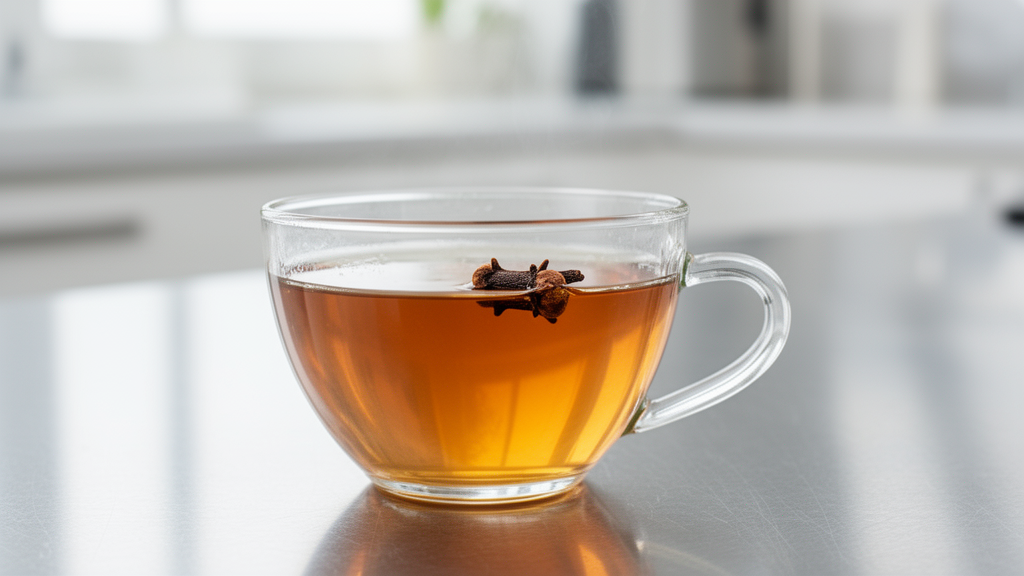
A study published in BMC Microbiology reports that clove tea exhibits antimicrobial and antibiofilm properties against bacteria isolated from kitchen food-contact surfaces. The research, conducted by a team including Çiğdem Sezer, Selçuk Alan, Betül Adem, and Gökçenur Çetin, investigated the potential of this natural brew as an additional measure for reducing microbial load after routine cleaning. The study specifically targeted biofilm-forming microorganisms likely to persist on equipment and countertops in ready-meal kitchens, aiming to determine if clove tea could serve as a supplementary tool for microbial safety.
The researchers collected swab samples from 50 different sampling points across various areas of a ready-meal kitchen after routine cleaning procedures had been completed. From these samples, a total of 22 bacterial isolates were obtained. Using cultural methods, the team identified these isolates as Escherichia coli and Staphylococcus aureus.
To assess the biofilm-forming capabilities of the isolated bacteria, the study employed Congo red agar and the crystal violet method. Of the 22 isolates identified, 15 were determined to be biofilm-positive, indicating a significant proportion of the recovered bacteria had the capacity to form protective communities on surfaces.
The antimicrobial effects of clove tea were evaluated by brewing the tea at different concentrations and testing its impact on both planktonic cells and bacteria associated with mature biofilms of Staphylococcus aureus isolates. The results indicated that the efficacy of clove tea was concentration-dependent. The study reported a mean minimum inhibitory concentration (MIC) value of 15% and a mean minimum bactericidal concentration (MBC) value of 19.33%.
Exposure time was also found to influence bacterial viability, although the concentration of the tea was identified as a more critical factor in determining overall efficacy. The researchers noted that while increased exposure time affected the number of viable bacteria, the concentration of the active components in the tea played a dominant role in the antimicrobial outcome.
When measuring biofilm reduction using the crystal violet method, the researchers observed increases in OD570 values at high tea concentrations. However, they cautioned that these optical density measurements require careful interpretation because the color of the tea itself or its chemical components may interfere with the assay. Consequently, the study emphasized the need to evaluate these optical measurements together with viable bacterial counts to accurately determine the true antibiofilm activity of the clove tea.
The study concludes that clove tea has potential as an additional application aimed at reducing biofilm-associated bacteria that may remain on kitchen surfaces after cleaning. It is not positioned as a replacement for routine cleaning procedures but rather as a complementary strategy. Due to its ease of preparation and natural origin, clove tea is considered a potential alternative worthy of further investigation for supporting microbial safety in kitchen environments.
Subject of Research: Antimicrobial and antibiofilm effects of clove tea on kitchen bacteria
Article Title: Antimicrobial and antibiofilm effects of clove tea on bacteria isolated from kitchen food-contact surfaces
Article References: SEZER, Ç., ALAN, S., ADEM, B., & ÇETİN, G. (2026). Antimicrobial and antibiofilm effects of clove tea on bacteria isolated from kitchen food-contact surfaces. BMC Microbiology. https://doi.org/10.1186/s12866-026-05875-y
Image Credits: AI Generated
DOI: 10.1186/s12866-026-05875-y
Keywords: clove tea, antimicrobial, biofilm, kitchen hygiene, Staphylococcus aureus, Escherichia coli, food safety, natural disinfectants, BMC Microbiology, antibiofilm, effects, clove
News Source: Drew Townsend. (November 7, 2026). Clove Tea Reduces Kitchen Bacteria and Biofilms. Scienmag.