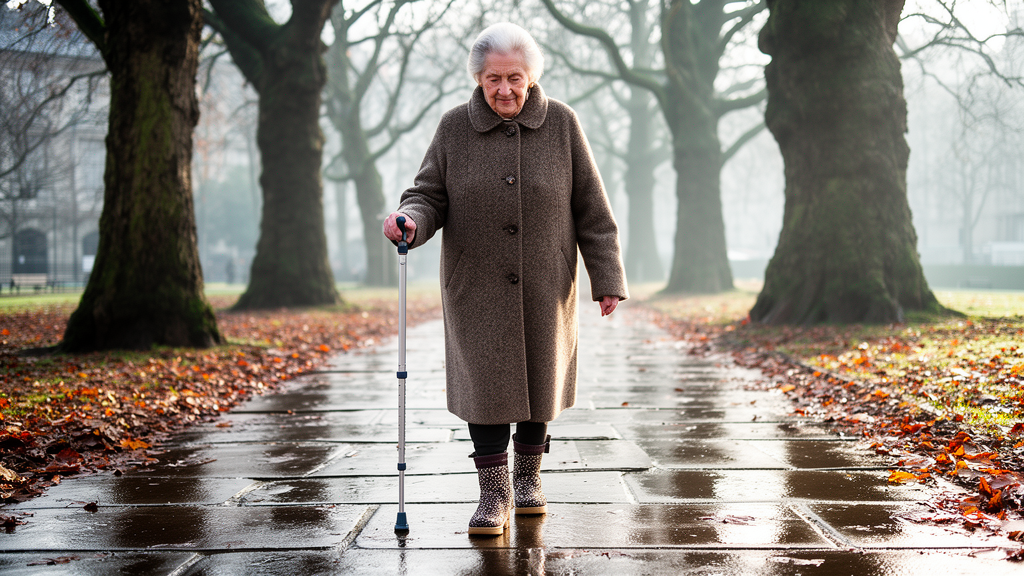
In a perspective published in Frontiers in Public Health, researchers argue that a meaningful component of fall risk among older adults is time-varying, emerging from the convergence of environmental hazards and individual susceptibility. Falls represent a leading cause of injury, disability, and mortality worldwide, contributing to an estimated 684,000 fall deaths annually, with the greatest fatal burden observed among adults older than 60 years.
Current multifactorial fall prevention strategies evaluate and stratify risk primarily at the level of the individual and the clinical encounter. Under this established paradigm, environmental hazards are treated predominantly as static features of the home, leaving population-level prevention unable to determine when, where, and for whom fall risks acutely escalate.
The framework posits that dynamic risk arises when an acute environmental hazard—specifically ice, heavy rainfall, flooding, heat, or cold—coincides with a specific vulnerability phenotype in an exposed individual at that moment.
In addition, the framework identifies key effect modifiers that influence risk, including heat-sensitising medicines, frailty, patterns of outdoor mobility, drainage and surface quality, and residential setting.
The authors outline a concrete agenda establishing which meteorological indicators should be linked to specific fall outcomes.
To determine whether a climate-informed strategy adds measurable value beyond conventional prevention, the agenda suggests evaluating outcomes using interrupted time-series or stepped-wedge designs. The authors conclude that rather than replacing multifactorial clinical assessments, the framework introduces a temporal dimension enabling anticipatory, targeted, and evaluable public health action as populations age and extreme weather events become more frequent.
Subject of Research: Climate-sensitive fall risk and prevention framework in ageing populations
Article Title: Climate-sensitive fall risk in ageing populations: a public health perspective
Article References: Samaher, M. A., & Ugwu, O. P.-C. (2026). Climate-sensitive fall risk in ageing populations: a public health perspective. Frontiers in Public Health, 14, Article 1871828. https://doi.org/10.3389/fpubh.2026.1871828
Image Credits: AI Generated
DOI: 10.3389/fpubh.2026.1871828
Keywords: ageing populations, climate variability, fall risk, fall prevention, injury prevention, older adults, seasonal risk, early warning systems, acute environmental hazards, exposure-vulnerability coincidence, heat-sensitising medicines, frailty, outdoor mobility, surface quality, lagged exposure-response curves, alert thresholds, interrupted time-series, stepped-wedge designs
News Source: Beatrice Stafford. (November 14, 2026). Climate-Sensitive Framework Addresses Time-Varying Fall Risk in Ageing Populations. Scienmag.