• HOME
  • NEWS
  • EXPLORE
    • CAREER
      • Companies
      • Jobs
    • EVENTS
    • iGEM
      • News
      • Team
    • PHOTOS
    • VIDEO
    • WIKI
  • BLOG
  • COMMUNITY
    • FACEBOOK
    • INSTAGRAM
    • TWITTER
Thursday, July 2, 2026
BIOENGINEER.ORG
No Result
View All Result
  • Login
  • HOME
  • NEWS
  • EXPLORE
    • CAREER
      • Companies
      • Jobs
        • Lecturer
        • PhD Studentship
        • Postdoc
        • Research Assistant
    • EVENTS
    • iGEM
      • News
      • Team
    • PHOTOS
    • VIDEO
    • WIKI
  • BLOG
  • COMMUNITY
    • FACEBOOK
    • INSTAGRAM
    • TWITTER
  • HOME
  • NEWS
  • EXPLORE
    • CAREER
      • Companies
      • Jobs
        • Lecturer
        • PhD Studentship
        • Postdoc
        • Research Assistant
    • EVENTS
    • iGEM
      • News
      • Team
    • PHOTOS
    • VIDEO
    • WIKI
  • BLOG
  • COMMUNITY
    • FACEBOOK
    • INSTAGRAM
    • TWITTER
No Result
View All Result
Bioengineer.org
No Result
View All Result
Home NEWS Science News Biology

Climate change predicts southerly shift of great whale species in New Zealand

Bioengineer by Bioengineer
August 8, 2022
in Biology
Reading Time: 3 mins read
0
Sperm whale
Share on FacebookShare on TwitterShare on LinkedinShare on RedditShare on Telegram

New research sheds light on how climate change will impact the distribution of great whales in New Zealand waters.
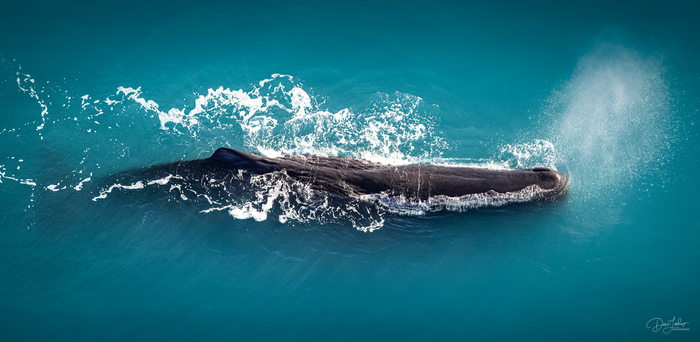
Sperm whale

Credit: Photo courtesy DBL Wildlife

New research sheds light on how climate change will impact the distribution of great whales in New Zealand waters.

An international collaborative study between Massey University, the University of Zurich, Canterbury University and Flinders University, used a complex modelling approach to project the regional range shift of blue and sperm whales by the year 2100, under different climate change scenarios.

The study, published in the international journal Ecological Indicators, shows a southerly shift of suitable habitat for both species, which increases in magnitude as the ocean warms. The most severe climate change scenario that was tested generated a 61 per cent loss and 42 per cent decrease of currently suitable habitat for sperm and blue whales, mostly in New Zealand’s northern waters.

Research lead Dr Katharina Peters of the University of Canterbury says, “Regardless of which of the climate change scenarios will be the reality, even the best-case scenario indicates notable changes in the distribution of suitable habitat for sperm and blue whales in New Zealand.”

Island nations such as New Zealand are extremely vulnerable to climate change impact on marine ecosystems because of their strong connection to the ocean. For example, sperm whales in New Zealand are critical for the tourism industry and local economy.

Study co-author Professor Karen Stockin, who leads the Cetacean Ecology Research Group at Massey University, says, “The whale watch industry off Kaikoura may be at potential risk due to fewer and less reliable sightings of sperm whales off that coastline in the future. Such changes in sperm whale distribution would have socioeconomic impacts due to the direct and indirect reliance on the whale watching activities by the local economy.”

Great whales, such as sperm and blue whales, are important ecosystem engineers. This means that they fulfill a multitude of tasks such as facilitating the transfer of nutrients from deep waters to the surface, and across latitudes via migration from feeding to calving areas. Their predicted future southward shift, driven by climate change, will impact ecosystem functioning and potentially destabilise ecological processes in the northern part of New Zealand.

While this research emphasises the negative impacts of climate changes on blue and sperm whales, it also highlights habitats that may be suitable in the future for both species in the South Island and offshore islands.

Senior author Dr Frédérik Saltré, co-leader of the Global Ecology Lab at Flinders University says, “Such areas have the potential to serve as climate refugia for both species. Knowing about these areas early on provides an opportunity for their increased protection in the future, particularly when considering the placement of marine protected areas and the legislation of oil and gas exploration.”


Journal

Ecological Indicators

DOI

10.1016/j.ecolind.2022.109235

Method of Research

Computational simulation/modeling

Subject of Research

Animals

Article Title

On the rise: Climate change in New Zealand will cause sperm and blue whales to seek higher latitudes

COI Statement

The authors declare no conflict of interest

Share12Tweet8Share2ShareShareShare2

Related Posts

Evolution-Inspired Biosensors Revolutionize Lipid Tracking in Real Time — Biology

Evolution-Inspired Biosensors Revolutionize Lipid Tracking in Real Time

July 2, 2026
New Study Reveals How to Reduce Risk of Dangerous Wildlife Encounters This Summer — Biology

New Study Reveals How to Reduce Risk of Dangerous Wildlife Encounters This Summer

July 2, 2026

Hepatic IFRD1 Alleviates Metabolic Dysfunction-Linked Steatohepatitis Through the GLUD1/α-KG Pathway

July 2, 2026

Intricate Food Webs Support Ecosystem Health and Stability

July 2, 2026

POPULAR NEWS

  • Detection of EDCs in Breast Milk and Infant Urine Up to Six Months Highlights Early Exposure Risks

    77 shares
    Share 31 Tweet 19
  • Saying Goodbye to PGY-6: Pediatric Fellowship Realities

    103 shares
    Share 41 Tweet 26
  • New Drug Candidate Developed at McMaster Shows Potential for Treating Brain Cancer

    58 shares
    Share 23 Tweet 15
  • KTU Researchers Explore Ultrasound’s Role in Enhancing Blood Flow Beyond Diagnostics

    53 shares
    Share 21 Tweet 13

About

BIOENGINEER.ORG

We bring you the latest biotechnology news from best research centers and universities around the world. Check our website.

Follow us

Recent News

Steatosis Drives Liver Metastasis Diversity in CRC

Unlocking the Mysteries of Alzheimer’s Disease

Pensoft Introduces New Peer-Reviewed Journal of Regeneration to Advance Restorative Biology Across Species

Subscribe to Blog via Email

Enter your email address to subscribe to this blog and receive notifications of new posts by email.

Join 83 other subscribers
  • Contact Us

Bioengineer.org © Copyright 2023 All Rights Reserved.

Welcome Back!

Login to your account below

Forgotten Password?

Retrieve your password

Please enter your username or email address to reset your password.

Log In
No Result
View All Result
  • Homepages
    • Home Page 1
    • Home Page 2
  • News
  • National
  • Business
  • Health
  • Lifestyle
  • Science

Bioengineer.org © Copyright 2023 All Rights Reserved.