In a groundbreaking advancement that could redefine natural cancer therapies, researchers have unveiled compelling evidence demonstrating the potent cytotoxic and antitumor effects of Cleome gynandra, a traditional medicinal plant, against Ehrlich ascites carcinoma in Swiss albino mice. This study, recently published in Medical Oncology, represents a significant stride toward harnessing bioactive compounds from botanicals to combat malignancies, an area that has intrigued oncologists and pharmacologists for decades.
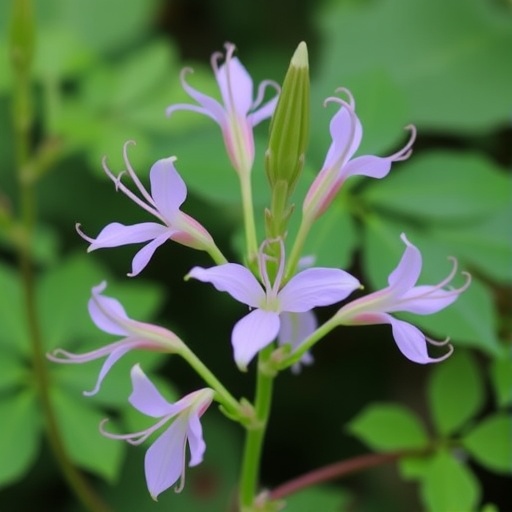
Cleome gynandra, commonly known as African spider flower or cat’s whiskers, has a storied history in traditional medicine for treating various ailments. However, its anticancer potential remained largely unexplored until Ramalingam, Senthilkumar, and Saravanan embarked on an exhaustive investigation to delineate its efficacy and underlying mechanisms in combating cancer cells. Their research uniquely bridges ethnobotanical knowledge and contemporary oncological science, showcasing how natural compounds could supplement or even enhance standard chemotherapeutic regimens.
In their meticulously designed in vivo experiments, the scientists administered extracts of Cleome gynandra to Swiss albino mice inoculated with Ehrlich ascites carcinoma, a widely accepted model for studying tumor biology and therapeutic responses. The results were striking—treated mice exhibited a substantial reduction in tumor volume and ascitic fluid accumulation compared to untreated controls, underscoring the plant’s therapeutic promise. Furthermore, these effects were dose-dependent, with higher extract concentrations correlating with more pronounced antitumor activity.
At the molecular level, the research sheds light on the cytotoxic mechanisms activated by Cleome gynandra extracts. The treatment induced significant apoptosis in tumor cells, characterized by hallmark features such as chromatin condensation, DNA fragmentation, and activation of caspase pathways. This apoptotic induction is pivotal because it signifies controlled cancer cell elimination without triggering inflammation or collateral damage to surrounding healthy tissues, a major complication in conventional chemotherapy.
Notably, the study observed alterations at the gene expression level in tumor cells post-treatment. Key regulators implicated in cell cycle arrest and apoptosis, including p53 and Bax, were upregulated, whereas anti-apoptotic proteins like Bcl-2 were substantially downregulated. This molecular orchestration suggests that Cleome gynandra mobilizes intrinsic cellular pathways to effectively suppress tumor growth—a revelation that could inspire the synthesis of novel targeted therapies derived from these natural compounds.
Biochemical analyses further revealed that the extract possesses substantial antioxidant properties, mitigating oxidative stress within tumor microenvironments. Oxidative stress is known to fuel carcinogenesis and metastasis; hence, the antioxidant action of Cleome gynandra potentially compounds its anticancer efficacy by disrupting the redox balance necessary for tumor survival and proliferation. This dual functionality, combining pro-apoptotic and antioxidative effects, positions the plant extract as a multifaceted therapeutic agent.
Importantly, the safety profile of Cleome gynandra was rigorously evaluated. The treated mice did not exhibit significant hematological or biochemical abnormalities, indicating that the extract was well-tolerated without overt toxicity. This finding is particularly encouraging in the context of side-effect profiles of current chemotherapeutic drugs, which often impair patient quality of life and mandate dose reductions or discontinuations.
The study’s implications extend beyond basic science to translational oncology. It highlights an accessible, cost-effective botanical resource with substantial antitumoral potential, especially pertinent for resource-constrained settings where access to advanced cancer therapies is limited. Moreover, by elucidating the molecular underpinnings of its action, the research lays a foundation for future clinical trials and drug development efforts aimed at integrating botanical derivatives into mainstream oncology.
Researchers stress the importance of further studies to identify the specific bioactive constituents responsible for these antitumor effects, which could include flavonoids, alkaloids, or other secondary metabolites uniquely abundant in Cleome gynandra. Isolating and characterizing these compounds will facilitate formulation standardization and dosing accuracy, essential steps for regulatory approval and clinical adoption.
While the findings are promising, the authors caution that preclinical successes do not always translate directly to human outcomes. Nevertheless, the robust data generated in this study provide an indispensable framework for designing phase I and II clinical trials addressing safety, efficacy, and pharmacokinetics in cancer patients, particularly those with ascites-forming tumors analogous to Ehrlich carcinoma.
This research also dovetails with a broader scientific movement valuing the integration of traditional medicinal knowledge with cutting-edge biomedical research. As conventional drug pipelines face bottlenecks and escalating costs, plants like Cleome gynandra emerge as reservoirs of novel chemotherapeutic agents that might overcome resistance mechanisms or enhance synergistic multimodal therapies.
In conclusion, the elucidation of Cleome gynandra’s enhanced cytotoxic and antitumoral properties marks a pivotal development in the quest for natural cancer therapeutics. By demonstrating its efficacy against a widely studied tumor model and unraveling key apoptotic and antioxidant mechanisms, this study not only amplifies the scientific value of ethnomedicine but also invigorates efforts to translate botanical wisdom into life-saving oncology treatments. The research team’s call for advancing this promising natural compound through rigorous clinical pathways resonates with hope for future cancer care paradigms that are both efficacious and accessible worldwide.
Subject of Research:
Article Title:
Article References:
Ramalingam, S., Senthilkumar, G. & Saravanan, R. Enhanced cytotoxic and antitumour properties of Cleome gynandra on Ehrlich ascites carcinoma in Swiss albino mice. Med Oncol 43, 81 (2026). https://doi.org/10.1007/s12032-025-03186-2
Image Credits: AI Generated
DOI: https://doi.org/10.1007/s12032-025-03186-2
Tags: bioactive compounds from botanicalsCleome gynandra antitumor effectscytotoxic properties of plantsEhrlich ascites carcinoma researchenhancing chemotherapeutic regimensethnobotany and modern sciencenatural cancer therapiespharmacological research on Cleome gynandraplant-based cancer treatmentsSwiss albino mice cancer studytraditional medicinal plants in oncologytumor biology and therapeutic responses