

• HOME
  • NEWS
  • EXPLORE
    • CAREER
      • Companies
      • Jobs
    • EVENTS
    • iGEM
      • News
      • Team
    • PHOTOS
    • VIDEO
    • WIKI
  • BLOG
  • COMMUNITY
    • FACEBOOK
    • INSTAGRAM
    • TWITTER
Thursday, August 20, 2026
BIOENGINEER.ORG
No Result
View All Result
  • Login
  • HOME
  • NEWS
  • EXPLORE
    • CAREER
      • Companies
      • Jobs
        • Lecturer
        • PhD Studentship
        • Postdoc
        • Research Assistant
    • EVENTS
    • iGEM
      • News
      • Team
    • PHOTOS
    • VIDEO
    • WIKI
  • BLOG
  • COMMUNITY
    • FACEBOOK
    • INSTAGRAM
    • TWITTER
  • HOME
  • NEWS
  • EXPLORE
    • CAREER
      • Companies
      • Jobs
        • Lecturer
        • PhD Studentship
        • Postdoc
        • Research Assistant
    • EVENTS
    • iGEM
      • News
      • Team
    • PHOTOS
    • VIDEO
    • WIKI
  • BLOG
  • COMMUNITY
    • FACEBOOK
    • INSTAGRAM
    • TWITTER
No Result
View All Result
Bioengineer.org
No Result
View All Result
Home NEWS Science News Biology

Clay Wright receives MIRA funding to create new molecular tools

Bioengineer by Bioengineer
March 14, 2024
in Biology
Reading Time: 2 mins read
0
Clay Wright
Share on FacebookShare on TwitterShare on LinkedinShare on RedditShare on Telegram

Clay Wright, assistant professor in the College of Agriculture and Life Sciences’ Department of Biological Systems Engineering, was awarded a prestigious Maximizing Investigators’ Research Award (MIRA) from the National Institute of General Medical Sciences, part of the National Institutes of Health.
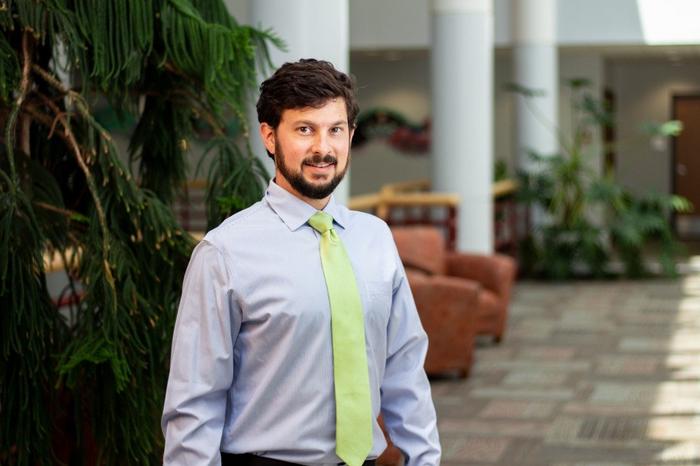
Clay Wright

Credit: Photo by Tim Skiles for Virginia Tech.

Clay Wright, assistant professor in the College of Agriculture and Life Sciences’ Department of Biological Systems Engineering, was awarded a prestigious Maximizing Investigators’ Research Award (MIRA) from the National Institute of General Medical Sciences, part of the National Institutes of Health.

The funding is aimed at providing the investigator, versus a specific project, enhanced stability and flexibility for further discovery, enhancing scientific productivity and the chances for significant breakthroughs outside the initial scope of the project.

This recognition supports Wright’s innovative work in understanding and engineering common cellular signals, a critical mechanism shared across animals, plants, and fungi. These signals are sent through a process called ubiquitin signaling.

This system works like a recycling center inside all living things by helping cells adapt to their environments by breaking down old proteins and making new ones. This system is important for plants because it helps them grow and deal with stress like pests.

“Our goal is to understand how this system works and to make it better,” Wright said. “We do experiments with yeast and use robots to help us with our research. By learning more about this system, we hope to find new ways to treat diseases and make plants grow more efficiently and robustly in the face of climate change.”

Wright’s research aims to understand and engineer the molecular mechanism of how information is transferred through these ubiquitin-proteasome signaling pathways and how these hormone-signaling and biosynthesis pathways have coevolved in plants and other eukaryotes, or animals, plants, and fungi.

To do this, the research looks for differences, or mutations, through a genomic technique called massively parallel functional assays. The team is using a protein degradation biosensor that they recently developed.

“We’re working toward evolving enzymes called ubiquitin ligases to help them identify both known and new chemical compounds,” Wright said. “These enzymes could work as tiny sensors and controllers within cells, helping us get a better grip on how biological systems operate. By doing so, we hope to enhance our understanding and ability to manipulate these systems, leading to more sustainable ways to produce important plant hormones and related chemicals.”

These molecular tools could improve our ability to manipulate, control, and engineer biological systems for applications from health care to agriculture.



Share12Tweet8Share2ShareShareShare2

Related Posts

AI Creates a Map of Human Emotions at Scientists’ Request

AI Creates a Map of Human Emotions at Scientists’ Request

August 20, 2026
UK Zoos Mostly House Non-Native, Unthreatened Species, Challenging Conservation Goals

UK Zoos Mostly House Non-Native, Unthreatened Species, Challenging Conservation Goals

August 20, 2026

Researchers design a novel, stable human growth factor

August 20, 2026

uOttawa Study Links Parkinson’s Gene to Potential Defenses Against Deadly Bacterial Infections

August 20, 2026

POPULAR NEWS

  • Engineers Develop Self-Powered Pacemaker 恒一

    29 shares
    Share 12 Tweet 7
  • CD39+CD103+CD8+ T Cells Boost Neoadjuvant Chemoimmunotherapy in Head and Neck Cancer

    29 shares
    Share 12 Tweet 7
  • Most AI medical devices cleared for use lacked testing on patient outcomes

    29 shares
    Share 12 Tweet 7
  • Scoping review suggests wildfires often leave drinking water contaminated with arsenic

    29 shares
    Share 12 Tweet 7

About

We bring you the latest biotechnology news from best research centers and universities around the world. Check our website.

Follow us

Recent News

Engineers Develop Self-Powered Pacemaker 恒一

CD39+CD103+CD8+ T Cells Boost Neoadjuvant Chemoimmunotherapy in Head and Neck Cancer

Most AI medical devices cleared for use lacked testing on patient outcomes

Subscribe to Blog via Email

Enter your email address to subscribe to this blog and receive notifications of new posts by email.

Join 85 other subscribers
  • Contact Us

Bioengineer.org © Copyright 2023 All Rights Reserved.

Welcome Back!

Login to your account below

Forgotten Password?

Retrieve your password

Please enter your username or email address to reset your password.

Log In
No Result
View All Result
  • Homepages
    • Home Page 1
    • Home Page 2
  • News
  • National
  • Business
  • Health
  • Lifestyle
  • Science

Bioengineer.org © Copyright 2023 All Rights Reserved.