In a groundbreaking advance in the fight against pancreatic cancer, researchers have unveiled a critical molecular player that may revolutionize therapeutic strategies. The study, recently published in Medical Oncology, highlights the upregulated circular RNA, circ_0060055, as a potent regulator of pancreatic cancer cell behavior, influencing proliferation, invasion, and programmed cell death through its interaction with microRNA miR-1298-5p. This discovery opens a promising avenue to target the elusive mechanisms behind one of the deadliest cancer types globally.
Pancreatic cancer notoriously resists traditional therapies due to its complex biology and aggressive nature. Unraveling the molecular intricacies governing its growth and spread is vital to developing more effective treatments. The study zeroes in on circ_0060055, a circular RNA whose unique looped structure imparts remarkable stability and functional versatility compared to linear RNAs. These circRNAs have recently emerged as crucial gene expression regulators, but circ_0060055’s explicit role in pancreatic oncogenesis had remained obscure until now.
The researchers utilized sophisticated molecular biology techniques to demonstrate that circ_0060055 expression is significantly elevated in pancreatic tumor samples relative to normal tissue. This upregulation correlates strongly with enhanced cellular proliferation and invasion capabilities, hallmark features driving tumor aggressiveness. Importantly, the study design went beyond correlation, establishing a causative role by experimentally manipulating circ_0060055 levels in pancreatic cancer cell lines. Silencing circ_0060055 markedly suppressed malignant behaviors, underscoring its potential as a therapeutic target.
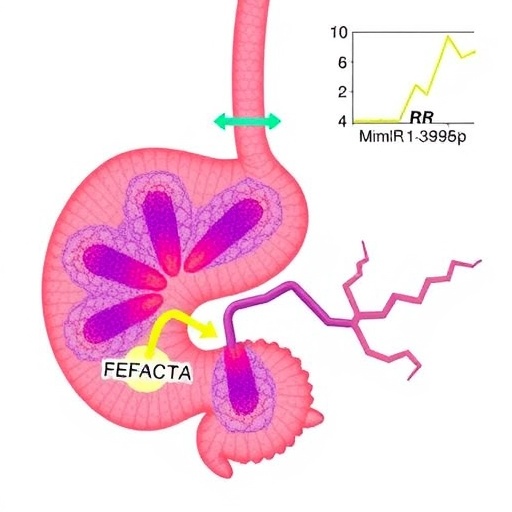
What makes circ_0060055 a central player is its function as a molecular sponge for miR-1298-5p, a microRNA known to possess tumor suppressive properties. MicroRNAs generally regulate gene expression by binding to messenger RNAs, leading to their degradation or translational repression. However, circRNAs can sequester these microRNAs, preventing them from exerting their regulatory effects—a mechanism akin to removing the brakes from cancer progression. By sponging miR-1298-5p, circ_0060055 effectively neutralizes its inhibitory influence, unleashing oncogenic pathways that foster tumor growth.
This “sponging” phenomenon disrupts the delicate balance between tumor-promoting and tumor-suppressing signals within pancreatic cells. The study delineates how this dysregulation facilitates unchecked proliferation and enhances invasive potential, allowing cancer cells to breach tissue boundaries and metastasize. Additionally, the circRNA-miRNA interaction impacts apoptotic pathways, tipping the scales against programmed cell death and enabling tumor cell survival under hostile conditions such as chemotherapy.
To confirm the clinical relevance of these molecular insights, the investigators analyzed patient tissue samples and survival data. Higher circ_0060055 expression was associated with poorer prognosis, suggesting its utility not only as a biomarker for disease progression but also as a predictor of treatment response. Such findings propel circ_0060055 from a molecular curiosity to a clinically actionable target, motivating further translational research and drug development efforts.
The implications of targeting circ_0060055 extend beyond pancreatic cancer. Given the conserved nature of circRNA and miRNA regulatory networks across tissues, similar mechanisms may underlie multiple malignancies. Thus, therapeutics designed to disrupt the circ_0060055/miR-1298-5p axis could herald a broader class of interventions tackling cancer at the RNA regulatory level, a frontier with untapped potential.
Importantly, the study leveraged cutting-edge RNA sequencing and bioinformatics tools to map the circRNA-miRNA interactome with unprecedented resolution. These technologies enabled precise identification of molecular interactions, facilitating mechanistic elucidation that would have been elusive with conventional methods. Such integrative approaches exemplify how modern biomedical research harnesses computational and experimental synergies to decode complex cellular signaling webs.
Therapeutic targeting of circRNAs presents unique challenges as well, given their stability and cellular localization. However, advances in RNA-based therapeutics, including antisense oligonucleotides and RNA interference technologies, offer promising modalities to modulate circ_0060055 function effectively. The study’s thorough characterization of the circRNA’s sequence and structure lays the groundwork for rational design of such agents, which could selectively disrupt circ_0060055 without off-target effects.
Beyond direct intervention, the identification of circ_0060055 expands the toolkit for cancer diagnostics. Non-invasive liquid biopsies assessing circRNA levels in patient blood samples could enable early detection, monitor therapeutic efficacy, and track disease progression in real time. This aligns with precision medicine paradigms aiming for tailored interventions based on molecular profiling.
Furthermore, understanding the interplay between circ_0060055 and miR-1298-5p provides insights into the cellular stress responses and metabolic adaptations unique to pancreatic cancer. By dissecting these pathways, researchers can identify synergistic vulnerabilities, potentially combining circRNA-targeted therapies with conventional chemotherapy or immunotherapy to enhance treatment efficacy.
This landmark study also underscores the importance of RNA biology in oncology, a field historically focused on DNA mutations and protein targets. The dynamic regulatory roles of non-coding RNAs like circRNAs and miRNAs represent an expanding frontier, revealing layers of gene expression control that are exploitable for therapeutic advantage. As such, the findings invite a paradigm shift towards RNA-centric cancer research.
Moreover, the demonstrated role of circ_0060055 in apoptosis evasion elucidates a critical hallmark of cancer. Apoptosis, or programmed cell death, normally acts as a protective mechanism to eliminate damaged or dangerous cells. Cancer’s subversion of apoptosis enables survival despite genetic abnormalities and hostile microenvironments, driving relentless tumor growth. Targeting circ_0060055 reactivates these death pathways, restoring this fundamental safeguard.
The research team’s multidisciplinary approach, combining molecular biology, oncology, genomics, and bioinformatics, exemplifies future directions in cancer research infrastructure. Such collaboration enables comprehensive exploration of complex disease mechanisms, accelerating translation from bench to bedside. The synergy between basic science and clinical insights promises to transform therapeutic paradigms.
Looking ahead, clinical trials will be essential to validate the safety and efficacy of circ_0060055-targeted therapies in human patients. If successful, this approach could significantly improve outcomes for pancreatic cancer patients, a group currently facing dismal five-year survival rates. The urgency of this unmet medical need adds weight to the study’s impact.
In sum, the identification of circ_0060055 as a key regulatory hub in pancreatic cancer underscores the transformative potential of RNA biology in oncology. This discovery empowers a new generation of therapies that transcend traditional targets, offering hope for more effective, personalized interventions against one of the most lethal cancers. The journey from molecular insight to clinical application is just beginning, but the trajectory promises profound advances in cancer treatment.
Subject of Research:
Article Title:
Article References:
Hao, L., Yin, Q., Song, J. et al. The upregulated RNA circ_0060055 regulates the proliferation, invasion and apoptosis of pancreatic cancer cells through spongy miR-1298-5p. Med Oncol 43, 127 (2026). https://doi.org/10.1007/s12032-026-03278-7
Image Credits: AI Generated
DOI: https://doi.org/10.1007/s12032-026-03278-7
Tags: aggressive cancer treatmentscancer cell proliferationcirc_0060055circular RNA in oncologygene expression regulatorsmicroRNA miR-1298-5pmolecular biology techniques in cancerpancreatic cancer researchpancreatic tumor biologyprogrammed cell death regulationtherapeutic strategies for pancreatic cancertumor invasion mechanisms