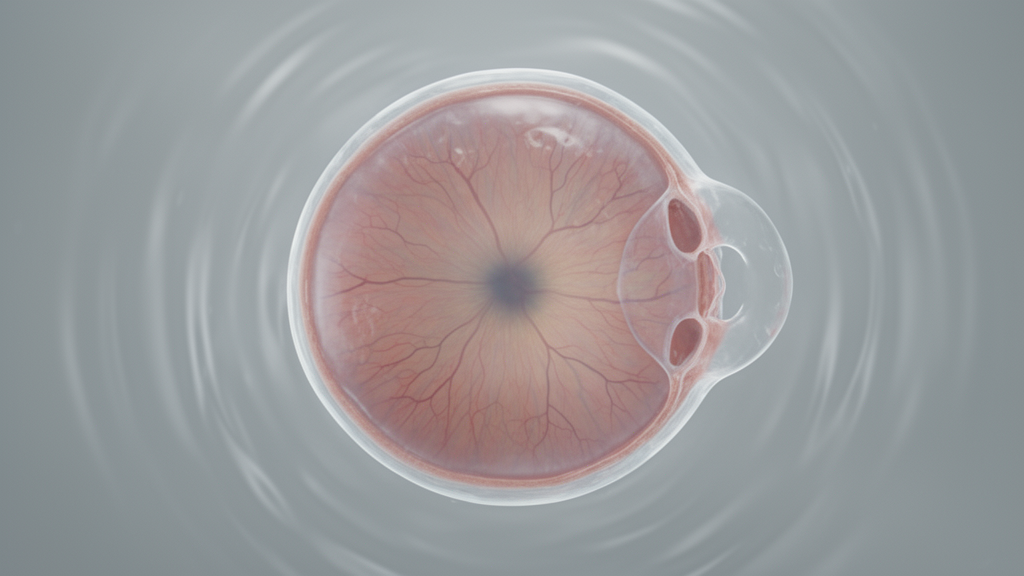
Researchers at the Eye School of Chengdu University of TCM and the Zhanjiang Institute of Clinical Medicine have reported that a chronic restraint stress protocol in adult male mice is associated with glaucoma-like retinal degeneration. Published in Frontiers in Molecular Neuroscience, the study utilized integrated metabolomics and transcriptomics to explore the molecular mechanisms underlying the potential link between psychological stress and glaucoma pathogenesis. The findings suggest that chronic stress may contribute to retinal damage through the dysregulation of metabolic, oxidative stress, and inflammatory pathways, although the authors emphasize that functional validation is required to establish a causal relationship.
The study was motivated by epidemiological evidence indicating a significant comorbidity between glaucoma and mood disorders, including depression and anxiety. While elevated intraocular pressure is recognized as a major pathogenic factor in glaucoma, a substantial proportion of patients continue to experience disease progression even after successful pressure reduction. This suggests the involvement of additional pathogenic mechanisms beyond intraocular pressure, potentially involving imbalances in the neuroendocrine-immune network and the autonomic nervous system. To investigate this, the team employed a well-established rodent model of chronic restraint stress, which had not previously been used to explore the potential causal relationship between psychological stress and glaucoma.
The experimental design involved two independent cohorts of wild-type male mice aged seven to eight weeks. In the chronic restraint stress group, mice were subjected to immobilization in well-ventilated 30 mL plastic tubes for four hours daily over ten consecutive days. During these sessions, the animals had no access to food or water. Non-stressed control mice were littermates housed in standard home cages. The study was approved by the Animal Research Committee of Zhanjiang Central People’s Hospital, and all procedures were conducted in accordance with institutional guidelines for animal research.
Behavioral evaluations conducted after the ten-day restraint period confirmed the successful establishment of the stress model. Compared to the control group, mice in the chronic restraint stress group spent significantly less time in the central zone of the open field test and showed significantly fewer entries into and less time spent in the open arms of the elevated plus maze. These behavioral changes are consistent with anxiety-like behavior, verifying that the protocol induced a measurable psychological stress response in the animals.
Intraocular pressure was measured at baseline, day seven, and day fourteen using a rebound tonometer under light general anesthesia. A mixed-effects model analysis revealed a highly significant main effect of group on intraocular pressure. While there was no significant difference between groups at baseline, the chronic restraint stress group displayed a marked upward trend over the 14-day observation period. Post-hoc comparisons indicated that intraocular pressure was significantly higher in the stressed group compared to controls at both day seven and day fourteen. Concurrently, retinal ganglion cell survival was significantly decreased in the chronic restraint stress group, as quantified by RBPMS immunofluorescence. These results suggest that the stress protocol may induce glaucoma-like damage characterized by pressure elevation and cell loss.
To identify the molecular underpinnings of these changes, the researchers performed RNA sequencing and untargeted metabolomics on retinal tissues. Transcriptomic analysis identified 216 candidate genes with nominal differential expression, comprising 167 upregulated and 49 downregulated genes. Because no genes met the stringent false discovery rate threshold, the team used an unadjusted p-value less than 0.05 combined with a log2 fold change of at least 1 to identify candidates for exploratory analysis. Gene Ontology enrichment analysis of these candidates revealed significant enrichment for oxidoreductase activity and iron ion binding, pointing to alterations in redox balance and metal ion homeostasis within the retina.
Metabolomic profiling using ultra-high-performance liquid chromatography coupled with mass spectrometry detected 255 differential metabolites in the retinas of stressed mice compared to controls. The majority of these metabolites were downregulated, with the main categories being fatty acids, glycerophospholipids, and amino acids. Metabolite enrichment analysis identified the thermogenesis pathway as nominally enriched, although this finding did not survive multiple-testing correction and is therefore considered exploratory. The predominance of downregulated metabolites in energy-related pathways may suggest a potential depletion of energy substrates in the highly energy-demanding retina, a hypothesis that requires further validation.
Quantitative PCR validation confirmed the upregulation of five specific genes in the retinas of stressed mice: Cyp2f2, Cyp4f15, Fmo2, S100a9, and Aif1. These genes are involved in oxidative stress responses, mitochondrial energy metabolism, and inflammatory activation. Cyp2f2 and Cyp4f15 are cytochrome P450 enzymes implicated in fatty acid oxidation and reactive oxygen species generation, while S100a9 is a calcium-binding protein that mediates neuroinflammatory responses. Aif1 is a marker for activated microglia, linking the findings to neuroinflammation. The validation of these genes provides molecular evidence supporting the multi-omics findings of stress-associated retinal alterations.
Integrated analysis of the transcriptomic and metabolomic data identified Fmo2 and Serpine1 as candidate genes that may contribute to the link between the stress protocol and glaucoma pathogenesis. A targeted query of the GWAS Catalog revealed that Serpine1 has records of single nucleotide polymorphisms associated with increased glaucoma risk in humans. The SERPINE1-encoded PAI-1 protein has been proposed to link trabecular meshwork extracellular matrix remodeling and the TGF-β signaling pathway, potentially exacerbating aqueous humor outflow resistance. However, the current study did not measure outflow facility or protein levels, so this mechanism remains a speculative extrapolation from prior human genetic studies.
The study has several limitations that must be considered when interpreting the results. The chronic restraint stress protocol included repeated fasting and water deprivation, meaning the observed metabolic changes may represent a combined response to restraint-associated stress and transient nutrient restriction. Without a fasting-matched control group, the independent contribution of psychological stress cannot be determined. Additionally, only male mice were used, and measurements were performed only at the endpoint of the modeling period without dynamic tracking of temporal changes. The authors note that the findings should be considered hypothesis-generating and warrant further validation through molecular and pathway-specific studies to establish causality.
Methodological safeguards were embedded throughout the experimental protocol to minimize observational bias. The study allocated mice across two separate cohorts, assigning extra animals to the restraint stress condition to offset potential procedure-related attrition. Within the first cohort, distinct subsets were randomly selected for retinal ganglion cell counting and RNA sequencing after completing behavioral and physiological assessments. To protect measurement integrity, intraocular pressure readings and cell counting were carried out by independent investigators who remained blinded to animal group assignments. Intraocular pressure was assessed in the early morning between 8:00 a.m. and 9:00 a.m. with a rebound tonometer while mice were under brief isoflurane anesthesia. The researchers took six consecutive recordings per eye, discarding the highest and lowest values before averaging the remaining four measurements to establish the final pressure reading for each animal across all time points.
Beyond individual candidate genes, gene set enrichment analysis indicated coordinated transcriptomic shifts involving ion homeostasis within stressed retinas. This analysis demonstrated nominal enrichment for pathways governing inorganic anion transport, anion transmembrane transporter activity, and transition metal ion binding. The authors noted that transition metals like iron catalyze reactive oxygen species generation through Fenton chemistry, which is known to accelerate retinal ganglion cell degeneration. In parallel, the investigation addressed analytical divergence between sequencing and validation platforms. While three candidate genes, including Car5a, Cybb, and Haao, did not achieve statistical significance after false discovery rate adjustment in quantitative PCR, Haao presented conflicting directional trends between methods. The researchers attributed this discrepancy to differing normalization protocols, possible transcript isoform variations captured by sequencing versus specific primer amplicons, or subtle batch-related technical variations.
The multi-omics integration further isolated sixteen candidate genes connected to metabolic enzymes or associated physiological pathways. These candidates spanned five primary biological categories: fatty acid and energy metabolism, oxidative stress and antioxidant defense, extracellular matrix and fibrosis, cell junction and transport, and inflammatory regulation. Seven of these metabolic enzyme genes mapped into the thermogenesis network. When querying the GWAS Catalog for reported human genetic markers, the investigators identified recorded single nucleotide polymorphisms linked to glaucoma risk not only for Serpine1 but also for Agbl2. The researchers emphasized that this targeted database query did not represent a formal statistical enrichment calculation, as no multiple-testing adjustments or background gene sets were applied, meaning these gene matches serve strictly as speculative candidate markers rather than confirmed causal drivers.
To evaluate data quality in the untargeted metabolomics workflow, the researchers conducted rigorous multivariate validation and instrument stability checks. Orthogonal partial least squares discriminant analysis clearly separated the control and stress cohorts, and a permutation test involving two hundred random iterations confirmed the model was not overfitted. Quality control pooled samples demonstrated high consistency, showing Pearson correlation coefficients between 0.994 and 0.996 and clustering tightly together away from experimental samples in principal component space. This stability confirmed that the observed skew toward downregulated metabolites reflected true physiological shifts rather than instrumental drift. Nevertheless, chromatographic execution had minor technical constraints, as retinal extracts were injected in 53 percent methanol without prior drying and reconstitution, potentially inducing peak distortion among polar metabolites that elute early.
Subject of Research: Association between chronic restraint stress and glaucoma-like retinal degeneration in mice
Article Title: Integrated metabolomics and transcriptomics reveal retinal alterations in a mouse model of chronic restraint stress protocol-induced anxiety-like behavior
Article References: Dai, Y., Qi, J., Shi, S., Xiang, H., Wang, J., Zhong, X., Lu, X., & Qi, G. (2026). Integrated metabolomics and transcriptomics reveal retinal alterations in a mouse model of chronic restraint stress protocol-induced anxiety-like behavior. Frontiers in Molecular Neuroscience, 19, Article 1980755. https://doi.org/10.3389/fnmol.2026.1980755
Image Credits: AI Generated
DOI: 10.3389/fnmol.2026.1980755
Keywords: glaucoma, chronic restraint stress, retinal ganglion cells, intraocular pressure, metabolomics, transcriptomics, oxidative stress, Serpine1, Fmo2, neuroinflammation, mouse model, anxiety-like behavior, retinal degeneration, GWAS Catalog, lipid metabolism, microglia activation
News Source: Ophelia Keating. (November 13, 2026). Chronic Stress Linked to Glaucoma-Like Retinal Damage in Mice. Scienmag.