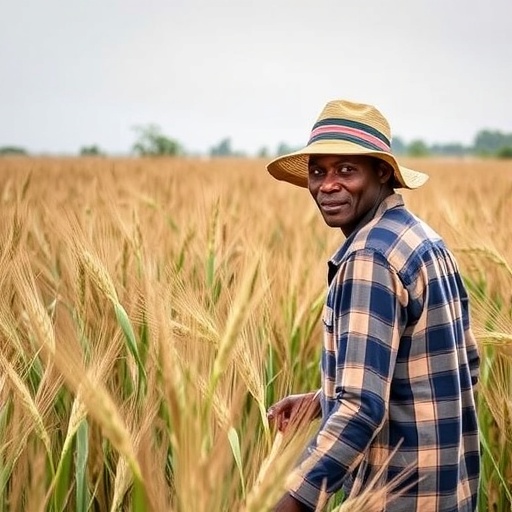
In the rich agricultural landscapes of Ethiopia, a significant shift in wheat production has garnered the attention of agricultural researchers and policymakers. The study conducted by Bekele and Worku investigates the intricate determinants influencing smallholder farmers’ choices of wheat seed sources, particularly within the Gedeo Zone of Southern Ethiopia. This region, known for its unique agro-climatic conditions and cultural practices, serves as a pertinent case study for understanding the dynamics of seed selection in the context of smallholder agriculture.
The importance of seed choice cannot be overstated, as it plays a crucial role in determining crop yield and overall agricultural productivity. In Ethiopia, where smallholder farmers dominate the agricultural sector, selecting the right seed variety is vital to ensure food security and enhance livelihoods. The research by Bekele and Worku aims to illuminate the various factors that influence these critical decisions, thus contributing to the broader discourse on sustainable agricultural practices.
One primary aspect that the researchers explore is the farmers’ access to different seed sources. In many rural communities, the proximity of seed suppliers can significantly affect the decision-making process. Farmers often rely on local markets and social networks to obtain seeds, which can both enhance the availability of desired varieties and shape preferences based on local knowledge and successful past experiences. Understanding this accessibility is essential to develop effective agricultural extension services and support systems.
Moreover, the study delves into the role of socio-economic factors that impact seed choice. Variables such as income level, education, and household size could greatly affect the decisions of farmers regarding which seed source to utilize. For instance, more affluent farmers may opt for hybrid seeds that promise higher yields, while those with limited resources may stick to traditional seed varieties due to affordability considerations. By analyzing these socio-economic parameters, Bekele and Worku provide insights into the underlying motivations that guide farmers’ seed choices.
The research also highlights the significance of traditional knowledge and cultural practices in seed selection. In the Gedeo Zone, farmers possess a wealth of indigenous knowledge regarding crop cultivation and seed preservation, which often influences their preferences for certain varieties over others. The respect for local seeds and the cultural significance attached to them remain strong, underscoring the need to consider these cultural dimensions when addressing agricultural modernization and seed system interventions.
Environmental factors represent another critical dimension of the study, as the local climate has direct implications for crop performance. Farmers may gravitate toward specific seed varieties that are more resilient to local adverse conditions, including droughts or pest infestations. By identifying these environmental factors, the research underscores the necessity for adaptive measures and the promotion of climate-resilient seed varieties to enhance food security amid changing climatic conditions.
Importantly, the study also examines the influence of government policies and agricultural programs on seed choice. In Ethiopia, various initiatives have been established to improve the accessibility of improved seed varieties to smallholder farmers. However, the effectiveness of these policies can vary based on implementation and local contexts. The researchers advocate for policy frameworks that are more attuned to the realities faced by farmers on the ground, ensuring that the voices and experiences of these smallholders are at the forefront of agricultural policy design.
Another compelling aspect of the research involves the integration of market dynamics into the seed selection framework. The interplay between supply and demand, as well as market prices for different seed varieties, significantly shapes farmers’ decisions. Smallholders often seek to balance risk and return when choosing seed sources, making market flows and price stability key components of their decision-making process. This analysis provides a robust understanding of how market-related factors interweave with individual farmer preferences and choices.
In discussing potential solutions for enhancing seed choice among smallholder farmers, the research suggests the need for increased investment in seed systems and local seed banks. Strengthening these systems can provide farmers with better access to a diverse range of seed varieties that are suited to their specific needs and environmental conditions. The establishment of local seed cooperatives may further empower farmers, fostering collaboration and mutual support in seed sourcing and sharing.
Collaboration between different stakeholders, including farmers, local governments, and research institutions, emerges as a pivotal theme in the findings. By creating platforms for dialogue and knowledge sharing, these diverse groups can work together to enhance the understanding of local agricultural challenges and develop tailored solutions. Such collaborative efforts can also contribute to the ongoing education of farmers, helping them make informed decisions based on scientific advancements and local experimentation.
Ultimately, the research conducted by Bekele and Worku presents a comprehensive picture of the determinants affecting smallholder farmers’ wheat seed source choices in the Gedeo Zone. By systematically dissecting the various socio-economic, cultural, environmental, and policy-related factors at play, the authors shed light on the complexity of agricultural decision-making processes. Their insights hold significant implications not only for Ethiopia but for smallholder farming systems worldwide, as they underscore the necessity of a nuanced and context-specific approach to improving agricultural productivity and resilience.
As the world grapples with the challenges of food security and climate change, understanding the factors shaping seed source choices becomes paramount. The findings from this research can serve as a pivotal resource for developing strategies that empower farmers, promote local seed systems, and ultimately enhance agricultural sustainability in regions like the Gedeo Zone.
In conclusion, the study reflects a deep commitment to bridging the gap between research, policy, and practice in agriculture. It underscores the vital need for continued research and dialogue, advocating for a holistic approach that prioritizes the voices of smallholder farmers. The path forward must be inclusive, adaptive, and rooted in the realities of those who feed the world.
Subject of Research: Determinants of smallholder farmers’ wheat seed source choices in Gedeo Zone, Southern Ethiopia.
Article Title: Determinants of smallholder farmers’ wheat seed source choices in Gedeo Zone, Southern Ethiopia.
Article References:
Bekele, M., Worku, Z. Determinants of smallholder farmers’ wheat seed source choices in Gedeo Zone, Southern Ethiopia. Discov Agric 3, 204 (2025). https://doi.org/10.1007/s44279-025-00378-2
Image Credits: AI Generated
DOI: 10.1007/s44279-025-00378-2
Keywords: wheat seed sources, smallholder farmers, Ethiopia, Gedeo Zone, agricultural productivity, seed choice determinants
Tags: agricultural productivity factorsagro-climatic influences on agricultureenhancing livelihoods through agriculturefood security in EthiopiaGedeo farmers insightslocal market access for farmersrural seed supply networksseed source determinantsseed variety importancesmallholder agriculture in Ethiopiasustainable farming practiceswheat seed selection