• HOME
  • NEWS
  • EXPLORE
    • CAREER
      • Companies
      • Jobs
    • EVENTS
    • iGEM
      • News
      • Team
    • PHOTOS
    • VIDEO
    • WIKI
  • BLOG
  • COMMUNITY
    • FACEBOOK
    • INSTAGRAM
    • TWITTER
Tuesday, November 24, 2026
BIOENGINEER.ORG
No Result
View All Result
  • Login
  • HOME
  • NEWS
  • EXPLORE
    • CAREER
      • Companies
      • Jobs
        • Lecturer
        • PhD Studentship
        • Postdoc
        • Research Assistant
    • EVENTS
    • iGEM
      • News
      • Team
    • PHOTOS
    • VIDEO
    • WIKI
  • BLOG
  • COMMUNITY
    • FACEBOOK
    • INSTAGRAM
    • TWITTER
No Result
View All Result
Bioengineer.org
No Result
View All Result
Home NEWS Science News Health

Chlamydia Effector CebN Targets Host Nuclear Factors to Disrupt STAT1 Localization

by
November 24, 2026
in Biology, Health
Reading Time: 2 mins read
0
Chlamydia Effector CebN Targets Host Nuclear Factors to Disrupt STAT1 Localization

Chlamydia Effector CebN Targets Host Nuclear Factors to Disrupt STAT1 Localization

Share on FacebookShare on TwitterShare on LinkedinShare on RedditShare on Telegram

Researchers investigating the obligate intracellular pathogen Chlamydia trachomatis have identified how a secreted bacterial effector protein targets host nuclear transport machinery to disrupt cellular defense mechanisms. Applying affinity purification-mass spectrometry to map host interaction partners for 21 secreted effectors, the team generated an interactome for the pathogen’s type III secretion system in the context of active infection.

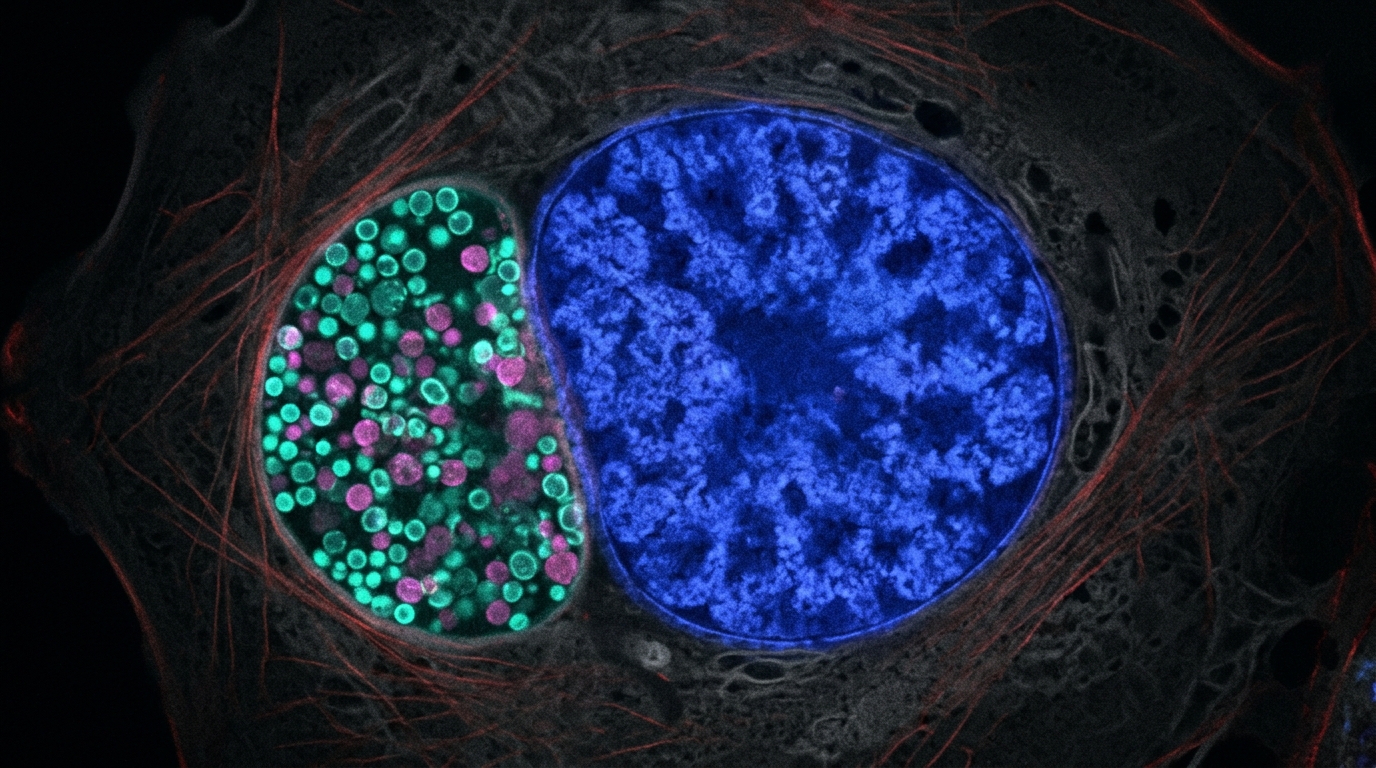
The study focused on the functional characterization of the effector CebN, also designated CT584. Experimental analyses demonstrated that the C-terminus of CebN directly binds multiple host nucleoporins and Rae1, which are factors previously implicated in viral immune evasion. Investigators observed that CebN localizes to the host nuclear envelope during infection, appearing on the nuclear membrane of infected cells as well as uninfected bystander cells.

Functional assays utilizing transfected CebN and Chlamydia trachomatis depletion mutants revealed that the effector protein is both necessary and sufficient to perturb the nuclear localization of STAT1. Depleting CebN impaired the pathogen’s capacity to alter STAT1 distribution, confirming the specific role of the bacterial protein in antagonizing this host signaling pathway at the nuclear pore.

Chlamydia trachomatis mutants lacking CebN exhibited reduced intracellular replication rates and formed significantly smaller inclusions than wild-type bacteria, demonstrating that the effector contributes critically to the pathogen’s intracellular survival and replicative niche.

To usurp host defenses and establish a replicative niche, obligate intracellular pathogens are tasked with remodeling the host cell using a discrete repertoire of effector proteins. For Chlamydia trachomatis, the identification of secreted proteins and their host targets, as well as the elucidation of their functions, has been particularly challenging given the inherent obstacles in applying genetics to an obligate intravacuolar pathogen.

Providing the first comprehensive type III secretion system effector and host interactome generated in the context of infection helps overcome these longstanding experimental hurdles. Defining these host interaction partners establishes a valuable foundation for investigating obligate intracellular pathogen biology and host cell remodeling. Together, these findings expand broader scientific understanding of chlamydia effector biology and highlight bacterial strategies for manipulating host defenses at the nuclear pore.

Subject of Research: Mechanism of Chlamydia trachomatis CebN effector in targeting host nuclear factors and perturbing STAT1 localization

Article Title: The Chlamydia trachomatis secreted effector CebN targets nucleoporins and Rae1 to antagonize STAT1 nuclear localization

Article References: Steiert, B. P., McCaslin, P. N., Elwell, C. A., Kevil-Yeager, J., Smith, P., Tijerina, X., Elliott, M. A., Huang, S., Delgado, Y., Ni, J., Faris, R., Andersen, S. E., Eldridge, Q., Imai, B. S., Arrington, J. V., Yau, P. M., Mirrashidi, K. M., Johnson, J. R., Verschueren, E., … Weber, M. M. (2026). The Chlamydia trachomatis secreted effector CebN targets nucleoporins and Rae1 to antagonize STAT1 nuclear localization. PLOS Pathogens, 22(11), e1014798. https://doi.org/10.1371/journal.ppat.1014798

Image Credits: AI Generated

DOI: 10.1371/journal.ppat.1014798

Keywords: Chlamydia trachomatis, CebN, CT584, Type III secretion system, STAT1, Nucleoporins, Rae1, Nuclear envelope, Bacterial effectors, Intracellular pathogen, Host-pathogen interactions, Affinity purification-mass spectrometry, Immune evasion, Nuclear localization, Intracellular replication, Pathogen biology

News Source: Drew Townsend. (November 24, 2026). Chlamydia Effector CebN Targets Host Nuclear Factors to Disrupt STAT1 Localization. Scienmag.

Tags: Affinity purification-mass spectrometryBacterial effectorsCebNChlamydia trachomatisCT584host-pathogen interactionsimmune evasionIntracellular PathogenIntracellular replicationnuclear envelopenuclear localizationnucleoporinspathogen biologyRae1STAT1type III secretion system
Share12Tweet7Share2ShareShareShare1

Related Posts

Mayaro Virus Genome Analysis Reveals Strong Translational Adaptation to Sylvatic Vectors

Mayaro Virus Genome Analysis Reveals Strong Translational Adaptation to Sylvatic Vectors

November 24, 2026
Comprehensive Review Details Molecular Drivers and Clinical Strategies in Liver Metastases

Comprehensive Review Details Molecular Drivers and Clinical Strategies in Liver Metastases

November 24, 2026

Letermovir Combination Clears Post-Transplant Cytomegalovirus in 88.9 Percent of Intolerant Patients

November 24, 2026

Predefined Sepsis Kidney Injury Phenotypes Show Group Patterns but Individual Instability

November 24, 2026

POPULAR NEWS

  • Military Telehealth Faces Critical Policy Gaps Despite Proven Clinical Value Across Forces

    Military Telehealth Faces Critical Policy Gaps Despite Proven Clinical Value Across Forces

    29 shares
    Share 12 Tweet 7
  • Air Pollutant Mixtures and Residential Greenness Linked to Thyroid Function in Depression

    29 shares
    Share 12 Tweet 7
  • Scoping Review Finds Insufficient Evidence That Vitamin D Relieves Menopausal Genitourinary Symptoms

    29 shares
    Share 12 Tweet 7
  • Neonatal Brain Injury Driven by Multicellular Crosstalk Rather Than Neurons Alone

    29 shares
    Share 12 Tweet 7

About

We bring you the latest biotechnology news from best research centers and universities around the world. Check our website.

Follow us

Recent News

Review Explains How Ecological Factors Determine Microbial Inoculant Success in Drylands

Mayaro Virus Genome Analysis Reveals Strong Translational Adaptation to Sylvatic Vectors

Comprehensive Review Details Molecular Drivers and Clinical Strategies in Liver Metastases

Subscribe to Blog via Email

Enter your email address to subscribe to this blog and receive notifications of new posts by email.

Join 89 other subscribers
  • Contact Us

Bioengineer.org © Copyright 2023 All Rights Reserved.

Welcome Back!

Login to your account below

Forgotten Password?

Retrieve your password

Please enter your username or email address to reset your password.

Log In
No Result
View All Result
  • Homepages
    • Home Page 1
    • Home Page 2
  • News
  • National
  • Business
  • Health
  • Lifestyle
  • Science

Bioengineer.org © Copyright 2023 All Rights Reserved.