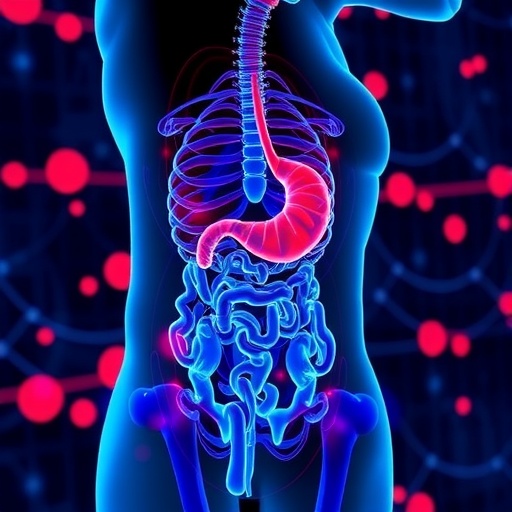
Artificial intelligence is moving deeper into the world of inflammatory bowel disease, where the sheer complexity of patient data has long challenged even experienced clinicians. A new review from researchers at University College Cork describes how machine-learning systems could help doctors combine endoscopic images, tissue samples, radiological scans, blood tests, medical records, microbiome profiles, and other molecular information. The goal is not to replace physicians, but to transform fragmented evidence into faster, more consistent, and increasingly personalized decisions for people living with Crohn’s disease and ulcerative colitis.
Inflammatory bowel disease, or IBD, is not a single uniform illness. Crohn’s disease can affect any part of the digestive tract and may cause inflammation, narrowing, fistulas, or deep ulcers, while ulcerative colitis primarily affects the colon and rectum. Symptoms can fluctuate widely, and the intensity of abdominal pain or diarrhea does not always match the amount of underlying inflammation. This mismatch makes objective assessment essential. Clinicians must often compare symptoms with endoscopic scores, microscopic findings, imaging results, inflammatory biomarkers, and treatment history before deciding whether a patient is improving or heading toward a flare.
The review, published in the Chinese Medical Journal on June 9, 2026, examines how artificial intelligence is being developed across nearly every stage of IBD care. Its authors describe a field progressing from experimental image-recognition systems toward multimodal platforms capable of analyzing different kinds of medical information together. “IBD is a compelling use case for AI, given its biological and clinical complexity,” says Professor Marietta Iacucci, who led the work. “Indeed, objective disease assessment is often challenging.” If validated in routine practice, these tools could help move IBD treatment away from generalized strategies and toward precision medicine.
Endoscopy is one of the most immediate areas of opportunity. During colonoscopy or enteroscopy, clinicians inspect the intestinal lining for erythema, ulceration, bleeding, and loss of normal vascular patterns. They then translate these observations into disease-activity scores, such as the Mayo Endoscopic Score for ulcerative colitis or the Simple Endoscopic Score for Crohn’s disease. Although these scoring systems improve communication, interpretation can vary between observers and may be influenced by fatigue, training, image quality, and clinical experience. Deep-learning models, particularly convolutional neural networks trained on labeled images and videos, can identify visual patterns associated with inflammation and assign standardized severity estimates.
In ulcerative colitis, several computer-vision systems have been tested for recognizing active inflammation and mucosal healing. Some models analyze individual frames, while others process full endoscopic videos to reduce the risk that important findings are missed. In Crohn’s disease, artificial intelligence has shown particular promise in capsule endoscopy, in which a small camera travels through the gastrointestinal tract and generates hours of footage. Algorithms can flag likely ulcers, bleeding, edema, strictures, and other lesions, allowing specialists to focus their attention on suspicious segments instead of reviewing every frame with equal intensity. This could shorten reading times while preserving diagnostic accuracy, although performance still depends on the data used to train the system.
AI is also being applied to histology, the microscopic examination of intestinal biopsies. Pathologists evaluate immune-cell infiltration, epithelial injury, crypt abnormalities, and other features that reveal whether inflammation persists beneath the surface. Histological remission has become increasingly important because microscopic healing may provide information about future relapse risk even when symptoms have improved. Digital pathology systems can analyze high-resolution slide scans, locate relevant tissue regions, count inflammatory cells, measure structural changes, and generate quantitative activity estimates. Combining these measurements with endoscopic findings could offer a more complete definition of intestinal healing than either method alone.
Medical imaging provides another window into disease that cannot be reached through conventional endoscopy. Magnetic resonance enterography, computed tomography enterography, and intestinal ultrasound can reveal inflammation in the small bowel, bowel-wall thickening, strictures, penetrating complications, and changes outside the mucosal surface. Machine-learning models can be trained to recognize patterns of active inflammation or fibrosis and to extract numerical features that are difficult to assess consistently by eye. Because intestinal ultrasound is portable and avoids radiation, AI-assisted interpretation could eventually support repeated monitoring in clinics or even community settings. For patients with Crohn’s disease, this noninvasive capability may be particularly valuable when disease is located beyond the reach of a colonoscope.
The most ambitious applications involve multimodal AI. Instead of examining a scan or laboratory result in isolation, these systems could combine clinical symptoms, endoscopic and histological scores, imaging measurements, fecal calprotectin, blood biomarkers, medication history, genetic information, microbiome composition, and other omics data. Statistical learning models may then identify patterns associated with treatment response, rapid relapse, complications, or the need for surgery. In principle, such systems could help predict which patient is most likely to benefit from a biologic therapy, who requires intensified monitoring, and who may safely follow a less intensive care pathway. The same approach could help researchers discover new disease subtypes and identify targets for drug development.
The review also highlights the expanding role of digital health. Natural-language processing can extract disease activity, medication changes, and adverse events from electronic health records, while large language models may help summarize complex patient histories or support education. Wearable devices and home-based testing could provide continuous information about sleep, heart rate, activity, symptoms, and biomarkers between clinic visits. Rather than waiting for a severe flare to become obvious, clinicians might receive earlier warnings when several weak signals begin to change together. Such systems could make care more proactive, but they must be designed around patient needs and integrated carefully into clinical workflows to avoid creating new streams of alarm and data overload.
Despite the excitement, the review makes clear that AI is not ready to function as an autonomous gastroenterologist. Many published models were trained on small, retrospective datasets from single hospitals, and their results may not generalize across countries, scanners, endoscopy equipment, patient demographics, or disease subtypes. Differences in image quality and labeling standards can weaken performance, while hidden biases may cause systems to work less accurately for underrepresented populations. Privacy, cybersecurity, informed consent, explainability, and responsibility for errors also require careful attention. The authors argue that progress depends on large multicenter datasets, external validation, standardized outcome definitions, transparent reporting, and close collaboration among patients, clinicians, data scientists, regulators, and technology developers. Used in that framework, AI could become a powerful clinical aid—helping doctors interpret complex evidence, detect disease earlier, and deliver more precise IBD care without displacing human judgment.
Subject of Research: Artificial intelligence applications in inflammatory bowel disease care
Article Title: Artificial intelligence in inflammatory bowel disease: From current evidence, clinical translation, and the road to precision medicine
News Publication Date: June 9, 2026
Web References: https://doi.org/10.1097/CM9.0000000000004170
References: Chinese Medical Journal; DOI: 10.1097/CM9.0000000000004170
Image Credits: www.ilmicrofono.it via Openverse
Keywords: artificial intelligence, inflammatory bowel disease, Crohn’s disease, ulcerative colitis, precision medicine, endoscopy, histology, medical imaging, machine learning, digital health, multi-omics, clinical decision support
Tags: advances in medical imaging and AI in gastrointestinal disordersAI in inflammatory bowel disease managementAI-based decision support systems for IBDchallenges in objective assessment of IBD inflammationintegration of endoscopic images and molecular data in IBD diagnosismachine learning for Crohn’s disease and ulcerative colitismicrobiome profiling in IBD managementpersonalized treatment strategies for inflammatory bowel diseaserole of radiological scans and blood tests in IBD assessmentuse of AI to predict IBD flare-ups