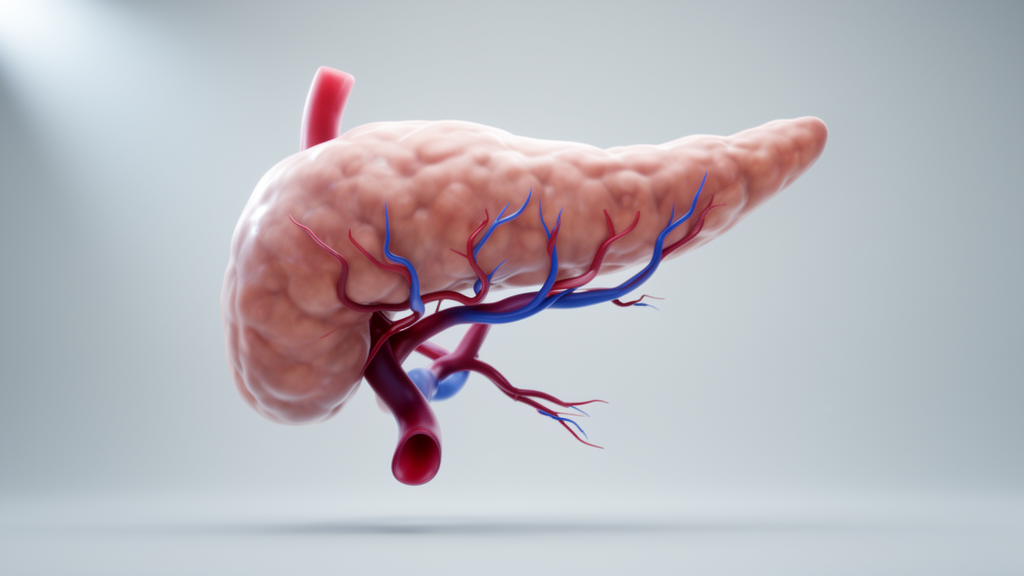
Deep in the abdomen, the pancreas sits pressed against some of the most important plumbing in the human body. When pancreatic disease strikes, it can silently choke off the veins that drain the spleen and stomach, creating a stealthy form of high blood pressure in the portal venous system that has long flown under the clinical radar. Now, a large panel of Chinese specialists has issued the first comprehensive consensus on how to detect and manage this condition, known as pancreatic portal hypertension, in a guideline published open access in BMC Medicine.
Pancreatic portal hypertension is a distinct type of portal hypertension caused by various pancreatic diseases or by pancreatic surgery. Unlike the far more common portal hypertension driven by cirrhosis of the liver, this variant arises when inflammation, cysts, tumors, or scarring in the pancreas compress or obstruct the splenic vein and neighboring splanchnic vessels. Blood that cannot drain through its usual route finds alternative channels, engorging vessels around the stomach and esophagus and enlarging the spleen. The result is a condition that mimics liver disease on the surface but has an entirely different anatomy and, crucially, a different treatment logic.
The clinical significance of the new consensus lies partly in a quiet epidemiological shift. According to the guideline authors, the detection rate of pancreatic portal hypertension has steadily increased in recent years with the widespread application of advanced imaging techniques and endoscopy. Computed tomography and magnetic resonance imaging now routinely capture the pancreatic region in exquisite detail, while endoscopic ultrasound allows physicians to peer directly at the vessels surrounding the pancreas. Diseases that once went unrecognized are now being identified with growing frequency, making a standardized management framework increasingly urgent.
Yet the condition remains notoriously difficult to catch early. The consensus panel notes that the clinical manifestations of pancreatic portal hypertension are often insidious, compromising early identification. Patients may carry the vascular changes for years without symptoms, and the first warning signs frequently emerge only at an advanced stage. By that point, some complications, such as splenomegaly and upper gastrointestinal bleeding, have already taken hold. Bleeding from engorged gastric varices can be dramatic and life threatening, while an enlarged spleen can trap platelets and complicate the broader management of the underlying pancreatic disease.
To build the guideline, the Chinese Society of Gastroenterology of the Chinese Medical Association invited a panel of skilled experts to participate in a Delphi consensus process, systematically reviewing and discussing the available evidence on the causes, risk factors, clinical manifestations, diagnosis, therapy, and prognostic assessment of pancreatic portal hypertension. The Delphi method is a structured technique for extracting reliable group judgment from a large panel: experts answer questionnaires independently, the results are aggregated and fed back, and the process repeats until statements stabilize. After three rounds of questionnaire surveys and votes, the panel formulated 19 consensus statements to provide clinical guidance on the diagnosis and management of the condition.
The scope of the consensus is deliberately broad. By covering etiology, risk factors, clinical presentation, diagnostic strategy, therapeutic options, and prognostic assessment in a single document, the guideline fills a gap that existing publications on pancreatic diseases or portal hypertension had left open. Although the concept of pancreatic portal hypertension has been recognized in existing guidelines and consensus documents on the management of pancreatic diseases or portal hypertension, its management strategy had never been comprehensively summarized. Clinicians confronting a patient with pancreatic disease and unexplained gastric varices or splenic enlargement have had to piece together guidance from scattered sources, and the new consensus aims to end that improvisation.
Technically, the diagnostic challenge centers on distinguishing pancreatic portal hypertension from cirrhotic portal hypertension and from other causes of splanchnic vein thrombosis. Cross-sectional imaging plays the decisive role: contrast-enhanced computed tomography and magnetic resonance imaging can reveal the obstructing pancreatic lesion, the occluded or compressed splenic vein, and the collateral vessels that betray the redirected blood flow. Endoscopic evaluation identifies the varices that carry bleeding risk, while laboratory findings such as thrombocytopenia from hypersplenism can provide supporting clues. The consensus framework gives clinicians a structured pathway for assembling these pieces into a confident diagnosis, even when the liver itself is entirely healthy.
On the therapeutic side, the management logic differs fundamentally from that of cirrhotic portal disease. Because the obstruction is often localized to the splenic vein, treating the underlying pancreatic lesion can sometimes restore normal venous drainage, and interventions aimed at the vascular obstruction itself, including endovascular approaches, have been explored in the literature. The consensus statements address how to weigh bleeding risk against the risks of intervention, how to manage acute upper gastrointestinal bleeding when it occurs, and how to coordinate vascular care with the treatment of the primary pancreatic condition, whether that is acute pancreatitis, chronic pancreatitis, autoimmune pancreatitis, or a pancreatic tumor.
The panel was large and geographically diverse, drawing gastroenterologists, endoscopists, interventional radiologists, hepatobiliary surgeons, and intensive care specialists from major hospitals across China, from Shenyang in the northeast to Chengdu, Shanghai, Guangzhou, and Xi’an. Corresponding authors include Xingshun Qi of the General Hospital of Northern Theater Command, Hao Wu and Chengwei Tang of West China Hospital, Sichuan University, and Xiaozhong Guo of the General Hospital of Northern Theater Command. Four junior researchers, Xingshun Qi, Yuhang Yin, Zhiyin Huang, and Yuzheng Zhuge, contributed equally to the work, which was partially supported by the National Key R&D Program of China.
The methodological rigor of the consensus reflects modern guideline standards. The panel employed structured evidence frameworks, including PICO and PECO question formats for framing clinical questions, and used the GRADE system for grading the quality of evidence behind each recommendation. Reporting followed the RIGHT checklist for practice guidelines, and the document was appraised with the AGREE II instrument. Literature searches spanned Chinese databases such as CNKI and VIP alongside international sources, ensuring that both Chinese clinical experience and global evidence informed the final statements. The authors declare no competing interests, and the guideline is published under a Creative Commons license allowing free access for clinicians worldwide.
For the international medical community, the significance of the consensus extends beyond China’s borders. Pancreatic portal hypertension is a global condition, arising wherever pancreatitis, pseudocysts, tumors, or pancreatic surgery compromise the splenic vein, and clinicians on every continent face the same diagnostic and therapeutic dilemmas. A comprehensive, openly available framework for the causes, risk factors, clinical manifestations, diagnosis, therapy, and prognostic assessment of the disease gives physicians everywhere a reference point for building their own local protocols. As advanced imaging continues to reveal more cases that once went undetected, the demand for such standardized guidance will only grow, and the 19 statements now offer a foundation that future international guidelines can refine and extend.
Subject of Research: Medicine
Article Title: Chinese consensus on the management of pancreatic portal hypertension
Article References: Qi, X., Yin, Y., Huang, Z., Zhuge, Y., Cai, S., Chen, M., Chen, P., Chen, S., Chen, W., Ding, Z., Du, Y., Guo, G., Guo, W., He, F., He, W., Hu, S., Huang, L., Ke, L., Kong, D., … Tang, C. (2026). Chinese consensus on the management of pancreatic portal hypertension. BMC Medicine. https://doi.org/10.1186/s12916-026-05289-7
Image Credits: AI Generated
DOI: 10.1186/s12916-026-05289-7
Keywords: pancreatic portal hypertension, portal hypertension, consensus, gastrointestinal bleeding, splenomegaly, BMC Medicine, Delphi, pancreatic disease, Chinese, management, pancreatic, portal
News Source: Ophelia Keating. (October 16, 2026). Chinese Experts Issue First Comprehensive Consensus on Pancreatic Portal Hypertension. Scienmag.