


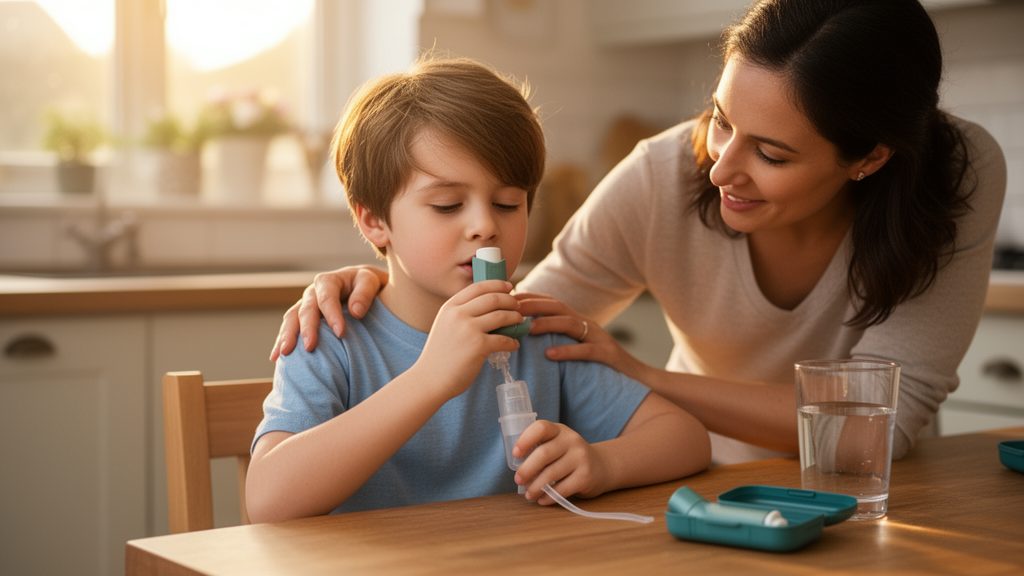
Children and adolescents with asthma aged 8 to 18 years report a moderate level of confidence in managing their own disease, according to a cross-sectional study conducted in 2025 at the outpatient asthma clinic of Ekbatan Educational and Medical Center in Hamadan, Iran. The study, published in BioPsychoSocial Medicine, assessed both asthma self-efficacy and the factors that children themselves perceive as limiting their ability to manage the condition, an approach its authors say fills a gap in a literature dominated by evaluations of educational interventions rather than simultaneous measurement of confidence and barriers.
The research team, led by Raheleh Shanazari with colleagues including Fatemeh Gholamzadeh, Mojgan Safari, Younes Mohammadi and Arash Khalili, recruited 100 children with physician-confirmed allergic asthma. In total, 137 children were screened for eligibility; 31 did not meet the inclusion criteria and six questionnaires were removed because more than 20 percent of their data were missing. To be included, participants needed a diagnosis confirmed by a pediatric allergist based on clinical history, spirometry and/or laboratory assessment, at least six months since diagnosis, current use of inhaled asthma medication, and the ability to complete the questionnaires, with written informed consent from a parent or guardian and assent from the child. Children with other chronic pulmonary diseases such as cystic fibrosis, immunodeficiency disorders, or severe cognitive impairment were excluded.
The participants had a mean age of 12.45 years with a standard deviation of 3.05, and 65 percent were male. The mean duration of asthma was 2.25 years. Nearly half of the children, 48 percent, reported no school absenteeism in the previous month, while 26 percent reported more than three days of absence. Forty-five percent reported no asthma attacks in the previous month, and 26 percent reported two or more attacks. A family history of asthma was present in 43 percent of households. Because the center is a tertiary referral clinic, probability-based random sampling was not feasible; the authors used consecutive sampling of all eligible patients attending the clinic during the study period and acknowledge that referral-center recruitment may affect generalizability.
Self-efficacy was measured with a researcher-developed 12-item scale covering two subscales, asthma attack prevention and asthma attack management, with responses on a five-point Likert scale yielding total scores from 12 to 60. The instrument was validated by a panel of 10 experts in pediatric nursing and allergy, exploratory factor analysis supported its two-factor structure, and Cronbach’s alpha coefficients were 0.85 for the total scale, 0.78 for prevention and 0.81 for management. Perceived barriers were assessed with a separate researcher-developed 16-item questionnaire spanning medication-related, environmental, behavioral and emotional domains, scored from 16 to 64, with content validity confirmed by the same expert panel and a pilot Cronbach’s alpha of 0.80.
The mean self-efficacy score was 28.56 with a standard deviation of 4.96, ranging from 16 to 39, which corresponds to 47.6 percent of the maximum attainable score and indicates a moderate level of confidence. The mean limiting factors score was 30.09 with a standard deviation of 5.26, ranging from 18 to 44, corresponding to 47.0 percent of the maximum and indicating relatively low perceived barriers. Under the scoring interpretation for the barriers questionnaire, values below 50 percent of the maximum indicate mild barriers, so the group average fell within the mild range.
Statistical analysis in SPSS version 22 included descriptive statistics, Spearman correlation and multiple linear regression, with significance set at p less than 0.05. Correlation analysis revealed a small but statistically significant positive association between limiting factor scores and the frequency of asthma attacks, with r equal to 0.197 and p equal to 0.049. This suggests that children who experienced more exacerbations also reported greater perceived barriers to disease management. Neither school absenteeism nor medication use frequency was significantly associated with self-efficacy or limiting factor scores.
The regression model identified two variables significantly associated with self-efficacy. Longer asthma duration predicted higher self-efficacy, with a standardized coefficient of 0.230 and p equal to 0.035, while paternal education level showed a negative association, with a coefficient of minus 0.339 and p equal to 0.048, meaning lower paternal educational level was linked to reduced self-efficacy in the child. Maternal education, age and sex were not significantly associated. Multicollinearity diagnostics were acceptable, with variance inflation factors below 5 for all variables. The authors interpret the disease-duration finding through Bandura’s mastery experience framework, proposing that children with longer disease duration may gradually acquire greater confidence through accumulated experience managing their condition, while cautioning that the cross-sectional design cannot establish causality.
Item-level analysis of the barriers questionnaire showed that more than half of the participants reported moderate or high levels of barriers related to disease knowledge, medication concerns, healthcare access and misconceptions about asthma. Limited family support was reported by 41 percent of participants. The most commonly reported obstacles included insufficient disease-related knowledge, concerns about medication side effects and challenges in treatment follow-up, while family support emerged as a key facilitator of self-efficacy. The authors note that these barrier domains closely align with themes reported in international systematic reviews, which have identified knowledge deficits, medication beliefs, family relationships and the quality of engagement with healthcare systems as key determinants of pediatric asthma self-management.
The discussion of the association between perceived barriers and attack frequency is deliberately cautious. The authors describe the correlation as weak in magnitude but potentially clinically relevant, suggesting that recurrent symptoms and perceived barriers may influence each other over time, in line with previous studies linking forgetfulness, negative medication beliefs, social stigma around inhaler use and reduced adherence with increased symptom burden. They emphasize, however, that the cross-sectional design does not permit conclusions about the direction or causality of this relationship. On the paternal education finding, the authors point to family-centered models in which parental health literacy and socioeconomic resources shape pediatric chronic disease outcomes, noting that in many cultural contexts fathers play a prominent role in healthcare decision-making and resource allocation, and that higher paternal education may facilitate better understanding of treatment recommendations and greater support for the child’s self-management.
The study carries several limitations that the authors spell out explicitly. The cross-sectional design precludes temporal or causal conclusions. Recruitment from a single tertiary referral center may limit generalizability, since children managed at such centers may differ in disease severity, healthcare access and socioeconomic characteristics from those treated in primary or secondary settings. Important psychosocial factors such as anxiety, depression and peer relationships were not assessed, self-reported questionnaires may have introduced response and social desirability biases, and the researcher-developed instruments, although showing acceptable psychometric properties, require further validation in larger and more diverse populations. The authors call for future multicenter longitudinal studies incorporating additional psychosocial and clinical variables. In the meantime, they argue, the findings support integrating family-centered education, correction of medication misconceptions, attention to families with lower educational levels, and structured nursing-led support into routine pediatric asthma care, complemented by school-based and digital strategies that previous reviews have found promising.
Subject of Research: Self-efficacy and its limiting factors among children with asthma aged 8 to 18 years
Article Title: Evaluation of self-efficacy and its limiting factors among children with asthma aged 8–18 years
Article References: Shanazari, R., Gholamzadeh, F., Safari, M., Mohammadi, Y., & Khalili, A. (2026). Evaluation of self-efficacy and its limiting factors among children with asthma aged 8–18 years. BioPsychoSocial Medicine, 20(1), Article 18. https://doi.org/10.1186/s13030-026-00366-y
Image Credits: AI Generated
DOI: 10.1186/s13030-026-00366-y
Keywords: asthma, self-efficacy, children, adolescents, self-management, cross-sectional study, family support, paternal education, medication adherence, nursing, Iran, pediatric chronic disease
News Source: Glenn Wilkins. (October 29, 2026). Children with Asthma Show Moderate Self-Efficacy, With Barriers Shaped by Family Factors. Scienmag.



