• HOME
  • NEWS
  • EXPLORE
    • CAREER
      • Companies
      • Jobs
    • EVENTS
    • iGEM
      • News
      • Team
    • PHOTOS
    • VIDEO
    • WIKI
  • BLOG
  • COMMUNITY
    • FACEBOOK
    • INSTAGRAM
    • TWITTER
Tuesday, September 1, 2026
BIOENGINEER.ORG
No Result
View All Result
  • Login
  • HOME
  • NEWS
  • EXPLORE
    • CAREER
      • Companies
      • Jobs
        • Lecturer
        • PhD Studentship
        • Postdoc
        • Research Assistant
    • EVENTS
    • iGEM
      • News
      • Team
    • PHOTOS
    • VIDEO
    • WIKI
  • BLOG
  • COMMUNITY
    • FACEBOOK
    • INSTAGRAM
    • TWITTER
  • HOME
  • NEWS
  • EXPLORE
    • CAREER
      • Companies
      • Jobs
        • Lecturer
        • PhD Studentship
        • Postdoc
        • Research Assistant
    • EVENTS
    • iGEM
      • News
      • Team
    • PHOTOS
    • VIDEO
    • WIKI
  • BLOG
  • COMMUNITY
    • FACEBOOK
    • INSTAGRAM
    • TWITTER
No Result
View All Result
Bioengineer.org
No Result
View All Result
Home NEWS Science News Health

Changes in gut microbiome alters rewarding effects of cocaine and cravings

Bioengineer by Bioengineer
August 3, 2023
in Health
Reading Time: 3 mins read
0
Drew Kiraly, M.D., Ph.D.
Share on FacebookShare on TwitterShare on LinkedinShare on RedditShare on Telegram

Changes in Gut Microbiome Alters Rewarding Effects of Cocaine and Cravings
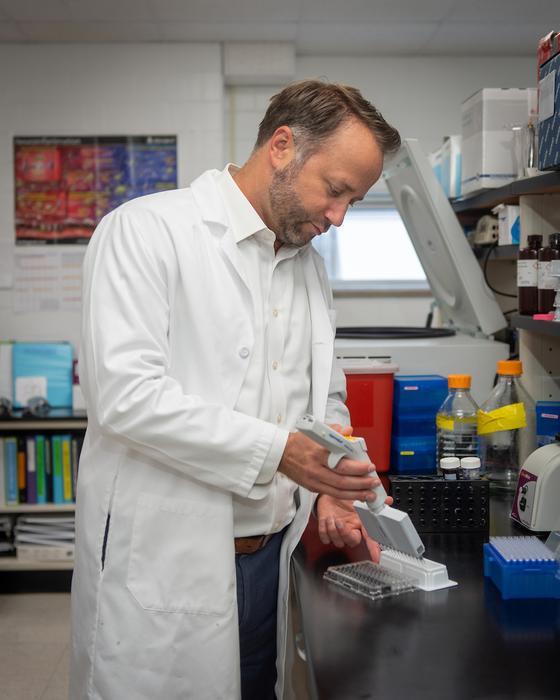
Drew Kiraly, M.D., Ph.D.

Credit: Wake Forest University School of Medicine

Changes in Gut Microbiome Alters Rewarding Effects of Cocaine and Cravings

WINSTON-SALEM, N.C. – Aug. 3, 2023 – According to the 2021 National Survey on Drug Use and Health, 4.8 million people (ages 12 and up) reported using cocaine within the previous 12 months, and 24,486 people died from an overdose involving cocaine. Because there are no FDA-approved medications for cocaine use disorder, there is an urgent need to develop therapeutic interventions.

In a new preclinical study from Wake Forest University School of Medicine, scientists provide the first evidence that changes in the gut microbiome have significant effects on cocaine use and cravings after withdrawal.

The study appears online in the journal Neuropsychopharmacology.

“In patients with a history of cocaine use disorder, there is a significant risk of relapse, and there are no effective medication treatments to reduce this risk. So, our study examines how the gut microbiome can impact drug seeking over time,” said Drew Kiraly, M.D., Ph.D., associate professor of physiology, pharmacology and psychiatry at Wake Forest University School of Medicine and Atrium Health Wake Forest Baptist. 

The gut microbiome refers to the population of trillions of bacteria that live in the gastrointestinal tract of humans and animals. The connection between the microbiome and good health is well established, but more research is needed on how changes in the microbiome impact cravings for cocaine.

For the study, the research team administered antibiotics in a rodent model to measure the behavioral effects of a reduced microbiome. They found that animals with a depleted microbiome took more cocaine and worked harder to seek drugs after abstinence. This suggests that the rewarding effects of cocaine were affected by the gut microbiome. In addition to the behavioral changes, the research team also found that microbiome depletion significantly changed important neurobiological markers in reward-related brain structures. 

The scientists also discovered that the effects of microbiome depletion could be reversed with the addition of molecules produced by beneficial bacteria in the gut microbiome that are important for brain health known as the short-chain fatty acids.

Kiraly said these findings provide an important foundation for future studies on specific microbial composition and how metabolite levels work on drug-seeking and other motivated behaviors.

“We might one day be able to target specific parts of the microbiome to help reduce drug relapse,” Kiraly said.

This research was supported by National Institutes of Health grants DA051551, DA044308, DA050906, DA053105 and NS124187.


Journal

Neuropsychopharmacology

DOI

10.1038/s41386-023-01661-w

Subject of Research

Animals

Article Title

Microbial short-chain fatty acids regulate drug seeking and transcriptional control in a model of cocaine seeking

Article Publication Date

2-Aug-2023
Share12Tweet8Share2ShareShareShare2

Related Posts

Wearable monitor improves diagnosis of heart rhythm disorders after fainting

August 31, 2026

Visualisation of magnetic field-induced nanoparticle clusters and mechanical property changes in a breast phantom for inductive moderate hyperthermia

August 31, 2026

Multidisciplinary intervention in frail elderly patients with cardiovascular diseases: a multicentre, single-blinded, randomised controlled trial

August 31, 2026

Machine Learning Model Development and Evaluation for Non-contact Lower Limb Injury Risk Prediction in Elite Male Rugby Union: A Multi-team, Multi-season Analysis

August 31, 2026

POPULAR NEWS

  • β-Sitosterol from Ipomoea carnea Jacq. As a promising anti-inflammatory agent: Evidence from in silico modeling and in vitro validation

    29 shares
    Share 12 Tweet 7
  • Design, fabrication and characterization of a wearable Fiber Bragg grating sensor for cardiorespiratory monitoring using finger plethysmography

    29 shares
    Share 12 Tweet 7
  • KAIST opens the era of industrial-scale microbial foods, proposing growth strategies for the next-generation protein market

    29 shares
    Share 12 Tweet 7
  • Virologist awarded $2 million NIH grant to investigate how virus-infected cells live and die

    29 shares
    Share 12 Tweet 7

About

We bring you the latest biotechnology news from best research centers and universities around the world. Check our website.

Follow us

Recent News

β-Sitosterol from Ipomoea carnea Jacq. As a promising anti-inflammatory agent: Evidence from in silico modeling and in vitro validation

Design, fabrication and characterization of a wearable Fiber Bragg grating sensor for cardiorespiratory monitoring using finger plethysmography

KAIST opens the era of industrial-scale microbial foods, proposing growth strategies for the next-generation protein market

Subscribe to Blog via Email

Success! An email was just sent to confirm your subscription. Please find the email now and click 'Confirm' to start subscribing.

Join 85 other subscribers
  • Contact Us

Bioengineer.org © Copyright 2023 All Rights Reserved.

Welcome Back!

Login to your account below

Forgotten Password?

Retrieve your password

Please enter your username or email address to reset your password.

Log In
No Result
View All Result
  • Homepages
    • Home Page 1
    • Home Page 2
  • News
  • National
  • Business
  • Health
  • Lifestyle
  • Science

Bioengineer.org © Copyright 2023 All Rights Reserved.