


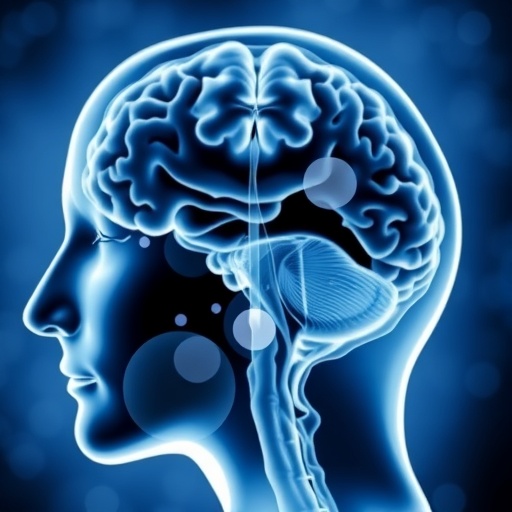
In a groundbreaking study poised to redefine our understanding of Parkinson’s disease (PD), researchers have unveiled compelling evidence that cerebrospinal fluid (CSF) flow dynamics are significantly altered in individuals suffering from this neurodegenerative disorder. The study, published in the prestigious journal npj Parkinson’s Disease, delves deep into the intricate mechanisms governing CSF circulation and its implications for PD pathology. This investigation represents a vital stride in unraveling the complex interplay between neural degeneration and fluid dynamics within the central nervous system.
Cerebrospinal fluid is a clear, colorless liquid that cushions the brain and spinal cord, plays a crucial role in nutrient delivery, and facilitates the removal of metabolic waste. The proper flow and regulation of CSF are indispensable for maintaining brain homeostasis. Any disruption in its dynamics can have profound consequences, potentially exacerbating neurodegenerative processes. Until recently, the direct involvement of CSF flow disturbances in Parkinson’s disease remained relatively unexplored, making this research a paradigm shift in neurological science.
The team of neuroscientists led by Zhou, Hong, and Chen employed advanced imaging technologies, including phase-contrast magnetic resonance imaging (PC-MRI) and diffusion tensor imaging (DTI), to quantify CSF flow parameters within the ventricles and subarachnoid space of PD patients. Their approach enabled the intricate mapping of fluid motion patterns, revealing a spectrum of deviations when compared to age-matched healthy controls. These deviations manifested as reductions in pulsatile flow amplitude and altered directional velocities, indicating compromised CSF circulation efficiency in Parkinson’s affected brains.
Neurodegenerative diseases like PD are marked by the accumulation of misfolded proteins, such as alpha-synuclein aggregates, which disrupt normal cellular function. The current findings suggest that impaired CSF flow could contribute to an insufficient clearance of these pathological proteins, fostering their accumulation and consequent neuronal damage. This hypothesis extends the traditional focus on intracellular pathology to include extraneuronal environments, emphasizing the importance of the brain’s fluid milieu in disease progression.
Importantly, the researchers identified that abnormalities in CSF flow were not uniform but exhibited regional variability, with the most pronounced impairments localized around the basal ganglia and brainstem – the primary sites afflicted in Parkinson’s disease. This regional specificity underscores the possibility that fluid dynamics disruptions might directly exacerbate the vulnerability of these neural circuits, further impairing motor and non-motor functions characteristic of PD.
The study also explored the relationship between CSF dynamics and clinical symptoms, uncovering correlations between decreased flow rates and the severity of motor deficits, as well as cognitive decline. These findings intimate that monitoring CSF flow parameters could emerge as a non-invasive biomarker for disease staging and prognosis, offering a novel avenue for patient stratification and tailored therapeutic interventions.
From a mechanistic standpoint, the authors propose that neuroinflammatory processes prevalent in PD might induce changes in perivascular spaces and aquaporin water channel function, thereby disrupting CSF circulation. Additionally, the degeneration of autonomic nervous system components controlling vascular pulsatility could further compromise CSF propulsion. This multifactorial model integrates vascular, immunological, and neurodegenerative pathways, painting a comprehensive picture of disease pathophysiology.
The implications of altered CSF dynamics extend to potential therapeutic innovations. Restoring or enhancing CSF flow might aid in the clearance of toxic metabolites, mitigating neuronal injury. Emerging technologies such as focused ultrasound and novel pharmacological agents targeting aquaporin channels or vascular health could be explored to normalize CSF circulation. Thus, the findings not only illuminate disease mechanisms but also ignite hope for novel treatment modalities.
Furthermore, this research invites a broader reevaluation of neurodegenerative conditions beyond Parkinson’s disease. The disturbances in CSF flow dynamics may represent a common pathogenic thread linking disorders like Alzheimer’s disease, Huntington’s disease, and multiple sclerosis. Cross-disease investigations inspired by these findings could spur the discovery of universal therapeutic targets aimed at preserving brain fluid homeostasis.
The study’s robust methodology, including longitudinal follow-ups, allowed the team to observe progressive CSF flow deterioration correlating with disease advancement over time. Such temporal data strengthen the argument that CSF dynamics may serve not only as a diagnostic marker but also as an indicator of disease trajectory, facilitating earlier interventions and improved patient outcomes.
Technological advancements were pivotal in this research, as the utilization of high-resolution imaging platforms and sophisticated computational fluid dynamics modeling provided an unprecedented window into live human brain fluid movements. These tools could soon become standard in clinical assessments, enhancing diagnostic precision and encouraging personalized medicine approaches in neurology.
Critically, these insights challenge the longstanding notion that neurodegeneration is solely a matter of intracellular dysfunction. Instead, they advocate for a holistic view encompassing extracellular components, including CSF and vascular elements. This paradigm shift may catalyze interdisciplinary collaborations, blending neuroscience, vascular biology, and fluid mechanics to tackle brain diseases more effectively.
The findings also raise intriguing questions about aging, as CSF flow naturally declines with age, potentially setting the stage for neurodegenerative vulnerabilities. Investigating lifestyle, genetic, or environmental factors that exacerbate this decline could yield preventative strategies aimed at maintaining CSF health and delaying disease onset in at-risk populations.
In conclusion, the study by Zhou, Hong, Chen, and colleagues represents a seminal contribution to the field of neurodegeneration, opening new research vistas and therapeutic opportunities centered around cerebrospinal fluid dynamics. As the scientific community continues to unravel the complexities of Parkinson’s disease, this work underscores the vital importance of considering fluid homeostasis in brain health and paves the way for innovations that may transform clinical care for millions worldwide.
Subject of Research: Alterations in cerebrospinal fluid flow dynamics in patients with Parkinson’s disease and their implications on disease progression and symptomatology.
Article Title: Alterations of cerebrospinal fluid flow dynamics in Parkinson’s disease.
Article References:
Zhou, C., Hong, H., Chen, Y. et al. Alterations of cerebrospinal fluid flow dynamics in Parkinson’s disease. npj Parkinsons Dis. (2026). https://doi.org/10.1038/s41531-025-01257-9
Image Credits: AI Generated
Tags: advanced imaging techniques in neurologybrain homeostasis and CSF regulationCerebrospinal fluid dynamics in Parkinson’s diseaseCSF flow alterations and implicationsdiffusion tensor imaging in Parkinson’s researchimplications of CSF flow disturbancesmetabolic waste removal in neurodegenerationneurodegenerative disorder researchneuroinflammation and cerebrospinal fluidParkinson’s disease pathology studiesphase-contrast MRI applications in neuroscienceZhou Hong Chen Parkinson’s study findings.



