• HOME
  • NEWS
  • EXPLORE
    • CAREER
      • Companies
      • Jobs
    • EVENTS
    • iGEM
      • News
      • Team
    • PHOTOS
    • VIDEO
    • WIKI
  • BLOG
  • COMMUNITY
    • FACEBOOK
    • INSTAGRAM
    • TWITTER
Friday, November 20, 2026
BIOENGINEER.ORG
No Result
View All Result
  • Login
  • HOME
  • NEWS
  • EXPLORE
    • CAREER
      • Companies
      • Jobs
        • Lecturer
        • PhD Studentship
        • Postdoc
        • Research Assistant
    • EVENTS
    • iGEM
      • News
      • Team
    • PHOTOS
    • VIDEO
    • WIKI
  • BLOG
  • COMMUNITY
    • FACEBOOK
    • INSTAGRAM
    • TWITTER
No Result
View All Result
Bioengineer.org
No Result
View All Result
Home NEWS Science News Health

Cellular Senescence Markers Linked to Localized Brain Alterations in Schizophrenia

by
November 8, 2026
in Health
Reading Time: 2 mins read
0
Cellular Senescence Markers Linked to Localized Brain Alterations in Schizophrenia

Cellular Senescence Markers Linked to Localized Brain Alterations in Schizophrenia

Share on FacebookShare on TwitterShare on LinkedinShare on RedditShare on Telegram

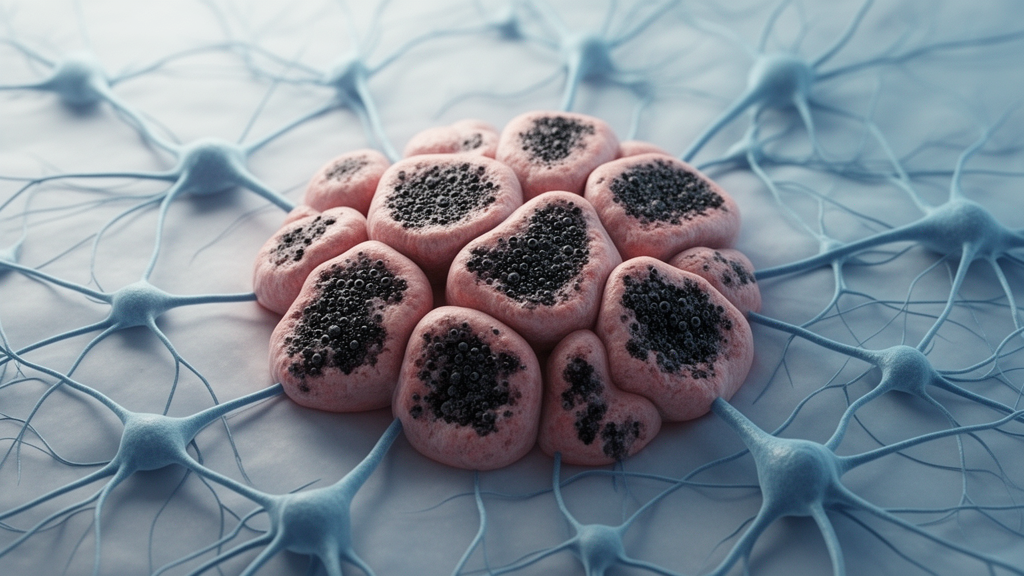
A study published in Translational Psychiatry has identified elevated markers of cellular senescence in individuals diagnosed with schizophrenia and major depressive disorder, alongside localized structural brain alterations in schizophrenia.

Individuals with schizophrenia and major depressive disorder may experience accelerated biological aging, a process potentially linked to cellular senescence and the senescence-associated secretory phenotype, or SASP. Although previous research reported an elevated SASP index—a composite biomarker-based measure—in major depressive disorder, its status in schizophrenia and its relationship with brain structure remained unclear prior to this investigation.

To investigate these questions, researchers evaluated whether the SASP index is elevated in schizophrenia and major depressive disorder and examined its potential associations with brain-predicted age difference, known as brain-PAD, as well as regional brain morphology. The study examined a total of 119 subjects, including 29 individuals with schizophrenia, 40 individuals with major depressive disorder, and 50 healthy controls, all of whom underwent both peripheral blood collection and magnetic resonance imaging scanning.

Across all participants, the researchers assessed the effects of diagnostic groups on SASP indices, finding a significant main effect of diagnostic group and significantly elevated SASP indices in both schizophrenia and major depressive disorder. When examining associations between age-adjusted SASP indices and brain-PAD within each diagnostic group, the team found no statistically significant associations in any group.

Exploratory analyses evaluating subcortical volumes, cortical thickness, and surface area identified significant negative associations in schizophrenia between SASP indices and the surface area of both the left transverse temporal gyrus and the right inferior frontal gyrus pars triangularis. Because these regions play pivotal roles in auditory and language processing alterations observed in schizophrenia, the findings suggest that SASP-related processes may contribute to the neural underpinnings of schizophrenia through localized, rather than global, alterations in brain structure.

Subject of Research: Cellular senescence and brain structure in schizophrenia and major depressive disorder

Article Title: Cellular senescence changes and their association with brain structure in schizophrenia and major depressive disorder

Article References: Okada, N., Seitz-Holland, J., Ikegame, T., Omileke, F., Kiyota, M., Shoji, E., Mori, S., Morita, S., Koshiyama, D., Satomura, Y., Koike, S., Jinde, S., Yagishita, S., Kamiya, K., Abe, O., Shenton, M. E., Kubicki, M., & Kasai, K. (2026). Cellular senescence changes and their association with brain structure in schizophrenia and major depressive disorder. Translational Psychiatry. https://doi.org/10.1038/s41398-026-04538-w

Image Credits: AI Generated

DOI: 10.1038/s41398-026-04538-w

Keywords: cellular senescence, schizophrenia, major depressive disorder, SASP index, brain structure, magnetic resonance imaging, biological aging, neuroimaging, Cellular, senescence, changes, association

News Source: Beatrice Stafford. (November 8, 2026). Cellular Senescence Markers Linked to Localized Brain Alterations in Schizophrenia. Scienmag.


Tags: Associationbiological agingbrain structurecellularCellular Senescencechangesmagnetic resonance imagingmajor depressive disorderneuroimagingSASP indexschizophreniaSenescence
Share12Tweet7Share2ShareShareShare1

Related Posts

Elite Floorball Goalkeepers Face High Burden of Lower Limb Overuse Injuries

Elite Floorball Goalkeepers Face High Burden of Lower Limb Overuse Injuries

November 20, 2026
Cellular Clearance Failures Drive Progressive Brain Degeneration Across Major Neurological Disorders

Cellular Clearance Failures Drive Progressive Brain Degeneration Across Major Neurological Disorders

November 20, 2026

Gamified Treadmill Biofeedback Matches Conventional Training Effects While Raising Cognitive Demands

November 20, 2026

Plyometric Training Improves Athlete Speed, Jumping, and Agility Across Multiple Sports

November 20, 2026

POPULAR NEWS

  • Biased Bubble Chain Navigation Helps Indoor Mobile Robots Accommodate Approaching Pedestrians

    Biased Bubble Chain Navigation Helps Indoor Mobile Robots Accommodate Approaching Pedestrians

    29 shares
    Share 12 Tweet 7
  • Thermophilic Fungus Engineered for High-Yield Bacterial Dipeptidyl Peptidase 4 Secretion

    29 shares
    Share 12 Tweet 7
  • Anterior Talar Osteotomy Corrects Equinus Deformity While Preserving Joint Congruence

    29 shares
    Share 12 Tweet 7
  • Biosensor Mouse Shows Mammary Defects Reversed by Estrogen and Genetic Crossing

    29 shares
    Share 12 Tweet 7

About

We bring you the latest biotechnology news from best research centers and universities around the world. Check our website.

Follow us

Recent News

Nanostructured Oxide Fillers Stabilize Ionic Conductivity in Eutectic Salt Composites

Elite Floorball Goalkeepers Face High Burden of Lower Limb Overuse Injuries

Cellular Clearance Failures Drive Progressive Brain Degeneration Across Major Neurological Disorders

Subscribe to Blog via Email

Enter your email address to subscribe to this blog and receive notifications of new posts by email.

Join 89 other subscribers
  • Contact Us

Bioengineer.org © Copyright 2023 All Rights Reserved.

Welcome Back!

Login to your account below

Forgotten Password?

Retrieve your password

Please enter your username or email address to reset your password.

Log In
No Result
View All Result
  • Homepages
    • Home Page 1
    • Home Page 2
  • News
  • National
  • Business
  • Health
  • Lifestyle
  • Science

Bioengineer.org © Copyright 2023 All Rights Reserved.