A prospective clinical study has revealed that perioperative structural remodeling between cellular organelles and distinct metabolic alterations are strongly associated with the risk of major limb amputation within twelve months after thrombectomy. Researchers investigated how physical interactions between mitochondria and the endoplasmic reticulum change during surgical reperfusion for acute limb ischemia, providing new insight into postoperative tissue outcomes in humans.
This prospective, single-center cohort study included 100 patients undergoing thrombectomy. Investigators obtained paired skeletal muscle biopsies immediately prior to blood flow restoration and again thirty to sixty minutes following reperfusion. In addition to tissue sampling, the protocol implemented serial blood draws and monitored participants across a twelve-month follow-up period to track long-term vascular recovery.
The primary clinical endpoint evaluated across the patient population was major amputation of the index limb within twelve months of the initial intervention. Secondary endpoints monitored over the same observation window encompassed overall patient mortality, secondary vascular reintervention, wound healing trajectories, and patient-reported health status measured via the VascuQol-6 questionnaire. Over the complete course of follow-up, twenty-seven individuals underwent major limb amputation, whereas seventy-three patients avoided major amputation, a group that included four patients who died without undergoing limb loss.
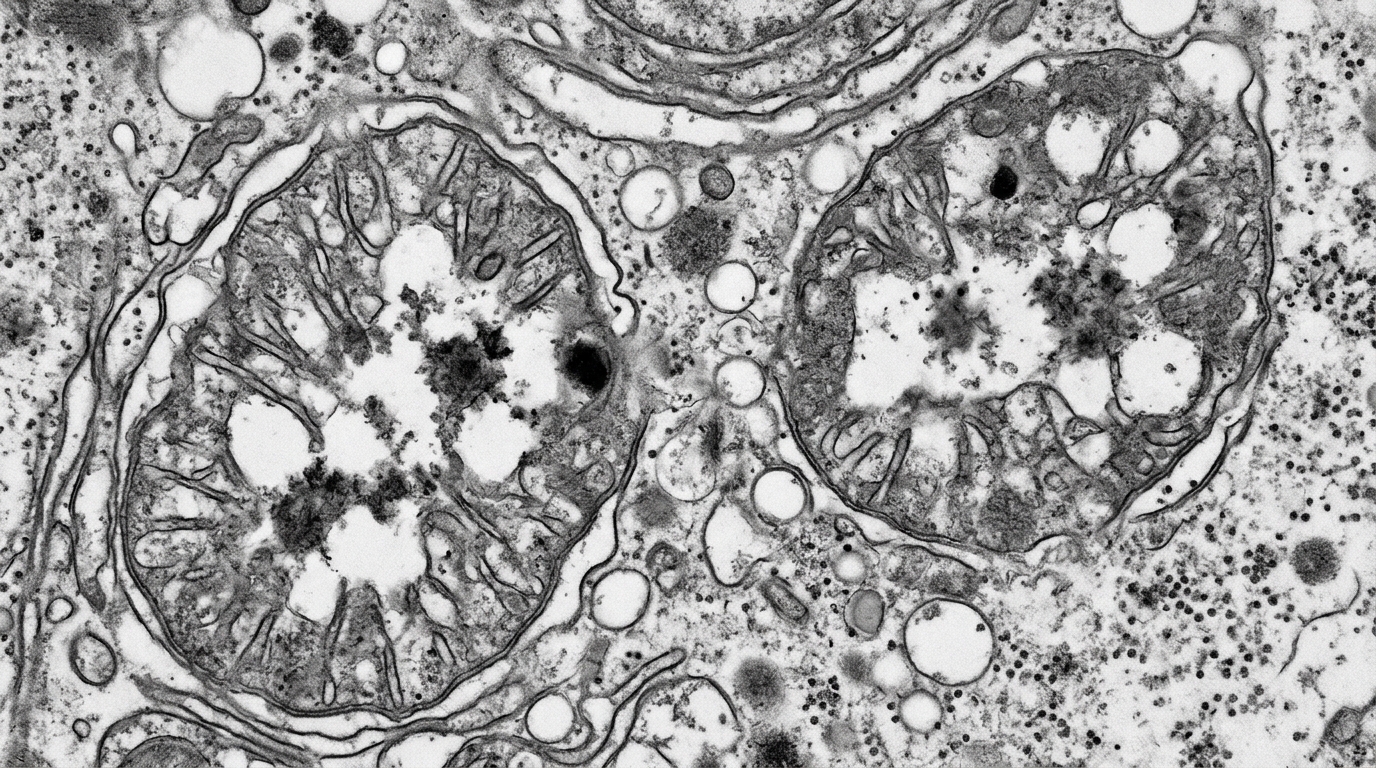
Analysis of cellular ultrastructure demonstrated that the mean perioperative increase in membrane contact length between mitochondria and the endoplasmic reticulum was significantly larger among patients who subsequently required major amputation. Specifically, contact length expanded by an average of 18.8 percentage points in the amputation cohort compared to 9.8 percentage points in individuals who retained their limbs, yielding a nominal p-value below 0.001. This structural expansion occurred alongside markedly greater perioperative increases in tissue lactate, mitofusin-2, the endoplasmic reticulum chaperone GRP78/BiP, and hypoxia-inducible factor 1-alpha.
Associations were explored using Firth penalized logistic regression in an exploratory five-predictor model. The final multivariable model incorporated patient diabetes status, baseline clinical presentation classified as Rutherford class IIb, symptom-to-reperfusion delay exceeding twelve hours, an organelle contact-length increase of ten percentage points or greater, and a twenty-four-hour circulating cell-free mitochondrial DNA level of at least 1,500 copies per microliter.
The resulting combined clinical and biomarker model demonstrated promising discrimination within the single-center study population. Statistical evaluation revealed an apparent area under the receiver operating characteristic curve of 0.847, with an associated 95 percent confidence interval spanning from 0.762 to 0.912. Following internal bootstrap validation, the adjusted area under the curve settled at 0.823, confirming consistent discriminatory ability across resampled cohorts.
The investigators concluded that perioperative changes in mitochondria–endoplasmic reticulum contacts and metabolic markers were associated with 12-month major amputation. The combined clinical and biomarker model showed promising discrimination within this cohort and may inform further study of postoperative risk assessment.
Subject of Research: Mitochondria-endoplasmic reticulum contact remodeling and metabolic markers in acute limb ischemia outcomes
Article Title: Mitochondria–endoplasmic reticulum contact remodeling and metabolic changes associated with 12-month major amputation after thrombectomy for acute limb ischemia
Article References: Pi, X., Li, D., & Cao, W. (2026). Mitochondria–endoplasmic reticulum contact remodeling and metabolic changes associated with 12-month major amputation after thrombectomy for acute limb ischemia. Frontiers in Physiology, 17, 2004761. https://doi.org/10.3389/fphys.2026.2004761
Image Credits: AI Generated
DOI: 10.3389/fphys.2026.2004761
Keywords: acute limb ischemia, thrombectomy, major amputation, ischemia-reperfusion injury, mitochondria-associated membranes, endoplasmic reticulum, skeletal muscle, metabolic remodeling, mitofusin-2, GRP78/BiP, HIF-1alpha, tissue lactate, cell-free mitochondrial DNA, Rutherford classification, penalized logistic regression, prospective cohort study
News Source: Drew Townsend. (November 25, 2026). Cellular Organelle Membrane Changes Linked to Major Amputation After Thrombectomy. Scienmag.