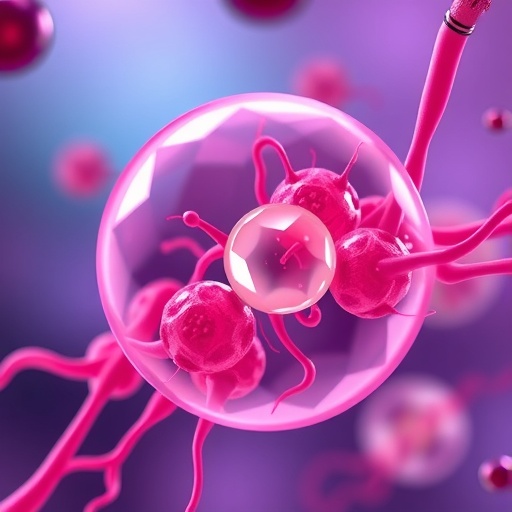
Penn State researchers have developed a microscopic “invisibility cloak” that may allow transplanted insulin-producing cells to function inside the body without being destroyed by the immune system. In experiments involving diabetic mice, the protective coating helped donor islets restore healthy blood sugar levels within a week, and most treated animals remained diabetes-free for more than 100 days without continuous immunosuppressive drugs. The technology, described in Nature Biomedical Engineering, represents a preclinical attempt to address one of the central obstacles in cell-based treatments for diabetes: protecting transplanted cells while allowing them to communicate chemically with the rest of the body.
Cell therapy for diabetes is designed to replace or supplement the insulin-producing cells that are missing or damaged, particularly in people with type 1 diabetes. Small clusters of pancreatic cells known as islets contain beta cells, which sense blood glucose and release insulin when it rises. Transplanting functional islets can therefore restore a biological system that regulates blood sugar automatically, potentially reducing or eliminating the need for repeated insulin injections. Yet donor islets are recognized as foreign tissue, and the recipient’s immune system can attack and destroy them. Patients receiving islet transplants may consequently need long-term immunosuppressive medication, which can increase vulnerability to infections, cancer and other serious complications.
The Penn State-led team addressed this problem by coating donor islets with a thin hydrogel layer called biomimetic zona pellucida, or BZP. The material is designed to imitate the zona pellucida, a natural protein-rich coating surrounding mammalian egg cells. In a biological system, this extracellular layer provides structural protection and regulates interactions between the egg and its environment. The researchers adapted that concept into a synthetic coating for therapeutic cell transplantation. Rather than placing the cells inside a bulky capsule, they formed an ultrathin film directly around the surface of individual islets, creating a close-fitting barrier that could reduce immune recognition without isolating the cells from essential molecules.
The coating’s permeability is central to its proposed function. Insulin must leave the transplanted islets and enter the bloodstream for the cells to regulate glucose, while oxygen, nutrients and other signaling molecules must move inward to keep the tissue alive. At the same time, the protective layer is intended to limit contact between the donor cells and immune components that could trigger rejection. This balance is technically difficult. A coating that is too dense may shield cells effectively but starve them of oxygen or prevent insulin release; one that is too porous may fail to prevent immune attack. The researchers reported that BZP was engineered to provide protection while preserving the islets’ biological activity.
Developing the film required approximately eight years of work, according to corresponding author Yong Wang, a professor of biomedical engineering at Penn State. The researchers had to create a hydrogel layer only about 20 micrometers thick—roughly one-third the width of a human hair—and make it conform to the irregular, curved surfaces of living cell clusters. The material also needed to remain stable after transplantation and avoid damaging the islets during the coating process. The researchers drew on the zona pellucida’s natural hardening process, adapting it to produce a synthetic structure that could be formed around the donor cells rather than manufactured as a separate container.
The team tested the technology in immunocompetent diabetic mice, animals that retain functioning immune systems and therefore provide a more demanding model than immunodeficient laboratory animals. After transplantation, mice receiving BZP-coated islets showed blood glucose levels returning to the healthy range within about a week. Most of these animals maintained that control for more than 100 days without the continuous immunosuppression normally needed to prevent rejection. By comparison, untreated diabetic mice remained hyperglycemic, while animals that received uncoated islets experienced only a brief therapeutic effect. The researchers said conventional unprotected islet transplants generally lose effectiveness within approximately a week, or sooner, in the absence of systemic immunosuppression.
The findings suggest that the coating may protect transplanted islets from more than one aspect of the immune response, although the precise mechanisms and duration of protection require further study. In type 1 diabetes, immune destruction can involve antibodies, complement proteins, inflammatory cells and other immune pathways. A physical and biomimetic interface surrounding the islets could alter how these components reach or recognize the donor tissue. However, the researchers have not yet established how BZP performs against every relevant immune mechanism, nor whether the coating will remain equally effective in larger animals or humans. The durability of the film, the possibility of fibrotic tissue forming around it and the long-term health of the encapsulated cells will all be important questions for future research.
The work arrives as cell therapy for diabetes moves from experimental research toward clinical use. In 2023, the U.S. Food and Drug Administration approved the first cellular therapy for certain patients with type 1 diabetes, establishing that transplanted insulin-producing cells can be used clinically under carefully controlled conditions. Current approaches, however, remain limited by the availability of donor cells, transplantation risks and the need for immunosuppressive treatment. A coating that could preserve cell function without requiring lifelong immune suppression might expand the potential of islet transplantation, but it would still need to meet strict standards for safety, manufacturing consistency and performance before entering routine medical care.
The researchers believe the BZP platform could eventually be adapted beyond diabetes. Because the coating is designed to protect living cells while preserving molecular exchange, it could be useful for other forms of cell transplantation, regenerative medicine and immunotherapy. Encapsulated cells might be engineered to release therapeutic proteins, stimulate tissue repair or replace functions lost through disease. The concept could also be relevant to treatments involving chronic inflammation or damaged organs. These possibilities remain speculative, however, and the current evidence comes from an experimental study in mice rather than a human clinical trial. The team’s next steps include determining how long individual transplants remain effective, refining the coating and conducting the additional studies needed before clinical testing. For now, the “invisibility cloak” is a promising laboratory strategy for protecting therapeutic cells, not an available treatment for people with diabetes.
Subject of Research: Animals
Article Title: Biomimetic zona pellucida-encapsulated islets for sustained glycaemic control in immunocompetent mice
News Publication Date: 14-Aug-2026
Web References: Nature Biomedical Engineering article and DOI; U.S. Food and Drug Administration announcement on the first approved cellular therapy for certain patients with type 1 diabetes
References: 10.1038/s41551-026-01775-8
Image Credits: Provided by Kyungsene Lee
Keywords: Cell therapy, diabetes, pancreatic islets, insulin, hydrogel, biomimetic zona pellucida, BZP, immunosuppression, transplantation, immune response, biomedical engineering, regenerative medicine, glycaemic control
Tags: beta cell immunoprotectionblood sugar regulation with cell cloaksdiabetes cell transplantation immune protectiondiabetes treatment without immunosuppressive drugsimmune shielding in transplant scienceimmune system evasion in cell therapyinvisibility cloaks for transplanted cellslong-term immunosuppression reductionnanotechnology in diabetes therapypancreatic islet transplantation advancementspreclinical diabetes cell therapyside-effect-free diabetes treatment innovations