Children admitted to a Sudanese hospital with cerebral malaria who carried a specific variant in the CD36 gene faced roughly eight times the risk of dying from the disease compared with children homozygous for the common allele, according to a prospective cohort study published in the Egyptian Journal of Medical Human Genetics. The variant, known as CD36 +188 T/G (rs3211938), sits in exon 10 of a gene that encodes a receptor long implicated in the deadliest complications of Plasmodium falciparum infection. Among the 100 children enrolled at Wad Medani Pediatrics Teaching Hospital in Gezira State, 11 died, and the distribution of genotypes differed significantly across outcome groups, with a P value of 0.046. Under the inheritance model that best fit the data, carriers of at least one copy of the mutant G allele had an odds ratio of 7.98 for death, with a 95 percent confidence interval of 2.09 to 30.56 and a P value of 0.002.
The study, led by Adil Mergani and colleagues with senior author Nasr-Eldin M. A. Elwali, recruited children diagnosed with cerebral malaria by a pediatrician using a strict clinical definition: unrousable coma persisting more than 30 minutes after any convulsions had ceased, in the presence of asexual P. falciparum parasites on thick blood film, with no other explanation for the illness. Coma was scored every 12 hours using the Glasgow coma scale for children over 10 and the Blantyre coma scale for younger patients. The cohort had a mean age of 6.84 years, ranging from 1 to 14, and comprised 56 boys and 44 girls. Genomic DNA was extracted from blood samples and genotyped by polymerase chain reaction followed by restriction fragment length polymorphism analysis, a technique that exploits the fact that the G allele abolishes a recognition site for the Nde I restriction enzyme.
The genotyping workflow was deliberately conservative. Each PCR reaction included a non-template negative control and a positive control of known genotype, and gel images were scored independently by two investigators blinded to clinical outcomes. Ambiguous banding patterns triggered a repeat of the procedure, and a randomly selected 10 percent subset of samples was re-genotyped to confirm reproducibility, yielding complete concordance. Observed genotype frequencies did not deviate significantly from Hardy-Weinberg expectations, with a P value of 0.31, supporting the reliability of the genotyping. Complete digestion of the 210-base-pair PCR product produced fragments of 155 and 55 base pairs, marking the homozygous normal T/T genotype; partial digestion yielding three fragments indicated the heterozygous T/G state; and an undigested 210-base-pair band marked the homozygous mutant G/G genotype.
Outcomes in the cohort were sobering. The case fatality rate was 11 percent, and of the 89 children discharged alive, 7 survived with neurological sequelae, representing 7.9 percent of survivors. Children who died had a mean age of 4.84 years, younger than the 7.00-year mean among survivors with neurological complications and the 7.07-year mean among those discharged healthy. When the researchers tabulated genotypes against outcomes, the homozygous normal T/T genotype appeared in 80.5 percent of children discharged alive and healthy, 62.5 percent of survivors with neurological sequelae, and only 36.4 percent of those who died. Mutant allele carriers, whether T/G or G/G, made up just 6.1 percent of the healthy survivors but a far larger share of the adverse outcome groups. A likelihood ratio chi-squared test of 8.024, with a chi-squared value of 9.563 and a P value of 0.046, confirmed that the genotype distribution differed significantly across outcome categories.
To probe the mortality association more rigorously, the team evaluated four genetic models of inheritance using the SNPStats platform: codominant, in which each genotype is treated separately; dominant, in which a single G copy is assumed sufficient to exert an effect; recessive, in which the effect requires two G copies; and overdominant, which compares heterozygotes against both homozygote groups. Model fit was compared with the Akaike Information Criterion, a statistic that rewards explanatory power while penalizing complexity, with the lowest value indicating the best-fitting model. The recessive model showed no association, with a P value of 0.180, while the codominant, dominant, and overdominant models all reached significance, with P values of 0.008, 0.013, and 0.002 and AIC values of 65.7, 67.1, and 63.7 respectively. The dominant model, with the lowest AIC, was selected as the best fit, indicating that carrying even one G allele substantially raised mortality risk relative to the T/T genotype.
The association held up under multivariate analysis. A logistic regression with mortality as the dependent variable included the dominant-model genotype as the primary independent variable, alongside age as a continuous covariate and sex as a binary covariate. After adjustment, the association remained statistically significant, with an adjusted odds ratio of 7.45, a 95 percent confidence interval of 1.89 to 29.38, and a P value of 0.004. This suggests the genetic effect is independent of the demographic factors measured, though the authors caution that the modest sample size, with only 11 deaths, limits statistical power and produces wide confidence intervals that warrant careful interpretation.
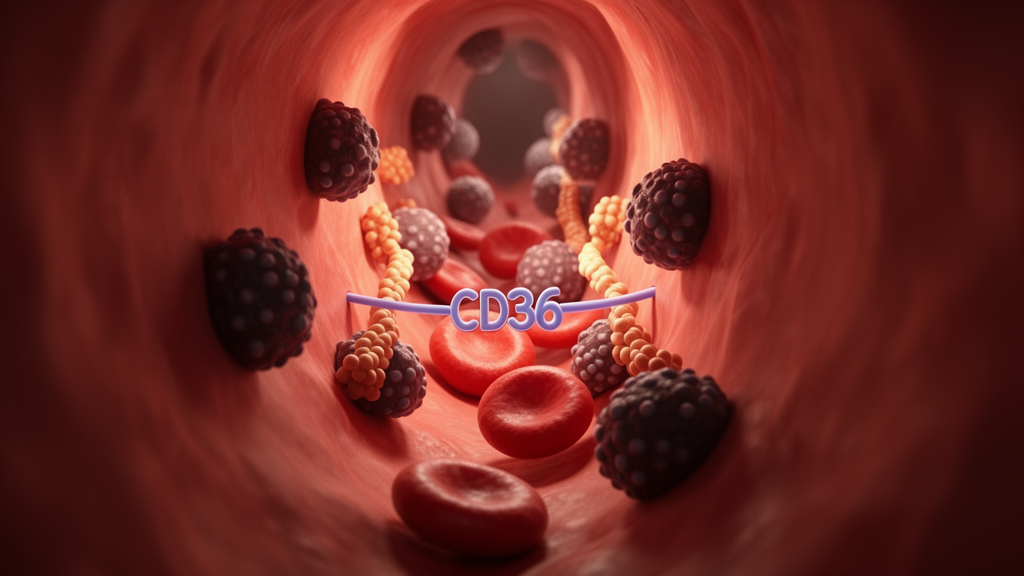
The biological rationale for the finding traces back to CD36’s role in malaria pathogenesis. CD36 is an 88-kilodalton glycoprotein expressed on endothelial cells lining blood vessels, as well as on platelets, monocytes, and macrophages. During infection, P. falciparum-infected red blood cells display the parasite protein PfEMP1 on their surface, and certain domains of this molecule, notably the cysteine-rich interdomain region 1, bind with high affinity to CD36. This adhesion drives sequestration of parasitized cells in the microvasculature of deep organs, particularly the brain, a key immune-evasion strategy for the parasite that contributes to the coma and tissue damage characteristic of cerebral malaria. The +188 T/G transversion lies in exon 10 of the CD36 gene, which is located on chromosome 7 at position q11.2 and spans 15 exons.
The authors propose that the G allele might alter CD36 protein structure, expression level, or binding affinity for PfEMP1, potentially enhancing sequestration in cerebral blood vessels. However, they are explicit that the functional consequences of the T188G change on CD36 protein activity were not directly demonstrated in this study, and they label this mechanistic interpretation speculative. Enhanced binding could occlude small vessels in vital organs, reduce blood flow and oxygen delivery, and trigger inflammatory cytokine release, but confirming these steps requires future in vitro and in vivo work. The literature on CD36 in cerebral malaria is also inconsistent: some studies in adult Thai patients and certain Indian populations have reported that the G allele or the T/G genotype may be protective against severe malaria, while a prior study in Central Sudan found that children carrying the G allele were at higher risk of developing cerebral malaria. The polymorphism might also act through linkage disequilibrium with other functional variants, meaning the broader haplotype could matter more than a single SNP in isolation.
The sample size was calculated from a reported G allele frequency of roughly 20 to 25 percent in Sudanese populations, based on a 2014 study by Mohamed and colleagues, assuming a two-sided alpha of 0.05, 80 percent power, and an expected two-fold difference in mutant allele frequency between children who died and those who survived without sequelae. A minimum of 88 subjects was required, and 100 were enrolled to account for attrition. The authors position their work as among the first to systematically apply multiple genetic models to this polymorphism in a Sudanese pediatric cohort, providing population-specific evidence for a region where allele frequencies and linkage patterns may differ from other endemic settings. They call for larger, multicenter studies to produce more precise risk estimates and to reconcile the conflicting findings across populations, noting that the wide confidence interval around the dominant-model odds ratio reflects the uncertainty inherent in a study with so few deaths.
For a disease that kills over two million people each year in sub-Saharan Africa, with the heaviest burden among children, a genetic marker that flags elevated mortality risk could eventually sharpen triage and follow-up for the most vulnerable patients. The neurological toll is substantial as well: follow-up studies have reported that up to 10 percent of children recovering from cerebral malaria suffer some form of neurological impairment, and recent work in African children has documented sequelae in 10.9 percent of survivors. This study adds a piece to that picture, linking a single nucleotide change in an adhesion receptor to both death and lasting neurological damage in a well-characterized cohort, while leaving open the mechanistic questions that will determine whether the finding translates into clinical practice.
Subject of Research: A prospective cohort study of Sudanese children examining how the CD36 +188 T/G polymorphism relates to mortality and neurological outcomes in cerebral malaria.
Article Title: Association of cd36 + 188 T/G gene polymorphism with outcome of cerebral malaria among Sudanese children
Article References: Mergani, A., Daffala, A. M., Abdelwahed, M. O., Sanhouri, K., Babeker, M. M., Dafalla, A., Elhassan, O. A., Haboor, A. B., & Elwali, N.-E. M. A. (2026). Association of cd36 + 188 T/G gene polymorphism with outcome of cerebral malaria among Sudanese children. Egyptian Journal of Medical Human Genetics, 27(1), Article 85. https://doi.org/10.1186/s43042-026-00914-9
Image Credits: AI Generated
DOI: 10.1186/s43042-026-00914-9
Keywords: cerebral malaria, CD36, rs3211938, gene polymorphism, Sudanese children, mortality, neurological sequelae, PCR-RFLP, dominant model, Plasmodium falciparum, Association, gene
News Source: Juliet Wilcox. (October 28, 2026). CD36 Gene Variant Linked to Higher Death Risk in Childhood Cerebral Malaria. Scienmag.