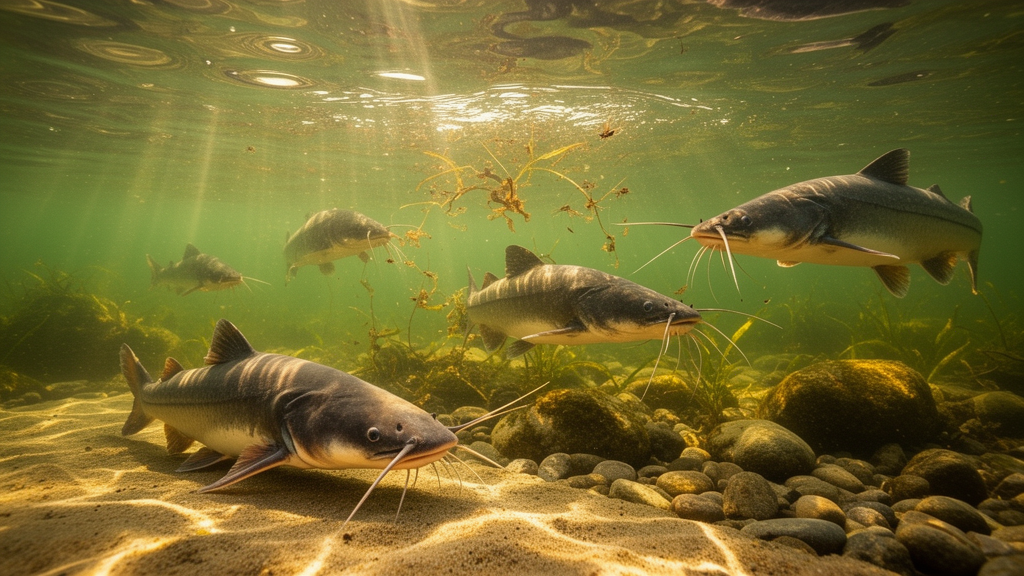
In the dryland streams of the Tehuacán-Cuicatlán Biosphere Reserve in northeast Oaxaca, Mexico, two closely related catfish species have evolved distinct feeding strategies that allow them to share the same aquatic habitat. Researchers recently published a detailed analysis of the trophic ecology of Rhamdia guatemalensis and Rhamdia laticauda, providing new insights into how these nocturnal predators coexist without engaging in intense competition for food resources. The study, conducted between 2015 and 2016, utilized electrofishing techniques to sample fish from the Río Salado and Río Grande, both tributaries of the Papaloapan River. By examining the stomach contents of 184 specimens, scientists were able to quantify the dietary composition, trophic levels, and niche overlap of these sympatric species, highlighting the subtle ecological mechanisms that sustain biodiversity in Neotropical freshwater systems.
The genus Rhamdia is widespread across the Neotropical region, yet quantitative data on the trophic ecology of its members remains scarce, with most previous studies focusing on Rhamdia quelen. This gap in knowledge is particularly significant for the two species studied here, which occur together in southern Mexico but have rarely been analyzed in a comparative context. Rhamdia guatemalensis, known as the Pale catfish, is distributed across both Pacific and Atlantic slopes, while Rhamdia laticauda, the Filespin chulín, inhabits waters from Veracruz to central Panama. Their overlapping ranges create ideal conditions for studying resource partitioning, a fundamental concept in ecology that explains how similar species can coexist by utilizing different portions of the available food supply. The current research fills this void by providing the first comprehensive quantitative analysis of their feeding habits in this specific region.
Both species were confirmed to be carnivorous, with Intestinal Quotient (IQ) values below 1, indicating a diet primarily composed of animal matter. However, their dietary spectra differed significantly in breadth. Rhamdia guatemalensis consumed prey from nine different taxonomic orders, whereas Rhamdia laticauda exhibited a broader diet encompassing 19 orders. The most important prey items for both species included aquatic insects from the orders Diptera, Ephemeroptera, Megaloptera, and Trichoptera. For R. guatemalensis, Diptera dominated the diet with a 42.2% Index of Relative Importance, followed by Megaloptera and Ephemeroptera. In contrast, R. laticauda relied heavily on Ephemeroptera, which accounted for 50.1% of its diet, followed by Diptera. This variation in prey preference suggests that while both species are aquatic invertivores, they exploit different segments of the invertebrate community, reducing direct competition.
The analysis also revealed significant ontogenetic shifts in diet composition. As both species grew larger, their diets became more diverse, incorporating a higher proportion of vertebrate prey such as fish and decapods. Juveniles of both species primarily consumed smaller invertebrates, likely due to morphological limitations in mouth size and capture ability. In R. guatemalensis, adult specimens showed an increased consumption of Cyprinodontiformes, while adults of R. laticauda consumed more Decapoda, Characiformes, and Cyprinodontiformes. These findings align with previous studies in other Mexican states and suggest that dietary flexibility is a key adaptation for survival and growth in these predatory fish. The transition from invertebrate to vertebrate prey as fish mature reflects the increasing energy demands and predatory capabilities associated with larger body sizes.
Sexual differences in diet were also observed, particularly in Rhamdia guatemalensis. Females of this species consumed a greater proportion of Megaloptera and Cyprinodontiformes compared to males, a difference that was statistically significant. In contrast, no significant dietary differences were found between sexes in Rhamdia laticauda, although females did consume slightly more Diptera and Ephemeroptera. The sexual dimorphism in diet for R. guatemalensis may be related to differences in body size or energy allocation strategies, although further research is needed to fully understand the underlying mechanisms. This is the first reported evidence of sexual dietary differentiation in the genus Rhamdia, adding a new dimension to our understanding of their ecological roles and potential vulnerabilities to environmental changes.
Trophic niche breadth analysis indicated that both species are dietary specialists, with Levins’ standardized index values below 0.4. This specialization is likely linked to their benthophagous feeding habits and the use of sensory barbels to detect prey in the streambed. Specialist species are often more vulnerable to environmental fragmentation and food depletion than generalists, making their conservation a priority. The study highlights the importance of preserving the quality of these streams, as the aquatic insects that form the bulk of their diet, such as Ephemeroptera and Trichoptera, are sensitive to pollution and habitat degradation. Protecting these habitats is essential for maintaining the food web structure that supports these catfish and other aquatic organisms in the region.
The degree of trophic niche overlap between the two species was assessed using Pianka’s index, which revealed low to moderate overlap, primarily driven by the shared consumption of Diptera and Ephemeroptera. However, evidence of trophic niche partitioning was found among adults and females, suggesting that these groups consume different prey items to minimize competition. This partitioning, combined with microhabitat segregation, where R. guatemalensis prefers slow currents and plant material while R. laticauda inhabits rocky riffles, allows the two species to coexist stably. The study underscores the importance of considering multiple ecological dimensions, including trophic, spatial, and temporal factors, when evaluating interspecific competition and coexistence mechanisms in complex ecosystems.
These findings have significant implications for the conservation and management of freshwater ecosystems in Mexico. Rhamdia guatemalensis is listed as subject to special protection under Mexican legislation, while R. laticauda is not, yet both species face threats from water pollution, habitat degradation, and invasive species. Understanding their trophic ecology is crucial for developing effective conservation strategies that account for their specific dietary needs and ecological roles. As secondary consumers, these catfish play a vital role in controlling populations of aquatic insects, contributing to the overall health of the stream ecosystem. Future research should focus on analyzing prey availability in their habitats to better understand their feeding strategies and electivity, which will provide a more comprehensive picture of their ecological dynamics and inform long-term conservation planning.
In conclusion, the study demonstrates that Rhamdia guatemalensis and Rhamdia laticauda coexist through a combination of dietary specialization, ontogenetic shifts, and sexual differentiation in feeding habits. Their roles as carnivorous predators and biological controllers of aquatic insects highlight their importance in the food web of the Tehuacán-Cuicatlán Biosphere Reserve. By revealing the mechanisms of trophic niche partitioning, this research provides valuable insights into the ecological interactions that sustain biodiversity in Neotropical freshwater systems. The data collected in this study serves as a baseline for monitoring changes in the trophic ecology of these species in response to environmental pressures, ensuring that conservation efforts are grounded in a solid understanding of their biological needs and ecological functions.
Subject of Research: Trophic ecology and niche overlap of two sympatric species of Rhamdia (Siluriformes, Heptapteridae) from northeast Oaxaca, Mexico
Article Title: Trophic ecology and niche overlap of two sympatric species of Rhamdia ( Siluriformes , Heptapteridae ) from northeast Oaxaca, Mexico
Article References: Julián-Caballero, C. C., Martínez-Ramírez, E., Gómez-Ugalde, R. M., & Cruz-Arenas, E. (2024). Trophic ecology and niche overlap of two sympatric species of Rhamdia (Siluriformes, Heptapteridae) from northeast Oaxaca, Mexico. Neotropical Biology and Conservation, 19(2), 117-136. https://doi.org/10.3897/neotropical.19.e119908
Image Credits: AI Generated
DOI: 10.3897/neotropical.19.e119908
Keywords: Trophic, ecology, niche, overlap, sympatric, species, Rhamdia, Siluriformes, Heptapteridae, northeast, Oaxaca, Mexico
News Source: Daisy Hatcher. (October 18, 2026). Catfish Coexistence Revealed Through Dietary Partitioning in Oaxaca. Scienmag.