Chemistry

Rockets to uncover electric circuit that powers the Northern Lights
A NASA-funded rocket mission is headed to space to measure the global electric circuit underlying the northern lights. For its...
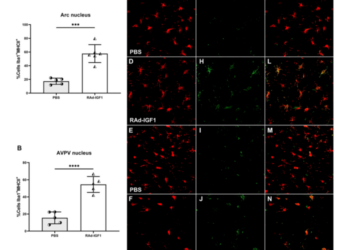
Aging | IGF1 gene therapy in middle-aged female rats delays reproductive senescence through its effects on hypothalamic GnRH and kisspeptin neurons
“Based on our findings, we propose IGF1 gene therapy to delay reproductive senescence as a potential strategy to optimize lifespan...
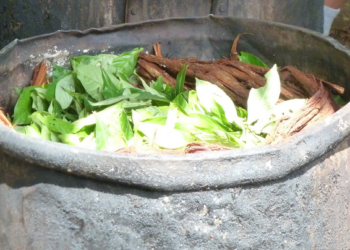
Is ayahuasca safe? New study tallies adverse events
There is a high rate of adverse physical effects and challenging psychological effects from using the plant-based psychoactive ayahuasca, though...
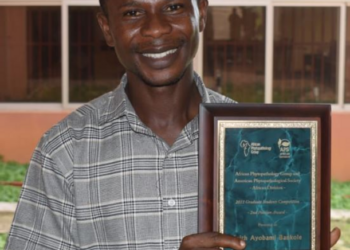
Inbred to well-fed: Maize breeding efforts to improve food security and safety in Africa
Over 300 million people in Sub-Saharan Africa (SSA) depend on maize for nearly 30% of their caloric intake, and the...
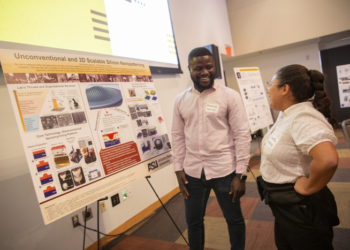
New Arizona State University school strengthens domestic semiconductor manufacturing
MESA, Ariz. -- Nearly 200 members of industry and Arizona State University affiliates celebrated the launch of the highly anticipated School...

Sweet: Honey reduces cardiometabolic risks, study shows
Researchers at the University of Toronto have found that honey improves key measures of cardiometabolic health, including blood sugar and...

Helping to make the British Virgin Islands more resilient to the impacts of climate change
Researchers from the University of Portsmouth are collaborating with the British Virgin Islands government to help make its inhabitants and...
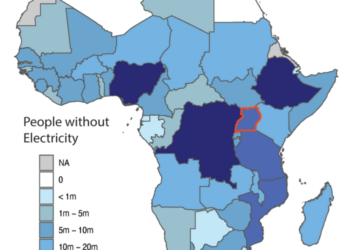
Stanford research ushers in a ‘new frontier’ in tackling global poverty
With electricity comes prosperity, right?Credit: Image credit: Ratledge et al, 2022, Nature With electricity comes prosperity, right? The answer might...

Funding awarded for an innovation to recover hydrogen from waste to help safeguard energy security
A team of experts at The University of Manchester led by Dr Amir Keshmiri have received UK government funding to work with Powerhouse...
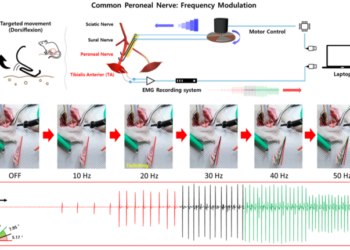
Professor Sanghoon Lee’s research team at DGIST developed a rotation-based triboelectric neurostimulator capable of real-time modulation of stimulus parameters
□ The research team led by Professor Sanghoon Lee from the Department of Robotics and Mechatronics Engineering at DGSIT (President Yang Kuk) successfully developed a rotation-based triboelectric neuro-stimulator (RoTENS) capable of real-time modulations of stimulus parameters, including current amplitude, frequency, and pulse width. Credit: DGIST □ The research team led by Professor Sanghoon Lee from the Department of Robotics and Mechatronics Engineering at DGSIT (President Yang Kuk) successfully developed a rotation-based triboelectric neuro-stimulator (RoTENS) capable of real-time modulations of stimulus parameters, including current amplitude, frequency, and pulse width. □ Existing neurostimulators require additional steps when adjusting stimulus parameters in real time owing to the characteristics of its circuit-based system. In particular, changing the stimulus parameters while maintaining charge requires complex calculations and additional processes via electronic devices, resulting in low practicality. □ Professor Sanghoon Lee’s research team at DGIST modified triboelectric nanogenerators (TENG), which generate electric energy via friction, to a rotation-based design, generating multiple pulses with a single rotation. In addition, various pulses can be modulated for neurostimulation by changing the electrode patterns in the TENG. □ Owing to the charge-generation mechanism of TENG, RoTENG enables the control of the frequency and pulse width while maintaining a constant charge during rotation, allowing nerve stimulation while controlling stimulus parameters in real time. Furthermore, adjusting the interlayer distance allows for controlling the amplitude of the pulses, indicating that various stimulus parameters (frequency, pulse width, and amplitude) can be controlled. □ In vivo animal experiments were performed to verify the clinical effectiveness of RoTENS. The physiological responses induced by modulating the stimulus parameters by RoTENS were observed during the stimulation of the right tibial nerve in rats. Varying the frequency (10-50 Hz) allowed the muscle to shift its physiological state smoothly from twitching to fused tetanus. Natural relaxation of the muscle was induced by changing the current amplitude via the distance between the two layers (0-6 mm). These results indicate that RoTENS is sufficient to induce the desired physiological response while creating a wide range of frequencies and amplitudes. □ Professor Sanghoon Lee (Robotics and Mechatronics Engineering, DGIST) said that preclinical trials with the newly developed neuro-stimulators proves that it is possible to control the stimulus parameters for neural stimulation in real time with rotational energy. We expect that technological advancements and further optimization research will lead to new opportunities and possibilities for the use of TENG as neurostimulators, such as immediate and intuitive sensory feedback to bionic limbs or exoskeletons, rehabilitation, and bioelectric medicine. This research was supported by a National Research Foundation of Korea grant and Hugo Dynamics Korea Medical Device Development Fund grant. This paper was published by a renownd journal in the field of energy, Nano Energy. Correspondent author's email...
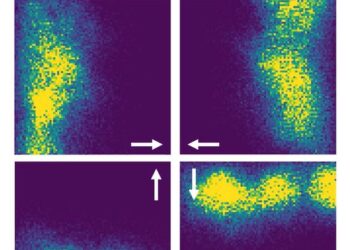
Microscopy and simulation unite to improve new-age polymers
Among the most promising unfilled gaps in materials research is an ability to accurately predict real-world physical properties of a...

Power and Prediction: The Disruptive Economics of Artificial Intelligence. Book explains the ways AI will impact us
Toronto – When electricity was introduced in the 1880s, not everyone immediately switched from candles to lightbulbs, but there was...
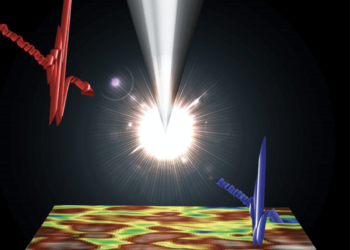
New discoveries made about a promising solar cell material, thanks to new microscope
A team of scientists from the Department of Energy’s Ames National Laboratory developed a new characterization tool that allowed them...
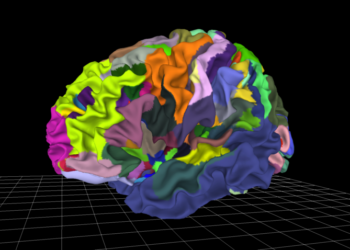
Multilevel brain atlases provide tools for better diagnosis
The multilevel Julich Brain Atlas developed by researchers in the Human Brain Project, could help in studying psychiatric and aging...

Mount Sinai appoints Michal A. Elovitz, MD, as dean for women’s health
Michal A. Elovitz, MD, a renowned leader in maternal-fetal medicine and expert in preterm birth, has been named Dean for...

Advanced light source upgrade approved to start construction
The Advanced Light Source (ALS), a scientific user facility at the Department of Energy’s Lawrence Berkeley National Laboratory (Berkeley Lab),...
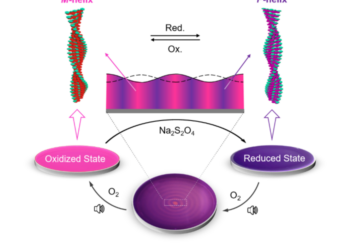
‘Sound’ly segregated supramolecular helices
In 1848, Louis Pasteur successfully segregated two types of crystals of double sodium-ammonium salt of tartaric acid, which were mirror...
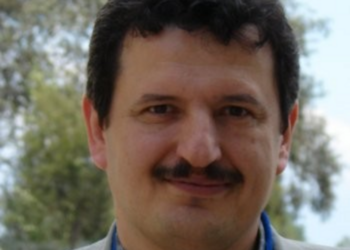
Aston University photonics expert elected as Fellow of Optica
A photonics expert at Aston University has been elected as a Fellow of Optica (formerly OSA), Advancing Optics and Photonics...
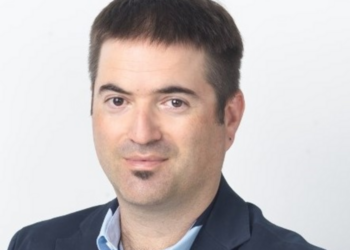
CHOP researchers find financial strain due to COVID-19 pandemic took significant toll on adolescent mental health
Philadelphia, November 15, 2022—Financial stress due to the COVID-19 pandemic took a distinct toll on adolescent mental health and contributed...

Beneficial and beautiful: Biodiversity of meadows and pastures can be an asset for nature, agriculture, and tourism
Where species-rich meadows provide habitat for bees and other insects, ecosystem services such as pollination or natural pest control offer...