• HOME
  • NEWS
  • EXPLORE
    • CAREER
      • Companies
      • Jobs
    • EVENTS
    • iGEM
      • News
      • Team
    • PHOTOS
    • VIDEO
    • WIKI
  • BLOG
  • COMMUNITY
    • FACEBOOK
    • INSTAGRAM
    • TWITTER
Sunday, August 23, 2026
BIOENGINEER.ORG
No Result
View All Result
  • Login
  • HOME
  • NEWS
  • EXPLORE
    • CAREER
      • Companies
      • Jobs
        • Lecturer
        • PhD Studentship
        • Postdoc
        • Research Assistant
    • EVENTS
    • iGEM
      • News
      • Team
    • PHOTOS
    • VIDEO
    • WIKI
  • BLOG
  • COMMUNITY
    • FACEBOOK
    • INSTAGRAM
    • TWITTER
  • HOME
  • NEWS
  • EXPLORE
    • CAREER
      • Companies
      • Jobs
        • Lecturer
        • PhD Studentship
        • Postdoc
        • Research Assistant
    • EVENTS
    • iGEM
      • News
      • Team
    • PHOTOS
    • VIDEO
    • WIKI
  • BLOG
  • COMMUNITY
    • FACEBOOK
    • INSTAGRAM
    • TWITTER
No Result
View All Result
Bioengineer.org
No Result
View All Result
Home NEWS Science News Health

Case Western Reserve University receives $1.5M grant from Foundation Fighting Blindness to test possible new treatment for inherited retinal disease

by
July 8, 2024
in Health
Reading Time: 2 mins read
0
Shigemi Matsuyama
Share on FacebookShare on TwitterShare on LinkedinShare on RedditShare on Telegram

CLEVELAND—There’s only one U.S. Food and Drug Administration-approved therapy for an inherited retinal disease, and dozens of retinitis pigmentosa (RP) genes for which no therapy is available.
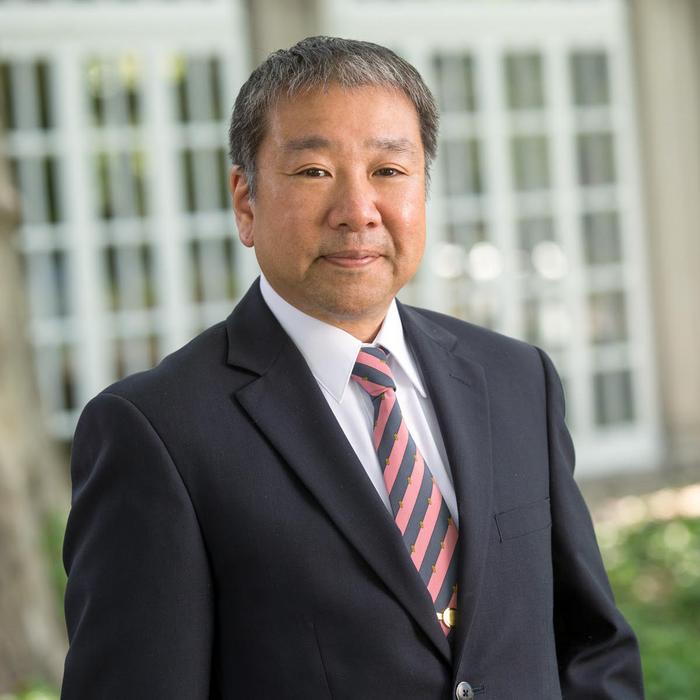
Shigemi Matsuyama

Credit: Case Western Reserve University

CLEVELAND—There’s only one U.S. Food and Drug Administration-approved therapy for an inherited retinal disease, and dozens of retinitis pigmentosa (RP) genes for which no therapy is available.

With a new three-year, $1.5 million grant from the Foundation Fighting Blindness, Shigemi Matsuyama, an associate professor of ophthalmology and visual sciences at the Case Western Reserve University School of Medicine, will test a possible breakthrough drug that can be taken by mouth—one that may address many RP disease manifestations, regardless of the underlying genetic mutation.

“We believe it can serve as the basis of an oral medicine to prevent blindness in RP patients, regardless of the underlying gene mutations,” Matsuyama said.

The disease…and promising science

RP causes blindness when cells in the retina that respond to light—called photoreceptors—die.

In a previous foundation-funded drug discovery program from 2017-20, Matsuyama and his research team developed a series of novel orally-active cell-death inhibitors—known as Cytoprotective Small Compounds (CPSCs)—which work by blocking the activation of Bax, a protein that contributes to cell death. Their lead compound prevented retinal cell death and vision loss in four mouse models of inherited retinal disease.

The proposed studies, which include toxicology evaluation and drug-formulation testing—for both oral drugs and eye drops—are aimed at advancing the technology to U.S. Food and Drug Administration (FDA)-regulated clinical trials.

“Our primary objective is bringing an CPSC-based therapeutic to RP patients who are suffering from the fear of blindness,” Matsuyama said.

Bax-induced cell death is also a major cause of various neurodegenerative conditions, including glaucoma, ischemia-reperfusion injury, amyotrophic lateral sclerosis (ALS) and Alzheimer’s disease.

“Therefore,” he said, “there is significant potential to expand the application of our Bax-inhibiting therapeutic for additional uses.”

“The Foundation Fighting Blindness is proud to support Dr. Shigemi Matsuyama’s research,” said Chad Jackson, senior director of preclinical translational research at the foundation. “Through this award, we continue our commitment to advancing scientific discoveries that have the potential to realize tangible solutions for those affected by inherited retinal diseases.”

About the Foundation Fighting Blindness

The foundation is focused on treating and curing blindness caused by the spectrum of blinding retinal diseases including: RP, macular degeneration and Usher syndrome.

                                                            ### 

Case Western Reserve University is one of the country’s leading private research institutions. Located in Cleveland, we offer a unique combination of forward-thinking educational opportunities in an inspiring cultural setting. Our leading-edge faculty engage in teaching and research in a collaborative, hands-on environment. Our nationally recognized programs include arts and sciences, dental medicine, engineering, law, management, medicine, nursing and social work. About 6,200 undergraduate and 6,100 graduate students comprise our student body. Visit case.edu to see how Case Western Reserve thinks beyond the possible.


Share12Tweet8Share2ShareShareShare2

Related Posts

Blocking glucosylceramide production kills cancer cells via lysosomal dysfunction, not ceramide buildup

August 23, 2026

ZCCHC4 boosts replication-dependent histone mRNA translation by interacting with eIF3

August 23, 2026

Tirzepatide Versus GLP-1 Agonists for Stroke Risk in Atrial Fibrillation and Diabetes

August 22, 2026

Real-world study examines psychotic complications of subcutaneous foslevodopa/foscarbidopa infusions in 198 patients

August 22, 2026

POPULAR NEWS

  • Blocking glucosylceramide production kills cancer cells via lysosomal dysfunction, not ceramide buildup

    29 shares
    Share 12 Tweet 7
  • ZCCHC4 boosts replication-dependent histone mRNA translation by interacting with eIF3

    29 shares
    Share 12 Tweet 7
  • KAIST Surface Defects Boost Droplet Formation, Removal, and Heat Transfer by 5.5-Fold

    29 shares
    Share 12 Tweet 7
  • Dual-oxygen pancreatic cancer organoids mirror basal-classical diversity, spatial transcriptomics confirms

    29 shares
    Share 12 Tweet 7

About

We bring you the latest biotechnology news from best research centers and universities around the world. Check our website.

Follow us

Recent News

Blocking glucosylceramide production kills cancer cells via lysosomal dysfunction, not ceramide buildup

ZCCHC4 boosts replication-dependent histone mRNA translation by interacting with eIF3

KAIST Surface Defects Boost Droplet Formation, Removal, and Heat Transfer by 5.5-Fold

Subscribe to Blog via Email

Success! An email was just sent to confirm your subscription. Please find the email now and click 'Confirm' to start subscribing.

Join 85 other subscribers
  • Contact Us

Bioengineer.org © Copyright 2023 All Rights Reserved.

Welcome Back!

Login to your account below

Forgotten Password?

Retrieve your password

Please enter your username or email address to reset your password.

Log In
No Result
View All Result
  • Homepages
    • Home Page 1
    • Home Page 2
  • News
  • National
  • Business
  • Health
  • Lifestyle
  • Science

Bioengineer.org © Copyright 2023 All Rights Reserved.