A longitudinal clinical case report published in Frontiers in Cardiovascular Medicine documents the course of a 67-year-old man presenting with complex, long-standing cardiovascular pathology who experienced reported symptomatic relief and changes in left ventricular performance following adjunctive intravenous hydrogen nanobubble therapy. The patient presented with chronic triple-vessel coronary artery disease, evidence of an old myocardial infarction, and concurrent medically controlled diabetes mellitus extending over a span of more than two decades. In advanced multivessel coronary presentations involving extensive diffuse disease and multiple occlusions, standard clinical guidelines frequently indicate coronary artery bypass grafting to mitigate ongoing ischemic risk and improve long-term survival prospects. However, after declining recommended surgical revascularization across multiple clinical evaluations, the patient pursued an individualized, multi-modal conservative management strategy spanning from 2012 through 2025, which culminated in an experimental trial of intravenous hydrogen nanobubbles administered alongside his baseline medical regimen.
The extensive medical timeline detailed in the report began acutely in 2012 when the patient experienced sudden visual dimming and an unsteady gait upon returning home from work. Following an initial hospital admission where a dangerous cerebrovascular microvascular event was suspected, he was transferred to Gatot Soebroto Army Hospital to undergo diagnostic digital subtraction angiography. Although the initial diagnostic procedure resolved the transient neurologic disturbances, his inpatient course was severely complicated during transfer from intensive care to the general ward by the sudden development of acute pulmonary fluid accumulation, severe respiratory distress, persistent coughing, and profuse cold sweating without typical anginal chest pain. Conventional non-invasive respiratory interventions, including high-flow nasal cannula delivery, face-mask oxygen, and manual bagging, proved inadequate to reverse respiratory failure, mandating acute endotracheal intubation and mechanical ventilatory support for a duration of nearly two weeks before comprehensive clinical stabilization and radiographic clearance of pulmonary congestion were achieved.
Subsequent diagnostic cardiac catheterization was carried out to assess the underlying coronary architecture responsible for the acute decompensation. Angiographic imaging performed in 2012 documented severe anatomical disruption across all three primary epicardial territories. While the left main coronary artery demonstrated a normal caliber, the left anterior descending artery exhibited a 60 percent proximal stenosis culminating in total occlusion distal to the emergence of the first septal branch. Simultaneously, coronary angiography demonstrated a 99 percent proximal stenosis within the left circumflex artery accompanied by markedly delayed distal contrast filling, alongside tandem 80 percent and 60 percent proximal stenoses in the right coronary artery leading into a complete total occlusion within the mid-vessel segment. Despite the presence of compensatory collateral vascular networks supplying the distal left anterior descending and right coronary beds, surgical coronary artery bypass grafting was repeatedly urged by medical teams, yet consistently declined by the patient in favor of conservative outpatient care.
Faced with the refusal of surgical revascularization, the patient enrolled in an ongoing non-surgical outpatient maintenance program under the direction of a clinical cardiologist in Jakarta. This intensive long-term conservative framework combined optimal medical therapy, targeted lifestyle modifications, routine functional monitoring, and regular cycles of non-invasive adjunctive interventions. The therapeutic regimen incorporated periodic cycles of Enhanced External Counterpulsation, intravenous chelation infusions, and external laser therapy administered approximately every two months following an initial intensive induction series of ten sessions in 2013 that had achieved early symptomatic stabilization. Over the subsequent twelve years, the patient maintained rigorous dietary adherence characterized by reduced intake of refined sugars, strict restriction of fried and fatty foods, measured carbohydrate portions, and the regular use of olive and coconut oils, supported by an unbroken habit of 45-minute daily morning walking.
The baseline pharmacological and nutraceutical profile maintained by the patient over this extended observation period was exceptionally detailed and complex. Daily cardiovascular and metabolic pharmacotherapy included spironolactone at 100 milligrams once daily, the beta-blocker nebivolol at 5 milligrams daily, candesartan cilexetil at 16 milligrams daily, amlodipine at 10 milligrams daily, high-intensity rosuvastatin at 40 milligrams daily, ezetimibe at 10 milligrams daily, acetylsalicylic acid at 80 milligrams daily, and metformin administered at 500 milligrams three times daily, alongside unspecified strengths of sitagliptin-metformin and dapagliflozin. This medicinal regimen was supplemented by coenzyme Q10 twice daily, a multi-enzyme preparation containing 100 milligrams each of nattokinase, bromelain, and papain with 125 milligrams of rutin bioflavonoid complex and 100 milligrams of white willow bark extract, an antioxidant compound combining lutein, lycopene, vitamin E, vitamin C, zinc, beta-carotene, and selenium yeast, alongside cholecalciferol and twice-daily sulbutiamine.
In September 2025, the patient underwent systematic clinical and physical re-evaluation due to complaints of progressive physical fatigue and exertional shortness of breath when walking extended distances or undertaking heavy exertion, symptoms that had persisted intermittently since 2013. On examination, he demonstrated a normal physical baseline with a non-elevated jugular venous pressure, normal dual heart sounds devoid of murmurs or gallops, clear breath sounds bilaterally, warm extremities with capillary refill times under two seconds, and intact neuromuscular status without focal deficits or peripheral edema. Twelve-lead electrocardiography confirmed an established inferior myocardial infarction pattern within normal sinus rhythm. Baseline laboratory analyses from June 2024 and June 2025 demonstrated sustained metabolic control, with glycated hemoglobin stable at 7.1 and 7.0 percent, low-density lipoprotein cholesterol at 73 milligrams per deciliter, normal serum creatinine levels of 0.91 and 0.90 milligrams per deciliter, preserved glomerular filtration rates exceeding 90 milliliters per minute per 1.73 square meters, and microalbuminuria with urine albumin-to-creatinine ratios of 46.2 and 37.3 milligrams per gram, while carotid ultrasound revealed bilateral calcified plaques without hemodynamically limiting stenosis.
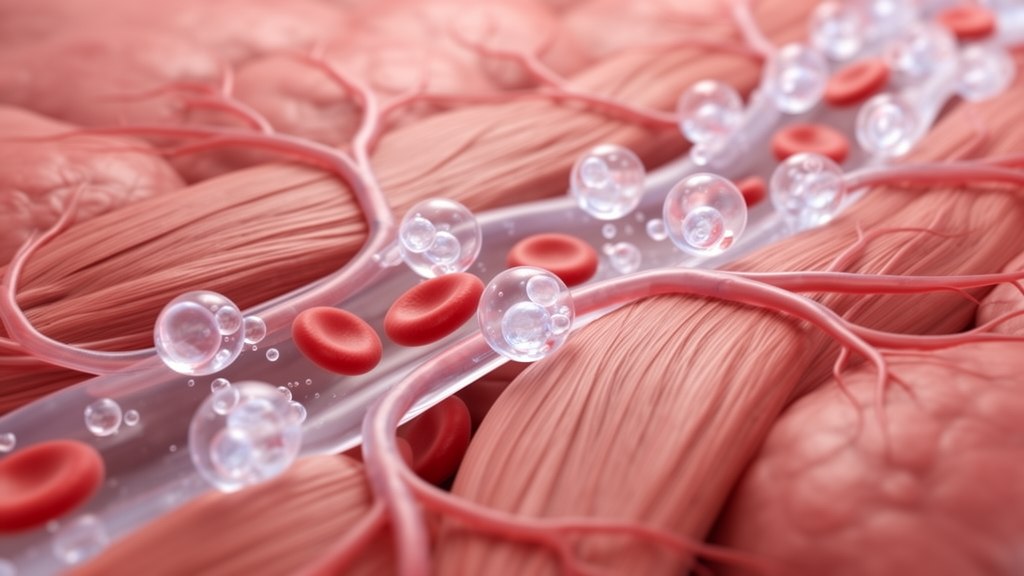
Between September 8 and September 20, 2025, the clinical team instituted a specialized 12-session course of adjunctive intravenous hydrogen nanobubble infusion therapy, scheduled once daily from Monday through Saturday over two consecutive weeks with an intervening pause on Sunday. Each therapeutic session involved admixing a sterile nanobubble concentrate into 250 milliliters of standard 0.9 percent sodium chloride solution, infused intravenously across a 45-to-60-minute interval. The protocol utilized an escalating volume strategy, increasing from 5 milliliters at the initial session to a sustained high-dose maintenance volume of 50 milliliters from the sixth session through the twelfth session. The aqueous formulation was manufactured under centralized blow-fill-seal conditions in 25-milliliter polypropylene ampoules meeting standard endotoxin limits of 0.25 endotoxin units per milliliter and confirmed sterility, containing approximately 50 million bubbles per milliliter with diameters documented strictly under 200 nanometers, yielding a per-session dose between 250 million and 2.5 billion nanobubbles.
Following the completion of the 12-day infusion protocol, direct clinical assessments documented marked qualitative and functional changes. At the concluding evaluation on September 25, 2025, the patient reported the complete resolution of exertional breathlessness during extended walking and demanding physical tasks, alongside a subjective sense of renewed bodily vigor, with no adverse events, unexpected reactions, or infusion interruptions documented throughout the trial. Serial transthoracic echocardiography performed on September 22, immediately post-treatment, recorded a modified biplane left ventricular ejection fraction of 51.6 percent and an apical four-chamber fraction of 51.5 percent, compared to pre-therapy baseline values of 56.4 and 56.9 percent in January 2025, while M-mode Teichholz assessments remained largely unchanged at 54.5 percent versus 54.3 percent, alongside persistent regional wall-motion abnormalities and impaired diastolic relaxation. A subsequent clinical follow-up note recorded on September 25 cited an ejection fraction reaching approximately 62 percent; however, the authors explicitly emphasize that the corresponding imaging loops, source reports, and quantitative tracing methods for this 62 percent figure were unavailable for independent verification.
The biological rationale discussed by the authors for investigating hydrogen-based therapeutics in chronic ischemic coronary disease centers on cellular oxidative stress biology and mitochondrial integrity. In chronically underperfused myocardium, the persistent generation of cytotoxic reactive oxygen species promotes chronic endothelial dysfunction, structural mitochondrial breakdown, and microvascular dysregulation, which collectively impair contractile efficiency within hibernating or viable myocardium. Preclinical animal models have previously demonstrated that molecular hydrogen acts as a selective antioxidant capable of neutralizing damaging hydroxyl radicals without disrupting critical physiological signaling molecules, with rodent and canine models demonstrating reduced infarct volumes and mitochondrial membrane preservation during ischemic insult. While early human pilot trials in post-cardiac arrest and acute ST-elevation myocardial infarction have suggested feasibility, favorable safety profiles, and potential reverse remodeling trends, intravenous delivery using nanobubbles represents an exploratory modality designed to optimize liquid dispersion and gas stability rather than achieve anatomical coronary revascularization.
In their final synthesis, the investigators emphasize the profound methodological limitations inherent in single-patient descriptive case reports, warning against drawing firm causal inferences between the experimental infusion and the observed clinical outcomes. The observed symptomatic relief and unverified imaging findings could readily reflect physiological fluctuation, measurement discrepancies across differing echocardiographic modalities and sonographers, altered hemodynamic loading conditions, or the cumulative therapeutic synergy of the patient’s intricate medical and lifestyle regimen. Furthermore, without blinded controls, subjective improvements remain susceptible to powerful expectation and placebo phenomena. Consequently, the authors conclude that while the temporal association between hydrogen nanobubble infusion and functional stabilization offers intriguing biological hypotheses, definitive therapeutic validation requires rigorous, randomized prospective trials incorporating standardized imaging protocols, functional exercise testing, and detailed biomarker profiling.
Subject of Research: Clinical evaluation of adjunctive hydrogen nanobubble infusion in chronic coronary artery disease
Article Title: Case Report: Clinical improvement and recovery of systolic function in chronic triple-vessel coronary artery disease with controlled diabetes mellitus after long-term conservative management and adjunctive hydrogen nanobubble infusion therapy
Article References: Yudhanata, R., Ekasari, C. P., & Subagjo (2026). Case Report: Clinical improvement and recovery of systolic function in chronic triple-vessel coronary artery disease with controlled diabetes mellitus after long-term conservative management and adjunctive hydrogen nanobubble infusion therapy. Frontiers in Cardiovascular Medicine, 13, Article 1992007. https://doi.org/10.3389/fcvm.2026.1992007
Image Credits: AI Generated
DOI: 10.3389/fcvm.2026.1992007
Keywords: cardiovascular medicine, case report, chronic coronary artery disease, triple-vessel disease, hydrogen nanobubbles, echocardiography, ejection fraction, myocardial infarction, diabetes mellitus, conservative management, cardiac catheterization, EECP, systolic function, oxidative stress, clinical cardiology, hemodynamics
News Source: Ophelia Keating. (November 19, 2026). Case Study Observes Ejection Fraction Shift Following Hydrogen Nanobubble Infusion. Scienmag.