In a groundbreaking advancement in cancer research, British scientist Charles Swanton has been honored with the prestigious Sjöberg Prize, carrying a substantial reward of one million US dollars. His pioneering work at London’s Francis Crick Institute has unveiled critical insights into the evolutionary processes occurring within tumours, dramatically enhancing our comprehension of how cancer cells mutate and adapt over time. This research not only elucidates the stubborn persistence of tumours despite aggressive treatments but also paves the way for refined diagnostic methodologies and potentially more effective therapeutic strategies.
Cancer has long been understood as a disease initiated by genetic mutations within a single cell that then divides uncontrollably. However, the intricate dynamics of these mutations within the heterogeneous environment of a tumour remained elusive until Swanton’s investigations. Unlike earlier models treating tumours as uniform masses, his research highlighted the spatial and temporal diversity of cancerous cells—revealing a sophisticated evolutionary process analogous to natural selection, where genetic variations within the tumour sculpt its growth and resistance patterns.
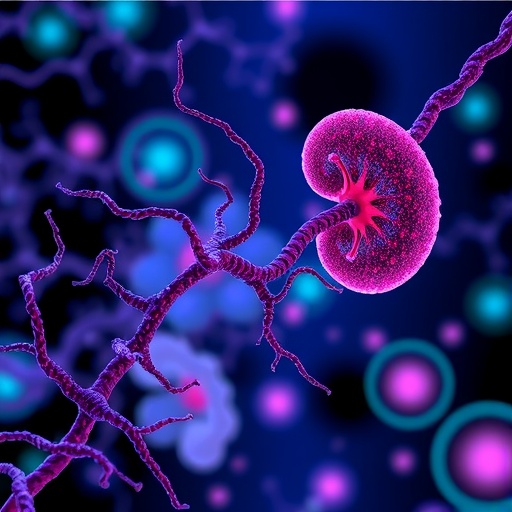
Swanton’s approach was inspired by evolutionary biology, reminiscent of Darwin’s work on species adaptation. By dissecting a kidney tumour into multiple samples and performing detailed genetic analyses, Swanton demonstrated that different regions within the same tumour harbored distinct sets of mutations. This spatial genetic heterogeneity indicated that tumour development is not a linear, uniform process but a branching evolutionary phenomenon. Some mutations are shared broadly among tumour cells, while others are confined to discrete subpopulations, reflecting branches on an oncogenic family tree.
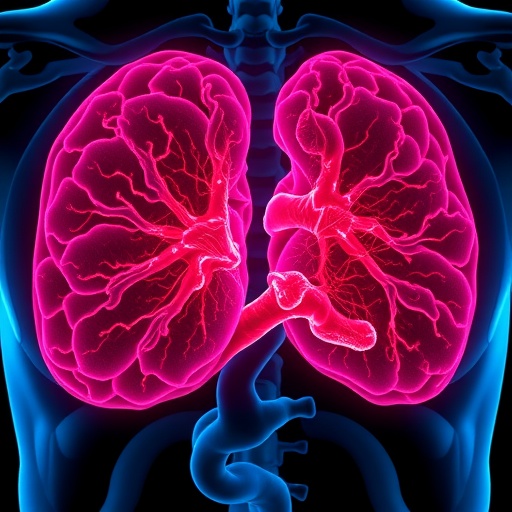
Further advancing this concept, Swanton led the TRACERx project—an ambitious longitudinal study monitoring hundreds of lung cancer patients over several years. This extensive dataset provided an unprecedented window into tumour progression, treatment response, and relapse. By sequencing tumours at diagnosis and at multiple points thereafter, Swanton’s team mapped how subclonal populations emerge, evolve, and sometimes evade therapy, offering vital clues into why certain treatments fail to fully eradicate cancer.
The genetic architecture of tumours, as elucidated by Swanton, can be likened to a phylogenetic tree, where the trunk contains critical early mutations found in every cancer cell, and the branches represent later mutations found in subsets of cells. Most cancer treatments target the branches, attempting to eliminate visible tumour segments. Unfortunately, some branches survive and drive eventual relapse, revealing the crucial need to understand and target the tumour trunk—the foundational mutation set—for durable therapeutic success.
Swanton’s research has not only deepened scientific understanding but has also yielded practical clinical tools. Among these is a novel blood test capable of detecting minimal residual disease and early relapse, through the identification of circulating tumour DNA. Such liquid biopsies promise less invasive, more frequent monitoring of cancer dynamics in patients, enabling personalized treatment adjustments that could preempt relapse and improve survival outcomes.
Recognizing the significance of his findings, the Sjöberg Prize Committee highlighted how Swanton’s work contributes decisively to decoding clonal evolution in cancer cells, emphasizing its profound impact on tumour growth and metastatic progression. The award, funded by the Sjöberg Foundation established in memory of Bengt Sjöberg—a businessman whose life was cut short by cancer—reflects the ongoing global commitment to supporting innovative cancer research that promises tangible patient benefits.
Swanton, visibly humbled by the award, expressed keen scientific curiosity about the earliest phases of cancer initiation. While his studies have mapped out later tumour evolution in great detail, the origin of the very first malignant cell remains somewhat enigmatic. He envisions leveraging the prize funds to investigate the molecular and cellular events that trigger initial tumour genesis, with the ultimate goal of intercepting these pathways before full-blown cancer develops—redefining prevention strategies.
The journey from basic evolutionary theory to clinically impactful cancer research underscores a paradigm shift in oncology, positioning tumour heterogeneity and clonal dynamics at the forefront of personalized medicine. Swanton’s work proves that viewing tumours as evolving ecosystems provides critical insights to outmaneuver cancer’s adaptive capabilities and informs the design of smarter, more resilient treatment regimens.
Looking ahead, collaborations inspired by these findings are expected to expand globally, integrating computational biology, genomics, and clinical oncology. The detailed molecular portraits of tumours will facilitate the development of bespoke therapeutic combinations tailored not only to tumour type but to its unique evolutionary pathways, thereby maximizing efficacy and minimizing resistance.
In conclusion, Charles Swanton’s award-winning research represents a seismic leap forward in our understanding of cancer biology. By decoding how genetic diversity within tumours drives disease progression and treatment failure, he has opened new horizons for both the diagnosis and management of cancer. His vision of intercepting cancer at its earliest evolutionary steps holds immense promise for transforming patient outcomes worldwide, reflecting the profoundly translational nature of his scientific discoveries.
Subject of Research: Clonal evolution of cancer cells and its importance in tumour growth and metastasis.
Article Title: British Cancer Researcher Charles Swanton Wins Sjöberg Prize for Groundbreaking Insights into Tumour Evolution
News Publication Date: Not specified in the source material
Web References:
Charles Swanton, Francis Crick Institute
Royal Swedish Academy of Sciences – Cancer Researcher Awarded Sjöberg Prize
Sjöberg Prize Research Video, Royal Swedish Academy’s Youtube Channel
Keywords: Cancer evolution, tumour heterogeneity, clonal evolution, cancer mutations, lung cancer, TRACERx project, liquid biopsy, tumour diagnostics, cancer relapse, personalised medicine, genetic diversity, oncogenesis
Tags: cancer cell adaptationcancer evolution researchCharles Swanton insightsdiagnostic methodologies for cancerevolutionary biology in medicineFrancis Crick Institute breakthroughsgenetic diversity in tumorsresistance patterns in tumorsSjöberg Prize winnerspatial heterogeneity of cancertherapeutic strategies in oncologytumor mutation dynamics