

• HOME
  • NEWS
  • EXPLORE
    • CAREER
      • Companies
      • Jobs
    • EVENTS
    • iGEM
      • News
      • Team
    • PHOTOS
    • VIDEO
    • WIKI
  • BLOG
  • COMMUNITY
    • FACEBOOK
    • INSTAGRAM
    • TWITTER
Wednesday, April 1, 2026
BIOENGINEER.ORG
No Result
View All Result
  • Login
  • HOME
  • NEWS
  • EXPLORE
    • CAREER
      • Companies
      • Jobs
        • Lecturer
        • PhD Studentship
        • Postdoc
        • Research Assistant
    • EVENTS
    • iGEM
      • News
      • Team
    • PHOTOS
    • VIDEO
    • WIKI
  • BLOG
  • COMMUNITY
    • FACEBOOK
    • INSTAGRAM
    • TWITTER
  • HOME
  • NEWS
  • EXPLORE
    • CAREER
      • Companies
      • Jobs
        • Lecturer
        • PhD Studentship
        • Postdoc
        • Research Assistant
    • EVENTS
    • iGEM
      • News
      • Team
    • PHOTOS
    • VIDEO
    • WIKI
  • BLOG
  • COMMUNITY
    • FACEBOOK
    • INSTAGRAM
    • TWITTER
No Result
View All Result
Bioengineer.org
No Result
View All Result
Home NEWS Science News Science

Cancer drug may cause women to grow new eggs, study suggests

Bioengineer by Bioengineer
December 6, 2016
in Science
Reading Time: 2 mins read
0
Share on FacebookShare on TwitterShare on LinkedinShare on RedditShare on Telegram
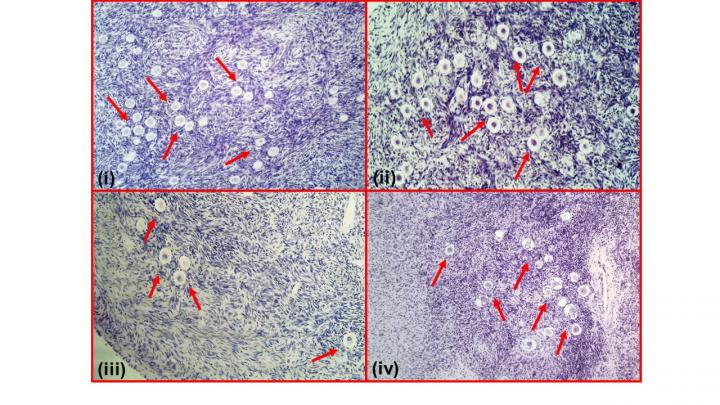
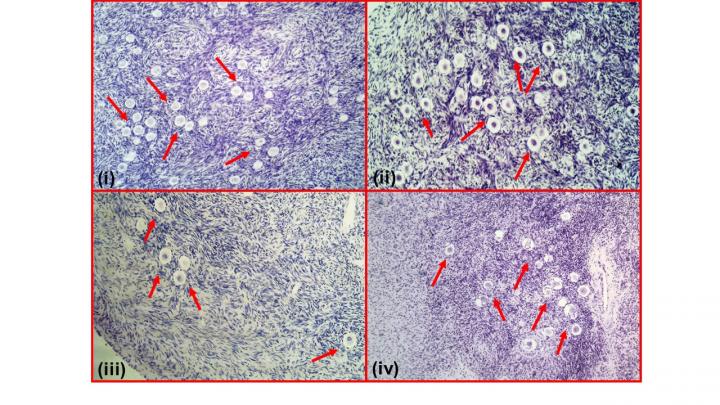
IMAGE

Credit: University of Edinburgh

Women treated with a common chemotherapy drug combination have more young eggs in their ovaries afterwards, research has found.

A small study indicates that a therapy commonly used to target Hodgkin's lymphoma appears to increase the number of non-growing eggs in women's ovaries.

Researchers say it is too soon to link the outcome to fertility, but believe more research is needed to better understand the findings and their implications.

Scientists from the University of Edinburgh analysed samples of ovary tissue donated by 14 women who had undergone chemotherapy, and from 12 healthy women.

They found that the ovaries from eight of the cancer patients, who had been treated with a drug combination known as ABVD, had a much greater incidence of immature, or non-growing, eggs compared with tissue from women who had received a different chemotherapy, or from healthy women of a similar age.

The ovary tissue was seen to be in healthy condition, appearing similar to tissue from young women's ovaries.

If further research can reveal the mechanism by which treatment with ABVD results in increased production of eggs, this would aid understanding of how women might be able to produce more eggs during their lifetime, which was until recently thought to be impossible.

Researchers had set out to better understand why treatment with ABVD is one of the few cancer drug combinations that does not impact on women's fertility.

Future studies will examine the separate impact of each of the four drugs that combine to make ABVD – known as adriamycin, bleomycin, vinblastine and dacarbazine – to better understand the biological mechanisms involved.

The study, published in Human Reproduction, was supported by the Medical Research Council.

Lead researcher Professor Evelyn Telfer of the University of Edinburgh's School of Biological Sciences, said: "This study involves only a few patients, but its findings were consistent and its outcome may be significant and far-reaching. We need to know more about how this drug combination acts on the ovaries, and the implications of this."

###

Media Contact

Catriona Kelly
[email protected]
44-131-651-4401
@edinunimedia

http://www.ed.ac.uk

############

Story Source: Materials provided by Scienmag

Share12Tweet8Share2ShareShareShare2

Related Posts

Five or more hours of smartphone usage per day may increase obesity

July 25, 2019
IMAGE

NASA’s terra satellite finds tropical storm 07W’s strength on the side

July 25, 2019

NASA finds one burst of energy in weakening Depression Dalila

July 25, 2019

Researcher’s innovative flood mapping helps water and emergency management officials

July 25, 2019
Please login to join discussion

POPULAR NEWS

  • blank

    Revolutionary AI Model Enhances Precision in Detecting Food Contamination

    96 shares
    Share 38 Tweet 24
  • Imagine a Social Media Feed That Challenges Your Views Instead of Reinforcing Them

    1006 shares
    Share 398 Tweet 249
  • Promising Outcomes from First Clinical Trials of Gene Regulation in Epilepsy

    51 shares
    Share 20 Tweet 13
  • Popular Anti-Aging Compound Linked to Damage in Corpus Callosum, Study Finds

    43 shares
    Share 17 Tweet 11

About

We bring you the latest biotechnology news from best research centers and universities around the world. Check our website.

Follow us

Recent News

Urban Systems and Traffic: Unequal Two-Way Links

Loss of Luminal Lineage Fuels Resistance to ERα Antagonists

Adults with Unknown Autoinflammation Mimic Still’s Disease

Subscribe to Blog via Email

Enter your email address to subscribe to this blog and receive notifications of new posts by email.

Join 78 other subscribers
  • Contact Us

Bioengineer.org © Copyright 2023 All Rights Reserved.

Welcome Back!

Login to your account below

Forgotten Password?

Retrieve your password

Please enter your username or email address to reset your password.

Log In
No Result
View All Result
  • Homepages
    • Home Page 1
    • Home Page 2
  • News
  • National
  • Business
  • Health
  • Lifestyle
  • Science

Bioengineer.org © Copyright 2023 All Rights Reserved.
