• HOME
  • NEWS
  • EXPLORE
    • CAREER
      • Companies
      • Jobs
    • EVENTS
    • iGEM
      • News
      • Team
    • PHOTOS
    • VIDEO
    • WIKI
  • BLOG
  • COMMUNITY
    • FACEBOOK
    • INSTAGRAM
    • TWITTER
Wednesday, May 20, 2026
BIOENGINEER.ORG
No Result
View All Result
  • Login
  • HOME
  • NEWS
  • EXPLORE
    • CAREER
      • Companies
      • Jobs
        • Lecturer
        • PhD Studentship
        • Postdoc
        • Research Assistant
    • EVENTS
    • iGEM
      • News
      • Team
    • PHOTOS
    • VIDEO
    • WIKI
  • BLOG
  • COMMUNITY
    • FACEBOOK
    • INSTAGRAM
    • TWITTER
  • HOME
  • NEWS
  • EXPLORE
    • CAREER
      • Companies
      • Jobs
        • Lecturer
        • PhD Studentship
        • Postdoc
        • Research Assistant
    • EVENTS
    • iGEM
      • News
      • Team
    • PHOTOS
    • VIDEO
    • WIKI
  • BLOG
  • COMMUNITY
    • FACEBOOK
    • INSTAGRAM
    • TWITTER
No Result
View All Result
Bioengineer.org
No Result
View All Result
Home NEWS Science News Health

Cancer: Central role of cell ‘skeleton’ discovered

Bioengineer by Bioengineer
April 10, 2019
in Health
Reading Time: 1 min read
0
IMAGE
Share on FacebookShare on TwitterShare on LinkedinShare on RedditShare on Telegram

IMAGE

Credit: (CC) Molinie et al./Cell Res/DOI: 10.1038/s41422-019-0160-9

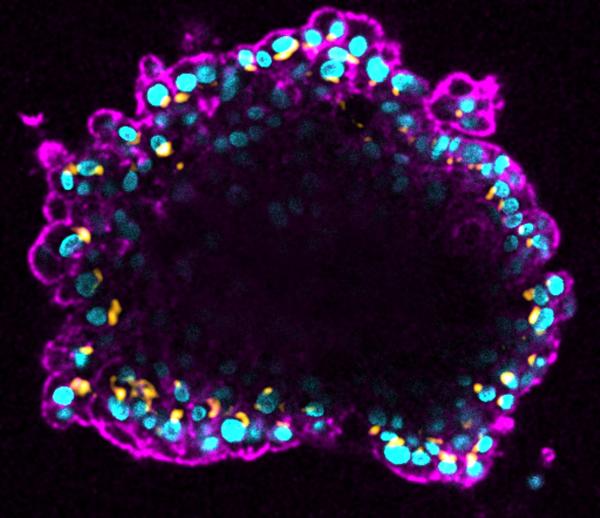
All cells possess a cytoskeleton which allows them to move and maintain their shape. However, scientists recently showed that a part of this cytoskeleton called branched actin is also essential to cell proliferation*: this actin transmits information to cells about the space around them, environmental chemical messages and therefore on whether they should proliferate. If the necessary conditions are not met, these actin fibres are not synthesised, and the cell does not divide – except in the case of cancerous cells, which can override this control mechanism and proliferate where they should not. This mechanism could nevertheless represent a therapeutic target to fight certain types of cancer. Inhibiting the formation of branched actin, for example, prevents the growth of a type of melanoma cells, against which no other specific treatment exists today. This research, carried out by an international team composed of scientists at the Laboratoire Bases moléculaires et régulation de la biosynthèse protéique (CNRS/École polytechnique) appear in the April 10th 2019 edition of Cell Research.

###

*- Proliferation is the rapid and abundant growth of either normal or pathogenic cells.

Media Contact
Francois Maginiot
[email protected]

Related Journal Article

http://dx.doi.org/10.1038/s41422-019-0160-9

Tags: BiologycancerCell BiologyMolecular Biology
Share12Tweet8Share2ShareShareShare2

Related Posts

Nuclear Plant Proximity Linked to Cancer Deaths US

May 20, 2026

How Ozone Pollution Reduces the Lung Health Benefits of Exercise in Children

May 20, 2026

Hepatic SNHG9 Connects Gut Microbiota to Liver Defense

May 20, 2026

NCCN Reinforces Global Commitment to Cancer-Related Distress Resources in Observance of Mental Health Awareness Month

May 20, 2026
Please login to join discussion

POPULAR NEWS

  • blank

    New Study Reveals Plants Can Detect the Sound of Rain

    732 shares
    Share 292 Tweet 183
  • Research Indicates Potential Connection Between Prenatal Medication Exposure and Elevated Autism Risk

    846 shares
    Share 338 Tweet 212
  • ESMO 2025: mRNA COVID Vaccines Enhance Efficacy of Cancer Immunotherapy

    289 shares
    Share 116 Tweet 72
  • Breastmilk Balances E. coli and Beneficial Bacteria in Infant Gut Microbiomes

    58 shares
    Share 23 Tweet 15

About

We bring you the latest biotechnology news from best research centers and universities around the world. Check our website.

Follow us

Recent News

Connecting Biological Neural Networks with 3D Devices

Nuclear Plant Proximity Linked to Cancer Deaths US

BLIP Score: New Prognostic Tool for Lung Cancer

Subscribe to Blog via Email

Enter your email address to subscribe to this blog and receive notifications of new posts by email.

Join 82 other subscribers
  • Contact Us

Bioengineer.org © Copyright 2023 All Rights Reserved.

Welcome Back!

Login to your account below

Forgotten Password?

Retrieve your password

Please enter your username or email address to reset your password.

Log In
No Result
View All Result
  • Homepages
    • Home Page 1
    • Home Page 2
  • News
  • National
  • Business
  • Health
  • Lifestyle
  • Science

Bioengineer.org © Copyright 2023 All Rights Reserved.