• HOME
  • NEWS
  • EXPLORE
    • CAREER
      • Companies
      • Jobs
    • EVENTS
    • iGEM
      • News
      • Team
    • PHOTOS
    • VIDEO
    • WIKI
  • BLOG
  • COMMUNITY
    • FACEBOOK
    • INSTAGRAM
    • TWITTER
Monday, November 9, 2026
BIOENGINEER.ORG
No Result
View All Result
  • Login
  • HOME
  • NEWS
  • EXPLORE
    • CAREER
      • Companies
      • Jobs
        • Lecturer
        • PhD Studentship
        • Postdoc
        • Research Assistant
    • EVENTS
    • iGEM
      • News
      • Team
    • PHOTOS
    • VIDEO
    • WIKI
  • BLOG
  • COMMUNITY
    • FACEBOOK
    • INSTAGRAM
    • TWITTER
No Result
View All Result
Bioengineer.org
No Result
View All Result
Home NEWS Science News Health

Canadian public health physicians describe burnout and paths to recovery

by
October 29, 2026
in Health
Reading Time: 2 mins read
0
Canadian public health physicians describe burnout and paths to recovery

Canadian public health physicians describe burnout and paths to recovery

Share on FacebookShare on TwitterShare on LinkedinShare on RedditShare on Telegram

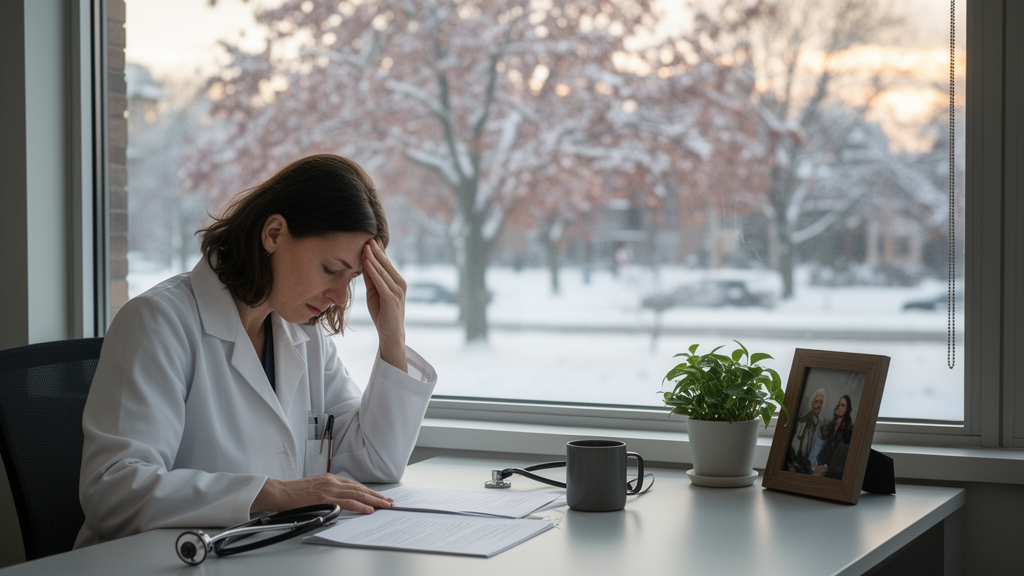
Burnout among Canadian public health physicians intensified during the COVID-19 pandemic, but the personal and systemic forces behind it have rarely been examined in depth. The researchers conducted semi-structured interviews between July and August 2024, recruiting participants from a 2024 national survey of public health physician leaders and residents.

The interviews, held in English or French by phone or video, were transcribed and analyzed using thematic analysis in NVivo 14. Coding followed a primarily deductive approach informed by the interview guide, with inductive codes added as new themes emerged from the data. This design allowed the team to capture both the factors participants expected to discuss and unexpected influences that surfaced during conversation.

The analysis showed that burnout was shaped by factors operating at both the individual and systems levels. At the individual level, contributors included knowledge and skills deficiencies, work-related stressors, personal life stressors, disrupted coping strategies, and a perceived lack of self-efficacy.

Not everything the participants described was corrosive. The study also identified mitigating factors that buffered physicians against burnout. Individually, these included prior training and work experience, stress management at work, privilege, personal coping strategies and social support, and perceived lack of self-efficacy. At the systems level, a safe workspace and a supportive organizational culture emerged as protective influences. The interplay between these contributors and buffers suggests that burnout in this workforce is not simply a matter of personal resilience but of the conditions surrounding daily public health work.

Participants proposed four overarching strategies for addressing burnout: building capacity and resilience, decreasing bureaucracy to improve workflow efficiency, creating healthier and safer work environments, and advocating for recognition and prioritization of public health. These strategies span the personal, organizational, and political spheres, reflecting the participants’ view that no single intervention can address a problem rooted in multiple levels of the system.

The authors conclude that burnout among Canadian public health physicians during the pandemic reflected cumulative system strain, insufficient emergency preparedness, and chronic underinvestment in public health infrastructure. While individual coping and experience offered some protection, they argue that sustainable solutions must address the organizational and structural drivers of burnout rather than relying on individual-level fixes alone.

Subject of Research: Qualitative study of burnout and recovery among Canadian public health physicians during the COVID-19 pandemic

Article Title: Rebuilding wellbeing in public health: a qualitative study of physician burnout and recovery in Canada

Article References: Sun, X., Yassa, P., Fatima, S. A., Hao, X. Y. C., Alvarez, E., Anderson, L. N., Malkin, I., Singh, J., Apatu, E., Piggott, T., Belita, E., Boamah, S. A., & Hopkins, J. P. (2026). Rebuilding wellbeing in public health: a qualitative study of physician burnout and recovery in Canada. BMC Public Health. https://doi.org/10.1186/s12889-026-29861-1

Image Credits: AI Generated

DOI: 10.1186/s12889-026-29861-1

Keywords: public health, physician burnout, qualitative research, COVID-19, Canada, workforce resilience, thematic analysis, occupational health, public health physicians, organizational culture, Rebuilding, wellbeing

News Source: Phoebe Ingram. (October 29, 2026). Canadian public health physicians describe burnout and paths to recovery. Scienmag.
Tags: CanadaCOVID-19occupational healthOrganizational Culturephysician burnoutPublic Healthpublic health physiciansqualitative researchRebuildingthematic analysiswellbeingworkforce resilience
Share12Tweet7Share2ShareShareShare1

Related Posts

Somali children with severe neck infections show vacuum therapy linked to deeper disease

Somali children with severe neck infections show vacuum therapy linked to deeper disease

November 9, 2026
Research report: Balloon flotation pacing for severe post-reperfusion syndrome in adult liver transplantation: a four-patient case series

Research report: Balloon flotation pacing for severe post-reperfusion syndrome in adult liver transplantation: a four-patient case series

November 9, 2026

Sarcopenia Linked to Greater Relative Leg Muscle Mass Deficit in Hospitalized Older Adults

November 9, 2026

Collaborative Surgical Training Models Expand Healthcare Workforce Across Developing Nations

November 9, 2026

POPULAR NEWS

  • Ulinastatin Shortens ICU Stays in Post-Traumatic Sepsis Trial

    Ulinastatin Shortens ICU Stays in Post-Traumatic Sepsis Trial

    29 shares
    Share 12 Tweet 7
  • Simulation Study Reveals Bias in Self-Controlled Drug Safety Designs

    29 shares
    Share 12 Tweet 7
  • Metabolic Enzyme and Protein Lactylation Markers Signal Laryngeal Cancer Progression

    29 shares
    Share 12 Tweet 7
  • Marine Compounds Identified as Potential GLP-1 Receptor Agonists

    29 shares
    Share 12 Tweet 7

About

We bring you the latest biotechnology news from best research centers and universities around the world. Check our website.

Follow us

Recent News

AI Framework Detects Hidden Grouting Defects and Maps 3D Porosity in Prefabricated Building Sleeves

Somali children with severe neck infections show vacuum therapy linked to deeper disease

Single Mutation Creates Highly Specific Maltose Biosensor

Subscribe to Blog via Email

Enter your email address to subscribe to this blog and receive notifications of new posts by email.

Join 86 other subscribers
  • Contact Us

Bioengineer.org © Copyright 2023 All Rights Reserved.

Welcome Back!

Login to your account below

Forgotten Password?

Retrieve your password

Please enter your username or email address to reset your password.

Log In
No Result
View All Result
  • Homepages
    • Home Page 1
    • Home Page 2
  • News
  • National
  • Business
  • Health
  • Lifestyle
  • Science

Bioengineer.org © Copyright 2023 All Rights Reserved.