• HOME
  • NEWS
  • EXPLORE
    • CAREER
      • Companies
      • Jobs
    • EVENTS
    • iGEM
      • News
      • Team
    • PHOTOS
    • VIDEO
    • WIKI
  • BLOG
  • COMMUNITY
    • FACEBOOK
    • INSTAGRAM
    • TWITTER
Saturday, May 16, 2026
BIOENGINEER.ORG
No Result
View All Result
  • Login
  • HOME
  • NEWS
  • EXPLORE
    • CAREER
      • Companies
      • Jobs
        • Lecturer
        • PhD Studentship
        • Postdoc
        • Research Assistant
    • EVENTS
    • iGEM
      • News
      • Team
    • PHOTOS
    • VIDEO
    • WIKI
  • BLOG
  • COMMUNITY
    • FACEBOOK
    • INSTAGRAM
    • TWITTER
  • HOME
  • NEWS
  • EXPLORE
    • CAREER
      • Companies
      • Jobs
        • Lecturer
        • PhD Studentship
        • Postdoc
        • Research Assistant
    • EVENTS
    • iGEM
      • News
      • Team
    • PHOTOS
    • VIDEO
    • WIKI
  • BLOG
  • COMMUNITY
    • FACEBOOK
    • INSTAGRAM
    • TWITTER
No Result
View All Result
Bioengineer.org
No Result
View All Result
Home NEWS Science News Biology

Can the environment help control disease in Asian aquaculture?

Bioengineer by Bioengineer
February 11, 2018
in Biology
Reading Time: 2 mins read
0
Share on FacebookShare on TwitterShare on LinkedinShare on RedditShare on Telegram
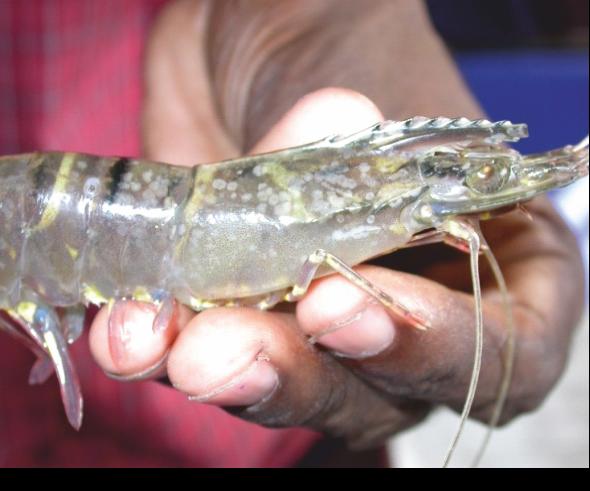
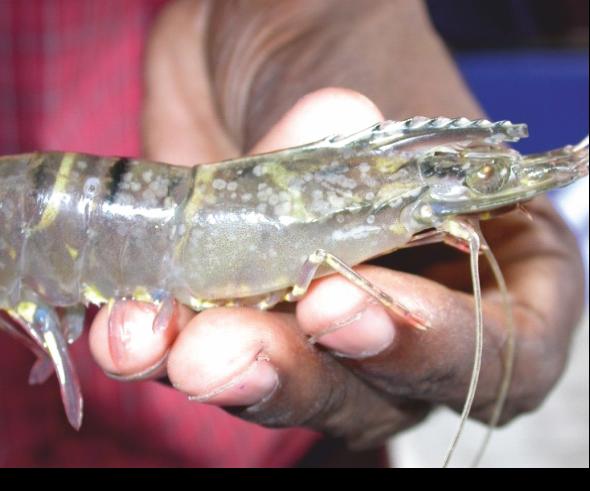
IMAGE

The University of Southampton is leading an international project to understand how the environment can help to control the risk of disease in fish and crustacean aquaculture in India and Bangladesh.

Infectious disease outbreaks represent a key limitation to the sustainable expansion of the aquaculture industry to meet the global challenges of food security and poverty alleviation.

The consortium, which is jointly led by the University of Southampton (UK) and the Central Institute of Brackishwater Aquaculture (India), involves nine research institutes and universities in India, the UK and Bangladesh.

The aim of the project is to calculate the role of physical pond conditions in controlling two socio-economically devastating pathogens of decapod crustaceans and freshwater fish in Asian aquaculture.

Global losses to White Spot Syndrome Virus (WSSV), the causative agent of white spot disease (WSD) in shrimp and other crustaceans, have been estimated to cost between US$ 8-15 billion.

Dr Chris Hauton, Associate Professor in Ocean and Earth Science at the University of Southampton and Principal Investigator of the project, said: "Currently, there is no effective means of controlling this globally significant pathogen that has been proven at farm scale. Our current best option is to understand how the environment controls disease progression in shrimp ponds, as a means to reduce the risk of infectious outbreak. This knowledge, incorporated into guidelines for best management practice, will allow for the development of novel intervention strategies to be implemented in the future."

At least 94 species of fish are affected by ulcerative syndromes (EUS) caused by the pathogenic fungal-like oomycete Aphanomyces invadans. In the period 1988-89 Bangladesh alone suffered a revenue loss of US$ 4.8 million due to EUS.

Professor Pieter van West, Director of the International Centre for Aquaculture Research and Development at the University of Aberdeen, added: "This is a very important award that will give us much needed information about EUS. As far as we know, this disease has not reached European aquaculture, but is one disease we should be very vigilant about as it is uncontrollable at the moment."

Researchers will work with farmers in India and Bangladesh to identify existing best practice to formulate new guidelines to disseminate throughout farming communities across Asia. The team will also develop new understanding of the host pathogen interaction for both diseases, with the intention of developing future novel intervention methods with which to tackle infection.

Funding for this research has been provided through the Global Research Partnership Aquaculture, representing the Department of Biotechnology (DBT) India, the UK Biotechnology and Biological Sciences and the Economic and Social Research Councils (BBSRC and ESRC), the Newton-Bhabha Fund and UK Aid.

###

Media Contact

Glenn Harris
[email protected]
44-023-805-93212
@unisouthampton

http://www.southampton.ac.uk/

Share12Tweet8Share2ShareShareShare2

Related Posts

Uncovering C. elegans Immunity via Genetic Screens — Biology

Uncovering C. elegans Immunity via Genetic Screens

May 16, 2026
Single mother must adapt swiftly — the survival of her colony depends on it — Biology

Single mother must adapt swiftly — the survival of her colony depends on it

May 15, 2026

Why Are Nearly Everyone Right-Handed? It Might Be Linked to How We Learned to Walk

May 15, 2026

Excessive Neuronal Activity Initiates Severe Autoimmune Brain Disorder

May 15, 2026
Please login to join discussion

POPULAR NEWS

  • Research Indicates Potential Connection Between Prenatal Medication Exposure and Elevated Autism Risk

    844 shares
    Share 338 Tweet 211
  • New Study Reveals Plants Can Detect the Sound of Rain

    730 shares
    Share 291 Tweet 182
  • Salmonella Haem Blocks Macrophages, Boosts Infection

    62 shares
    Share 25 Tweet 16
  • Breastmilk Balances E. coli and Beneficial Bacteria in Infant Gut Microbiomes

    58 shares
    Share 23 Tweet 15

About

We bring you the latest biotechnology news from best research centers and universities around the world. Check our website.

Follow us

Recent News

Short-Term Home Cognitive & Physical Training Tested in Seniors

Stress Evolution and Time Control in Retreat Roadways

New Kineococcus Species Discovered on Anabasis Seeds

Subscribe to Blog via Email

Enter your email address to subscribe to this blog and receive notifications of new posts by email.

Join 82 other subscribers
  • Contact Us

Bioengineer.org © Copyright 2023 All Rights Reserved.

Welcome Back!

Login to your account below

Forgotten Password?

Retrieve your password

Please enter your username or email address to reset your password.

Log In
No Result
View All Result
  • Homepages
    • Home Page 1
    • Home Page 2
  • News
  • National
  • Business
  • Health
  • Lifestyle
  • Science

Bioengineer.org © Copyright 2023 All Rights Reserved.