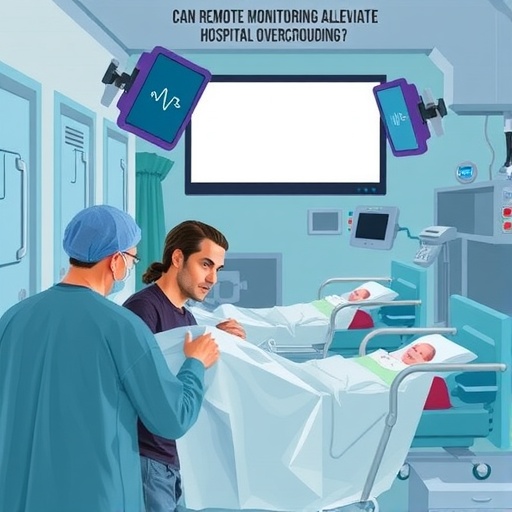
In a groundbreaking transformation poised to redefine acute healthcare delivery, the emerging Hospital-at-Home (HaH) paradigm is rapidly gaining momentum globally. Fueled by recent technological advances in remote monitoring and portable medical devices, this novel approach facilitates the provision of hospital-level acute care directly within patients’ residences. By dismantling the physical confines of traditional hospitals, HaH models offer a compelling solution to chronic overcrowding and critical workforce deficits that have long challenged healthcare systems worldwide.
At the heart of this revolution lies a suite of sophisticated technologies that converge to recreate the hospital environment in the comfort of home. Wearable sensors stand as a cornerstone, providing continuous, real-time surveillance of patients’ vital parameters—heart rate, respiratory function, and electrical cardiac rhythms—transmitting data instantly to clinical teams. These devices empower healthcare providers to detect subtle physiological shifts that may presage deterioration, enabling preemptive interventions that can forestall emergencies.
Complementing wearable monitoring, portable diagnostic platforms have evolved to bring laboratory analysis and imaging capabilities to patients’ doorsteps. Miniaturized ultrasound devices, point-of-care blood analyzers, and compact imaging systems eliminate the logistical complexities and risks associated with patient transport to centralized facilities. This decentralization not only expedites diagnostic workflows but also minimizes exposure to nosocomial infections, a significant concern in traditional inpatient settings.
Perhaps the most striking advancement powering HaH initiatives is the integration of predictive analytics and artificial intelligence. By harnessing vast datasets through machine learning algorithms and sophisticated natural language processing models, care teams gain unparalleled capacity to forecast complications. These AI-driven insights proactively flag high-risk trajectories in patients with pneumonia, congestive heart failure, post-surgical recovery challenges, and myriad acute ailments, enabling precision-tailored interventions that optimize outcomes.
Beyond clinical monitoring, advanced telehealth infrastructures underpin seamless communication between patients, caregivers, and multidisciplinary healthcare professionals. Video consultations, real-time data sharing, and virtual rounds constitute the digital backbone of this home-based hospital ecosystem. Logistic automation further enhances service delivery through innovations such as drone-mediated medical supply distribution, guaranteeing uninterrupted access to critical medications and consumables while maintaining strict inventory controls akin to those in brick-and-mortar institutions.
The clinical merits of HaH models are substantiated by a growing evidence base. Pioneers like Dr. Bruce Leff of Johns Hopkins University have documented compelling outcomes including significant reductions in healthcare expenditures and hospital readmissions. Notably, the rate of acute delirium—a neurologically debilitating complication prevalent among elderly inpatients—is markedly diminished in home settings, reflecting the therapeutic benefits of familiar environments coupled with attentive, continuous care.
Despite its promise, the widespread adoption of Hospital-at-Home programs encounters formidable challenges. Payment reform remains an unfinished agenda, as existing reimbursement frameworks are predominantly structured around conventional inpatient metrics, impeding investment in home-based alternatives. Moreover, establishing trust in the clinical efficacy and safety of HaH requires extensive cultural shifts among both healthcare providers and patients accustomed to conventional hospital care.
Technological challenges, particularly in data security and systems integration, demand robust solutions. Managing the deluge of sensitive patient data transmitted over diverse platforms necessitates cutting-edge encryption techniques and compliance with stringent regulatory standards to safeguard privacy. Additionally, scalable workforce models must be devised to address the logistical complexity of delivering round-the-clock, in-person clinical visits across dispersed geographies.
In response, a collective of health systems and technology innovators are forging pathways for HaH expansion, building interoperable digital health ecosystems and advocating policy reforms. By developing unified electronic health records that seamlessly integrate patient-generated data with hospital information systems, the coordination and continuity of care are enhanced, reducing fragmentation inherent in traditional models.
As the population ages and the global incidence of chronic diseases escalates, the pressure on hospital infrastructure intensifies. Hospital-at-Home frameworks emerge not merely as stopgap measures during crises like pandemics but as sustainable, scalable solutions. They exemplify a shift towards patient-centric care models that prioritize quality, accessibility, and dignity, ultimately contributing to the resilience and efficiency of healthcare delivery systems.
This paradigm shift posits that future hospitals will evolve into hubs for specialized, high-acuity services such as emergency departments, operating rooms, and intensive care units. Meanwhile, routine acute care and convalescence are expected to transition to technologically enabled home environments. This decentralization holds profound implications for healthcare economics, resource allocation, and patient experience, heralding a new era where the boundaries of hospital walls extend seamlessly into the community.
In summary, the Hospital-at-Home concept, empowered by wearable sensors, portable diagnostics, predictive AI analytics, and automated logistics, is reshaping acute care delivery. By facilitating recovery and disease management in the patients’ own homes, these models mitigate costs and improve outcomes, particularly among vulnerable elderly populations. The successful integration of technology, clinical expertise, and innovative care models signals a transformative future for medicine, where acute care is no longer tethered to institutions but is personalized, accessible, and adaptive.
Subject of Research: People
Article Title: Hospital-at-Home: New Technology Brings Acute Care to Patients’ Homes
News Publication Date: 20-Apr-2026
Web References: https://jmirpublications.com
References: Congdon J. Hospital-at-Home: New Technology Brings Acute Care to Patients’ Homes. J Med Internet Res 2026;28:e98143. DOI: 10.2196/98143
Image Credits: Jenna Congdon, BSN, RN., JMIR Correspondent
Keywords: Hospital-at-Home, Remote Monitoring, Wearable Sensors, Portable Diagnostics, Predictive Analytics, Artificial Intelligence, Telehealth, Acute Care, Healthcare Innovation, Patient-Centered Care, Health Technology, Digital Health
Tags: continuous vital sign monitoringdecentralized healthcare diagnosticshealthcare workforce optimizationhome-based acute healthcare deliveryHospital-at-Home modelsminimizing hospital-acquired infectionsportable medical diagnostic devicespreemptive clinical interventions at homereducing hospital overcrowding strategiesremote patient monitoring technologytelemedicine in acute carewearable health sensors for acute care