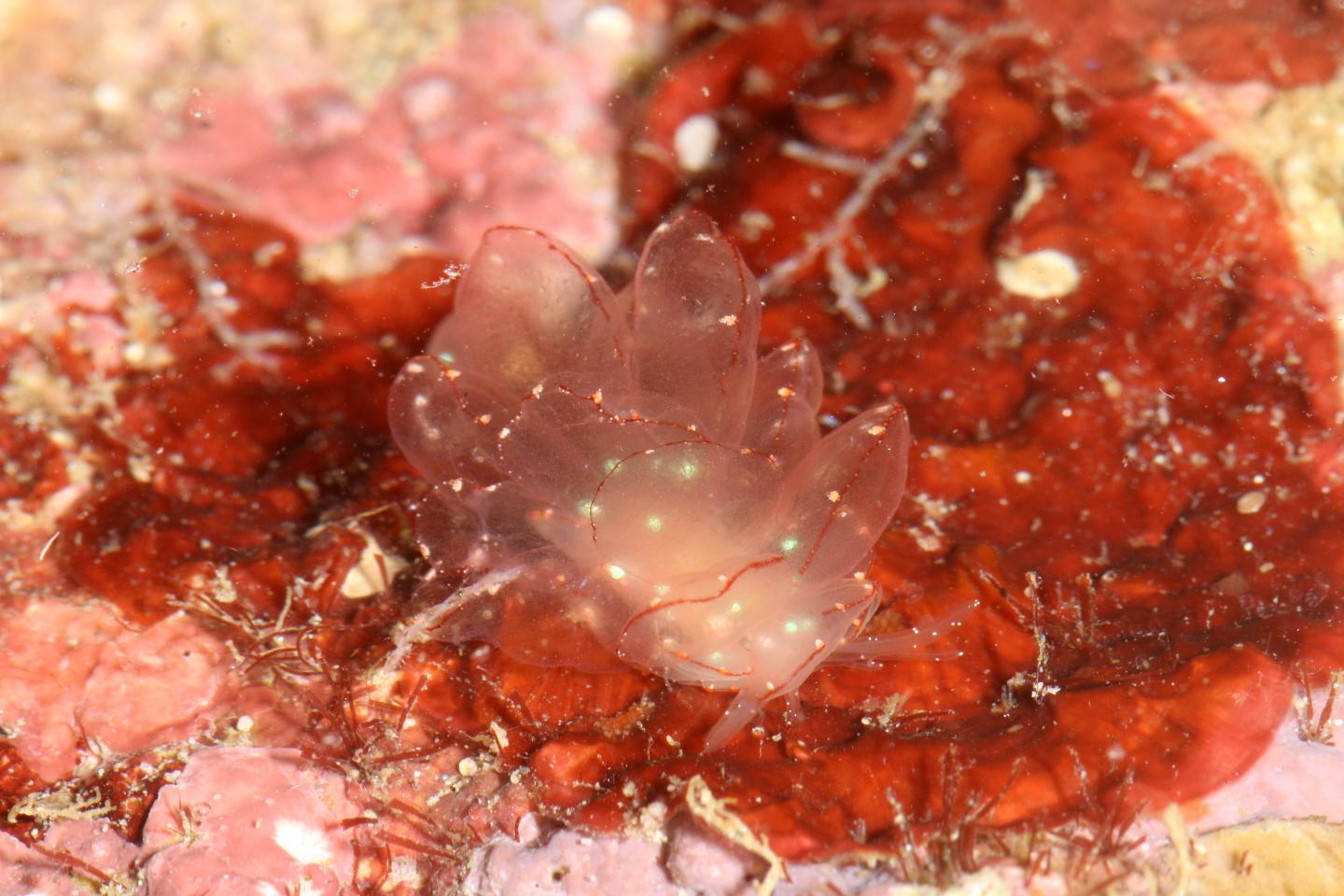
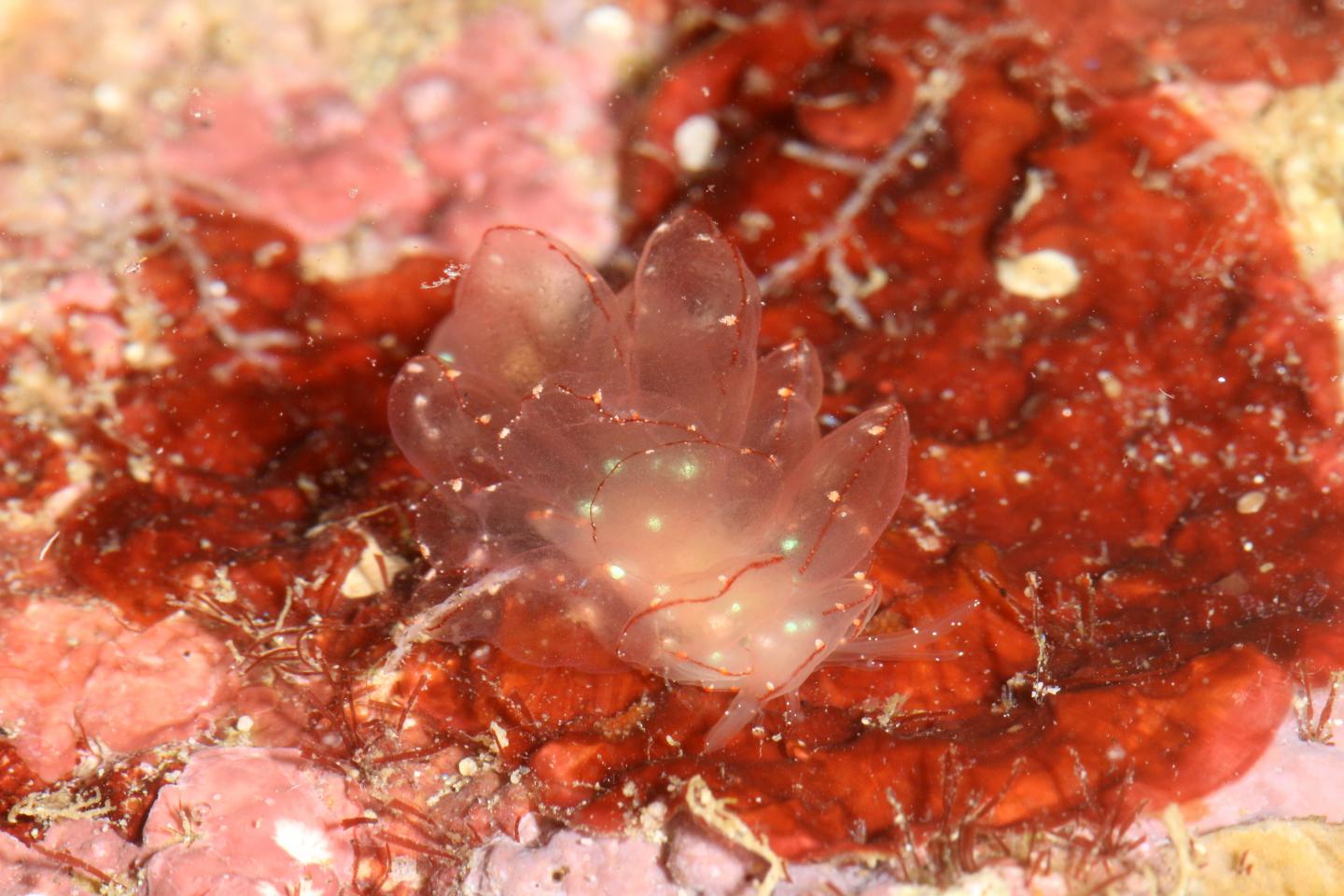
Credit: Terry Gosliner © California Academy of Sciences
San Francisco (June 8, 2017)– The California Academy of Sciences' Hope for Reefs initiative continues to advance global understanding of coral reef science through a series of ambitious expeditions. The team most recently returned from the Verde Island Passage in the Philippines–a longtime regional focus of Academy research considered the "center of the center" of marine biodiversity. The Academy's science diving teams explored both deep and shallow ecosystems to document species richness, evaluate ecosystem health, and gather data to support smarter ocean conservation strategies.
Building upon nearly three decades of Academy research in the region, the team has once again discovered several new species of fish, nudibranchs, urchins, and sand dollars. Academy researchers have visited the region since 1992 and in that time have discovered over one thousand species that are new to science. Just this month, Academy Curator of Invertebrate Zoology Dr. Terry Gosliner formally described eight new nudibranch species collected from earlier expeditions. Academy scientists also worked to promote a deeper appreciation for coral reefs through community outreach and presentations to a local school.
Dr. Rebecca Albright, Academy curator and coral biologist, assessed coral health and diversity across shallow dive sites–building upon her research on how to maximize coral recruitment in the face of environmental stressors. Her findings help leverage restoration efforts that enhance reef resilience.
In addition to discovering new marine species, the deep-diving "twilight zone" team also documented evidence of human impacts at 200-500 feet below the ocean's surface, indicating that mesophotic deep reefs are as heavily impacted as their shallow counterparts and in need of strong protections. Despite the fact that these unique ecosystems are greatly impacted by pollution and storm damage, twilight zone reefs are largely ignored by current protections. Marine protected areas (MPAs) and sanctuaries tend to favor shallow reefs better known to science and coastal communities.
Visitors to the California Academy of Sciences in San Francisco can meet scientists from the Hope for Reefs initiative this evening (June 8, World Oceans Day) at Coral Reef NightLife. Visitors to the Academy's Steinhart Aquarium can also take a closer look at mesophotic marine creatures from the Philippines in Twilight Zone: Deep Reefs Revealed.
Considered the "rainforests of the sea," coral reefs are some of the most beautiful, biologically diverse, and economically valuable ecosystems on Earth. They cover less than 1% of the ocean but contain more than 25% of all marine species. Coral reefs are integral to the livelihoods and well-being of billions of people worldwide, providing protection from erosion and storm damage, and generating income through ecotourism and fishing. Nearly 75% of the world's coral reefs are currently threatened by the combined impacts of overfishing, habitat destruction, water pollution, climate change, and ocean acidification. The Academy's Hope for Reefs initiative aims to reverse the potential collapse of global coral reefs by exploring little-known ecosystems, advancing coral reef science by decades, and communicating these issues to the public through innovative exhibits, media, and education programs. This work is supported by visionary donors taking action before life-supporting coral reefs are lost forever.
###
For the latest hi-res images/video and to connect with Academy scientists, please contact:
Haley Bowling, (415) 379-5123, [email protected]
Katie Jewett, (415) 379-5130, [email protected]
The Academy's Hope for Reefs initiative is made possible through the support of visionary donors. The Academy gratefully acknowledges the lead partners listed below.
- William K. Bowes, Jr. Foundation
- Dalio Ocean Initiative
- Jennifer Caldwell and John H.N. Fisher
- Eva and Bill Price
- Wendy and Eric Schmidt
- Kingfisher Foundation
- Hellman Foundation
- Frances and Warren Hellman
- Diana Nelson and John Atwater
About Research at the California Academy of Sciences
The Institute for Biodiversity Science and Sustainability at the California Academy of Sciences is at the forefront of efforts to understand two of the most important topics of our time: the nature and sustainability of life on Earth. Based in San Francisco, the Institute is home to more than 100 world-class scientists, state-of-the-art facilities, and nearly 46 million scientific specimens from around the world. The Institute also leverages the expertise and efforts of more than 100 international Associates and 400 distinguished Fellows. Through expeditions around the globe, investigations in the lab, and analysis of vast biological datasets, the Institute's scientists work to understand the evolution and interconnectedness of organisms and ecosystems, the threats they face around the world, and the most effective strategies for sustaining them into the future. Through innovative partnerships and public engagement initiatives, they also guide critical sustainability and conservation decisions worldwide, inspire and mentor the next generation of scientists, and foster responsible stewardship of our planet.
Media Contact
Katie Jewett
[email protected]
415-379-5130
@calacademy
http://www.calacademy.org
Original Source
https://www.calacademy.org/press/releases/scientists-from-the-california-academy-of-sciences-advancing-hope-for-reefs-in-the http://dx.doi.org/10.1093/zoolinnean/zlw018
############
Story Source: Materials provided by Scienmag