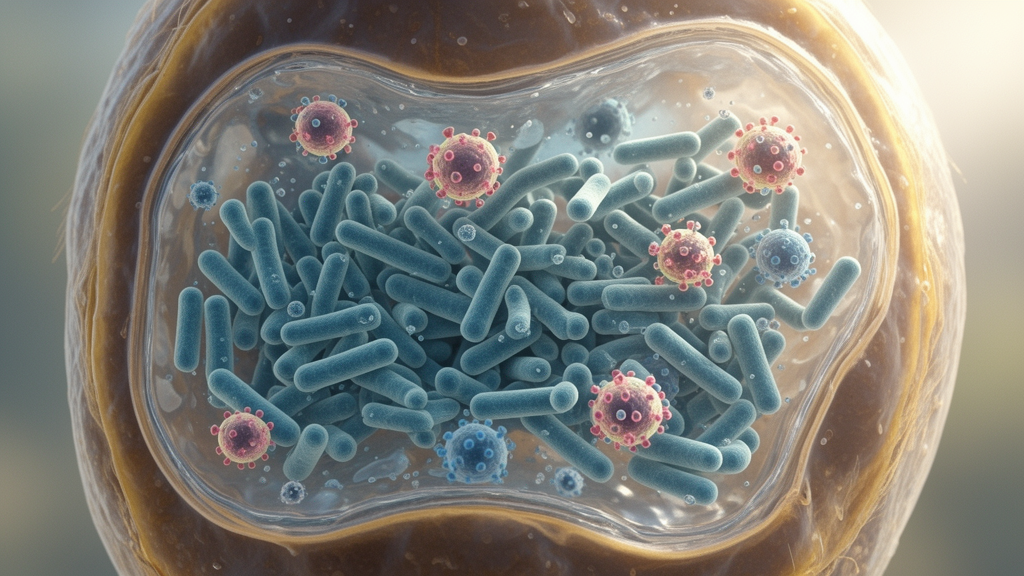
A critical review of corbiculate bee biology has concluded that while the specialized gut microbiota of bumble bees offers robust, experimentally demonstrated protection against virulent intestinal pathogens, many broader physiological functions attributed to these bacterial communities remain unproven in living hosts. Publishing in Frontiers in Microbiology, researchers Massimo Iorizzo, Dalila Di Criscio, Sonia Ganassi, and Antonio De Cristofaro from the University of Molise evaluated current research on the bumble bee gut microbiota. The authors determined that the strongest experimental support across the literature centers on colonization resistance against harmful gut invaders like the trypanosomatid parasite Crithidia bombi and opportunistic bacterial pathogens, alongside measurable modulation of host antibacterial immunity. In contrast, widely cited hypotheses suggesting that gut microorganisms drive larval caste differentiation, directly detoxify synthetic agrochemicals, regulate complex behaviors, or mediate environmental adaptation still rely primarily on correlative surveys, taxonomic associations, and computer-predicted metabolic pathways rather than verified in vivo biological mechanisms.
Bumble bees serve as vital agricultural and ecological pollinators across temperate ecosystems, yet many wild populations face mounting survival pressures from habitat alteration, nutritional deficits, chemical pesticides, changing climatic regimes, and spreading pathogens. To understand how bumble bee physiology interacts with these compounding stressors, researchers have increasingly investigated the host-associated microbial communities occupying the insect digestive tract. Unlike many other insects harboring highly variable assemblages, bumble bees carry a relatively simple, evolutionary conserved core gut microbiota dominated by five recurrent bacterial lineages: Snodgrassella, Gilliamella, members of the family Lactobacillaceae historically classified as the Firm-4 and Firm-5 groups, Bifidobacterium, and Bombiscardovia. However, the Italian review team stressed that the persistent presence of these shared phylogenetic lineages across social bees should never be confused with functional uniformity. High-resolution genomic sequencing shows marked genomic diversification between strains colonizing honey bees and bumble bees, as well as distinct metabolic niche specialization between individual gut compartments.
Spatial organization within the bumble bee digestive tract underscores this evolutionary specialization, with distinct bacterial lineages colonizing specific microenvironments along the gut axis. Snodgrassella alvi and Gilliamella apicola primarily colonize the epithelial surfaces of the ileum, whereas Lactobacillaceae and Bifidobacterium lineages predominate downstream in the rectum. Comparative genomic and physiological analyses reveal that these core residents rely on complementary metabolic substrates. Gilliamella functions primarily as a saccharolytic fermenter capable of utilizing specific dietary monosaccharides and breakdown products, whereas Snodgrassella cannot metabolize simple carbohydrates directly and instead depends upon carboxylic acids for energy. Although genomic sequencing and in vitro microbial cultures demonstrate that Gilliamella, Bifidobacterium, and Bombiscardovia possess enzymatic repertoires tailored for carbohydrate and glucose fermentation, the review emphasized that predicted metabolic capability does not prove that these bacteria quantitatively contribute to host nutrient absorption or energy balance in living bumble bees.
Unlike perennial honey bee colonies that maintain unbroken social contact across multiple years, bumble bees undergo an annual colony cycle that requires their gut microbiota to be disassembled, preserved, and reassembled each generation. The primary route of microbial continuity relies on overwintered queens, whose gut microbiota structure changes during and after diapause before colony establishment. Once workers emerge, social transmission within the colony facilitates microbial exchange and queen-to-worker transmission. Experimental studies confirming that newly emerged workers share near-identical bacterial strains with their founding queens validate the essential role of social contact in community maintenance. However, this assembly process remains dynamic during colony development, shaped by host developmental stages, worker ageing, and environmental exposure.
The clearest empirical evidence supporting the biological significance of this resident community comes from controlled inoculation experiments evaluating intestinal infection. Pioneering controlled challenge trials established that worker bees inoculated with nestmate-derived feces or cultured symbionts experienced dramatically lower infection intensities when exposed to the common gut parasite Crithidia bombi compared to microbiota-depleted control bees. More recent laboratory manipulations using Bombus impatiens demonstrated that an intact core microbiota actively blocks colonization by the opportunistic bacterial pathogen Serratia marcescens, directly preserving host survival and reproductive capacity. Furthermore, native microbiota supplementation via fecal transplantation in newly emerged workers has been shown to enhance induced antibacterial activity while reducing survival costs associated with non-pathogenic immune activation. Nevertheless, researchers caution that the relative importance of specific protective mechanisms, such as competitive exclusion of receptor sites, direct niche competition for dietary nutrients, microenvironmental physicochemical modification, or systemic host immune stimulation, remains largely unseparated in vivo.
In sharp contrast to the reproducible findings regarding intestinal defense, proposed microbial roles in behavioral regulation, cognition, and caste differentiation remain fraught with experimental ambiguity. For instance, while one study found that supplementing Bombus terrestris with Lactobacillus apis improved long-term memory retention through altered glycerophospholipid metabolism involving lysophosphatidic acid, other controlled trials in Bombus impatiens observed no measurable differences in visual learning or memory retention between microbiota-depleted and colonized workers. Similarly, while deep sequencing demonstrates that microbial diversity and community structure diverge between queens and workers during late larval development and adulthood, this taxonomic separation cannot demonstrate that gut bacteria trigger caste determination. Instead, microbial differences between queens and workers may merely reflect developmental, physiological, or nutritional changes between castes.
The synthesis also closely scrutinized the popular hypothesis that the gut microbiota actively shields bumble bees from anthropogenic chemicals through microbial detoxification. Experimental studies evaluating the impact of the herbicide glyphosate have generated highly conflicting results that depend heavily on exposure protocols, chemical formulations, and host colonies. Repeated exposure to commercial herbicide formulations or pure technical glyphosate altered the relative abundance of core taxa in some laboratory trials, whereas single acute oral doses produced no significant community changes in others. In Bombus impatiens workers exposed for five days, reductions in Snodgrassella abundance appeared in only two out of four commercial colonies tested and spontaneously recovered within three to seven days. Furthermore, concurrent changes in host gene expression following sublethal exposure to chloramphenicol or lead do not establish whether gut microbiota alterations contribute directly to the observed host responses.
External environmental factors, including agricultural landscapes, dietary diversity, and captive breeding facilities, also exert measurable but poorly understood influences on bumble bee gut assemblages. A synthesis integrating 814 gut samples across 15 studies identified rearing environment as an important source of microbiota variation, with greater microbial richness in outdoor- than indoor-reared bees. Transferring commercial colonies to outdoor enclosures typically triggers rapid compositional turnover and colonization by environmentally acquired bacteria. Interestingly, experimentally manipulated floral diversity had no significant effect on microbiota progression, indicating that outdoor exposure modifies gut communities without a simple relationship to floral diversity. Along natural elevational gradients, variations in bacterial lineages such as elevational replacement within Snodgrassella associate with altitude, but direct proof that these microbial shifts causally enhance host adaptation remains untested.
Methodological heterogeneity represents a profound hurdle in modern pollinator microbiome science, leading many researchers to overinterpret associative data. The review highlighted that standard high-throughput 16S ribosomal RNA gene sequencing, while scalable and cost-effective, cannot reliably resolve closely related bacterial strains that harbor vastly different functional genes, nor can it measure actual metabolic gene expression. Shotgun metagenomics provides critical strain-level resolution and maps reconstructed metabolic pathways, but genomic presence does not demonstrate active physiological expression inside the living insect. The authors emphasized that future research must combine functional transcriptomics, metabolomics, and standardized in vivo colonization assays using microbiota-free bees to separate three fundamentally distinct conditions: normal ecological variation across host life cycles, transient microbial disturbances followed by full functional recovery, and biologically detrimental dysbiosis that genuinely impairs host survival or colony reproduction.
Ultimately, the Italian research team concluded that applying microbiome-based tools to commercial bumble bee management and wild pollinator conservation remains prospective rather than immediately actionable. Introducing probiotic strains or single-species bacterial inoculants into commercial hives often produces inconsistent, short-lived establishment without reproducible colony-level benefits, while presenting uncharacterized ecological risks of microbial spillover into declining native bee populations. Until longitudinal field studies prove that specific gut bacterial profiles consistently predict whole-colony reproductive success across diverse Bombus species, microbiome metrics cannot replace core conservation priorities. Protecting wild bumble bees still depends decisively on mitigating verified primary environmental threats, including the extensive loss of flowering habitats, high pesticide burdens, expanding parasitic diseases, and escalating climate extremes.
Subject of Research: Critical synthesis of the composition, functional evidence, and environmental responses of the bumble bee gut microbiota
Article Title: The bumble bee gut microbiota: ecological dynamics, functional roles and environmental responses
Article References: Iorizzo, M., Di Criscio, D., Ganassi, S., & De Cristofaro, A. (2026). The bumble bee gut microbiota: ecological dynamics, functional roles and environmental responses. Frontiers in Microbiology, 17, Article 2008840. https://doi.org/10.3389/fmicb.2026.2008840
Image Credits: AI Generated
DOI: 10.3389/fmicb.2026.2008840
Keywords: Bombus, bumble bee gut microbiota, Snodgrassella alvi, Gilliamella apicola, Lactobacillaceae, Bifidobacterium, Bombiscardovia, Crithidia bombi, Serratia marcescens, colonization resistance, immune modulation, social transmission, queen diapause, shotgun metagenomics, environmental stressors, glyphosate exposure, pollinator health
News Source: Morgan Morrow. (November 15, 2026). Bumble Bee Gut Bacteria Show Strongest Evidence in Pathogen Defense. Scienmag.