


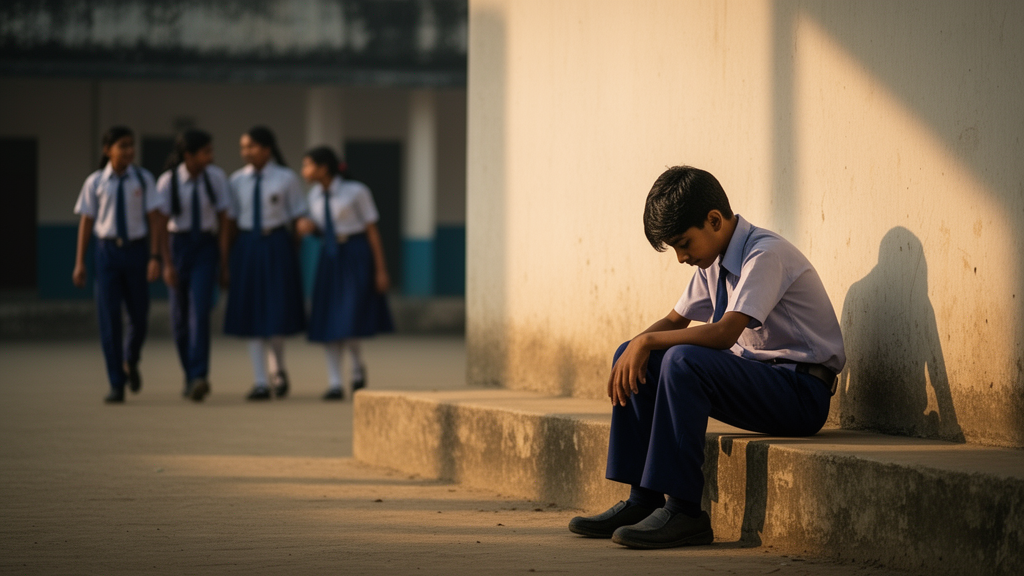
Verbal bullying and cyberbullying are independently associated with higher depressive symptom scores among adolescents in Bangladesh, according to an analysis of data from the nationally representative Bangladesh Adolescent Health and Wellbeing Survey, conducted in 2019–2020. The study, by Ruhul Amin and A S M Rafad Asgar, included 9,116 adolescents aged 15–19 years with complete depression data.
The researchers used a three-level linear mixed-effects model to account for the hierarchical structure of the survey, with adolescents nested within primary sampling units and districts. Verbal bullying showed the strongest single-form association, with a coefficient of 1.39 (p < 0.001), followed by cyberbullying at 1.15 (p = 0.012). The association between physical bullying and depressive symptoms differed significantly by gender, whereas interactions of gender with verbal and cyberbullying were not statistically significant. Exploratory subgroup analyses suggested variation in the magnitude of estimated associations across ever-married females, unmarried females, and unmarried males.
A graded pattern emerged for cumulative exposure. Compared with adolescents reporting no bullying, those exposed to one form had a coefficient of 1.25, two forms 2.61, and three forms 4.99, all with p < 0.001, indicating progressively higher depressive symptom scores with each additional form of victimization. The analysis also found that older age, current school or college attendance, and higher household wealth were associated with lower depressive symptom scores.
The authors note that bullying victimization, particularly verbal bullying, cyberbullying, and exposure to multiple forms, was associated with higher depressive symptoms among Bangladeshi adolescents, and they highlight the need for comprehensive bullying prevention strategies and accessible psychosocial support services, with particular attention to adolescents experiencing multiple forms of bullying and other vulnerable groups. As a cross-sectional survey analysis, the findings describe associations rather than causal effects, and the subgroup analyses were exploratory. The study relied on the 2019–2020 survey wave, so the results reflect that period rather than current conditions.
Subject of Research: The association between bullying victimization and depressive symptoms among adolescents in Bangladesh
Article Title: Exploring the association between bullying and depression symptoms among adolescents in Bangladesh: Findings from nationally representative survey
Article References: Amin, R., & Asgar, A. S. M. R. (2026). Exploring the association between bullying and depression symptoms among adolescents in Bangladesh: Findings from nationally representative survey. PLOS Mental Health, 3(10), e0000722. https://doi.org/10.1371/journal.pmen.0000722
Image Credits: AI Generated
DOI: 10.1371/journal.pmen.0000722
Keywords: bullying, depression, adolescents, Bangladesh, cyberbullying, mental health, verbal bullying, survey analysis, public health, psychosocial support, Exploring, association
News Source: Glenn Wilkins. (October 28, 2026). Bullying linked to higher depression scores among Bangladeshi adolescents. Scienmag.



