• HOME
  • NEWS
  • EXPLORE
    • CAREER
      • Companies
      • Jobs
    • EVENTS
    • iGEM
      • News
      • Team
    • PHOTOS
    • VIDEO
    • WIKI
  • BLOG
  • COMMUNITY
    • FACEBOOK
    • INSTAGRAM
    • TWITTER
Friday, June 26, 2026
BIOENGINEER.ORG
No Result
View All Result
  • Login
  • HOME
  • NEWS
  • EXPLORE
    • CAREER
      • Companies
      • Jobs
        • Lecturer
        • PhD Studentship
        • Postdoc
        • Research Assistant
    • EVENTS
    • iGEM
      • News
      • Team
    • PHOTOS
    • VIDEO
    • WIKI
  • BLOG
  • COMMUNITY
    • FACEBOOK
    • INSTAGRAM
    • TWITTER
  • HOME
  • NEWS
  • EXPLORE
    • CAREER
      • Companies
      • Jobs
        • Lecturer
        • PhD Studentship
        • Postdoc
        • Research Assistant
    • EVENTS
    • iGEM
      • News
      • Team
    • PHOTOS
    • VIDEO
    • WIKI
  • BLOG
  • COMMUNITY
    • FACEBOOK
    • INSTAGRAM
    • TWITTER
No Result
View All Result
Bioengineer.org
No Result
View All Result
Home NEWS Science News

Buckle up! Climate change to increase severe aircraft turbulence

Bioengineer by Bioengineer
April 6, 2017
in Science News
Reading Time: 2 mins read
0
Share on FacebookShare on TwitterShare on LinkedinShare on RedditShare on Telegram
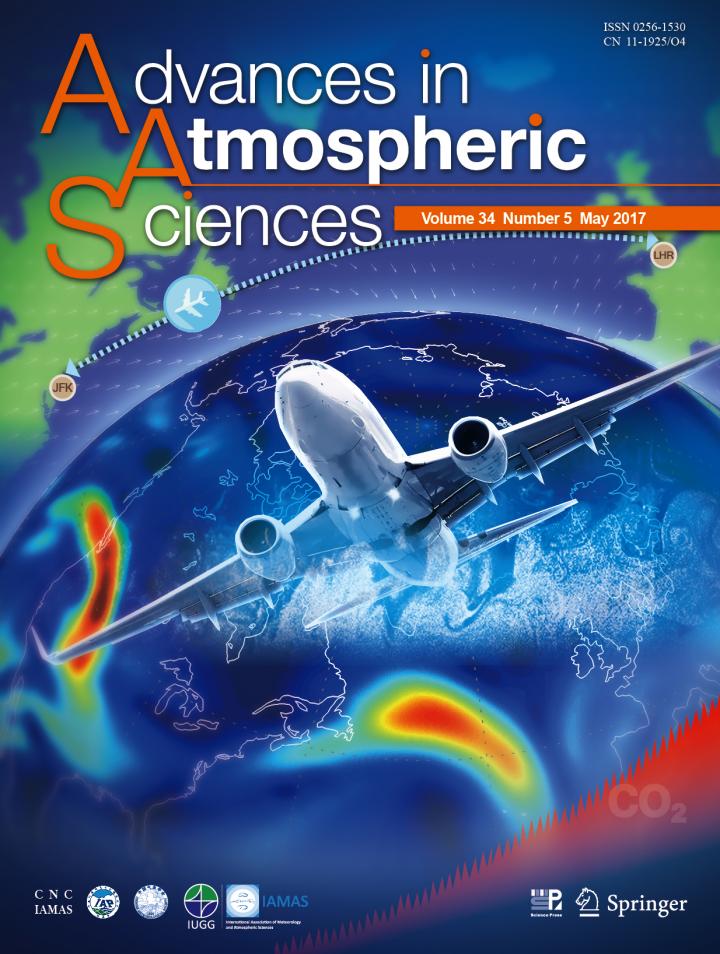
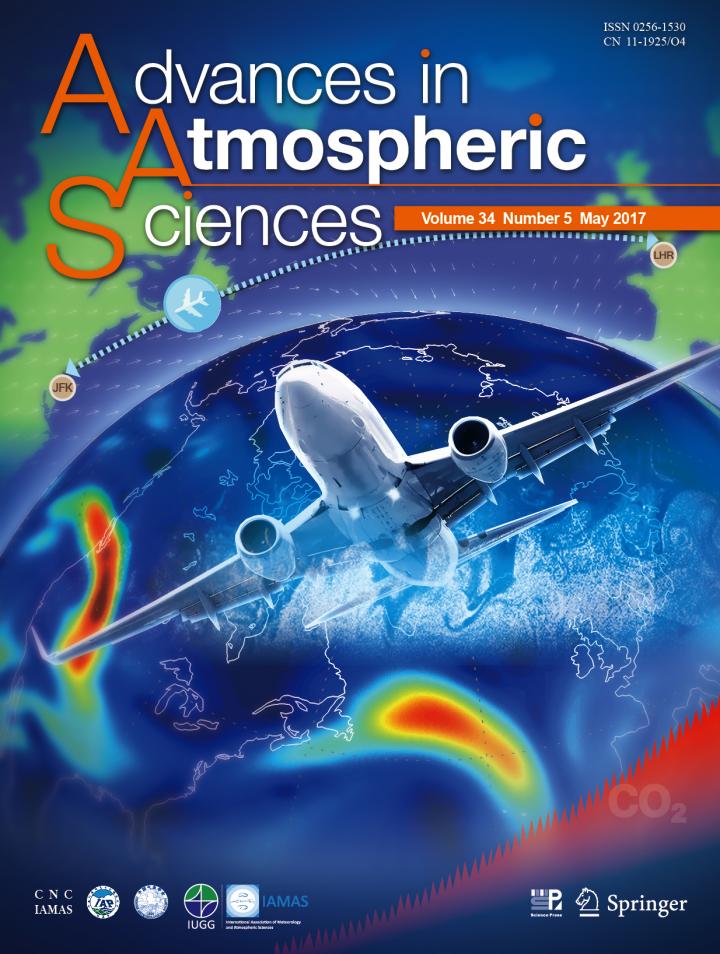
IMAGE

Credit: Advances in Atmospheric Sciences; image credit: Paul Williams

Turbulence strong enough to catapult unbuckled passengers and crew around the aircraft cabin could become twice or even three times as common because of climate change, according to a new study from the University of Reading published in Advances in Atmospheric Sciences.

The study is the first ever to examine the future of severe turbulence, which causes planes to undergo random up-and-down motions that are stronger than gravity. Passengers are forced violently against their seat belts, any unsecured objects are tossed about, and food service and walking are impossible.

The study examines several different turbulence strength levels, to investigate how they will each change in future. The results show that the average amount of light turbulence in the atmosphere will increase by 59%, with light-to-moderate turbulence increasing by 75%, moderate by 94%, moderate-to-severe by 127%, and severe by 149%.

The reason for the increases is that climate change is generating stronger wind shears within the jet stream. The wind shears can become unstable and are a major cause of turbulence.

Dr Paul Williams, who conducted the research, said: "Our new study paints the most detailed picture yet of how aircraft turbulence will respond to climate change.

"For most passengers, light turbulence is nothing more than an annoying inconvenience that reduces their comfort levels, but for nervous fliers even light turbulence can be distressing.

"However, even the most seasoned frequent fliers may be alarmed at the prospect of a 149% increase in severe turbulence, which frequently hospitalises air travellers and flight attendants around the world."

The new study uses supercomputer simulations of the atmosphere to calculate how wintertime transatlantic clear-air turbulence will change at an altitude of around 12 km (39,000 feet) when there is twice as much carbon dioxide in the atmosphere – which is widely expected to occur later this century.

Dr Williams added: "My top priority for the future is to investigate other flight routes around the world. We also need to investigate the altitude and seasonal dependence of the changes, and to analyze different climate models and warming scenarios to quantify the uncertainties."

###

Full reference: Williams PD (2017) Increased Light, Moderate, and Severe Clear-Air Turbulence in Response to Climate Change, Adv. Atmos. Sci., Volume 34, Issue 5, Pages 576-586, doi: 10.1007/s00376-017-6268-2. The paper will be freely accessible to the public from 6 April at this website: http://link.springer.com/article/10.1007/s00376-017-6268-2.

Advances in Atmospheric Sciences is an international journal on the dynamics, physics, and chemistry of the atmosphere and oceans. It is published by Springer and co-sponsored by the Institute of Atmospheric Physics, Chinese Academy of Sciences. http://www.springer.com/376

Media Contact

Jenny Lin
[email protected]
86-108-299-5053
@aasjournal

http://english.iap.cas.cn/

############

Story Source: Materials provided by Scienmag

Share12Tweet8Share2ShareShareShare2

Related Posts

Tracking Lanthanide-Labeled Microplastics in Plants

June 25, 2026

POSTECH Researchers Slash Cost of Reconstituted Cell-Free Systems by 95%

June 25, 2026

AI and Physics Collaborate to Design Advanced Hydrogen Storage Materials

June 25, 2026

Natural Hallucinogens: Evolution’s Ecological Tools, Not Mere Chemical Byproducts

June 25, 2026
Please login to join discussion

POPULAR NEWS

  • Saying Goodbye to PGY-6: Pediatric Fellowship Realities

    103 shares
    Share 41 Tweet 26
  • Multi-Hospital Study Reveals Long Covid Burden Is Twice as High as Current Estimates

    92 shares
    Share 36 Tweet 23
  • Detection of EDCs in Breast Milk and Infant Urine Up to Six Months Highlights Early Exposure Risks

    77 shares
    Share 31 Tweet 19
  • New Drug Candidate Developed at McMaster Shows Potential for Treating Brain Cancer

    58 shares
    Share 23 Tweet 15

About

We bring you the latest biotechnology news from best research centers and universities around the world. Check our website.

Follow us

Recent News

Tracking Lanthanide-Labeled Microplastics in Plants

POSTECH Researchers Slash Cost of Reconstituted Cell-Free Systems by 95%

AI and Physics Collaborate to Design Advanced Hydrogen Storage Materials

Subscribe to Blog via Email

Success! An email was just sent to confirm your subscription. Please find the email now and click 'Confirm' to start subscribing.

Join 82 other subscribers
  • Contact Us

Bioengineer.org © Copyright 2023 All Rights Reserved.

Welcome Back!

Login to your account below

Forgotten Password?

Retrieve your password

Please enter your username or email address to reset your password.

Log In
No Result
View All Result
  • Homepages
    • Home Page 1
    • Home Page 2
  • News
  • National
  • Business
  • Health
  • Lifestyle
  • Science

Bioengineer.org © Copyright 2023 All Rights Reserved.