


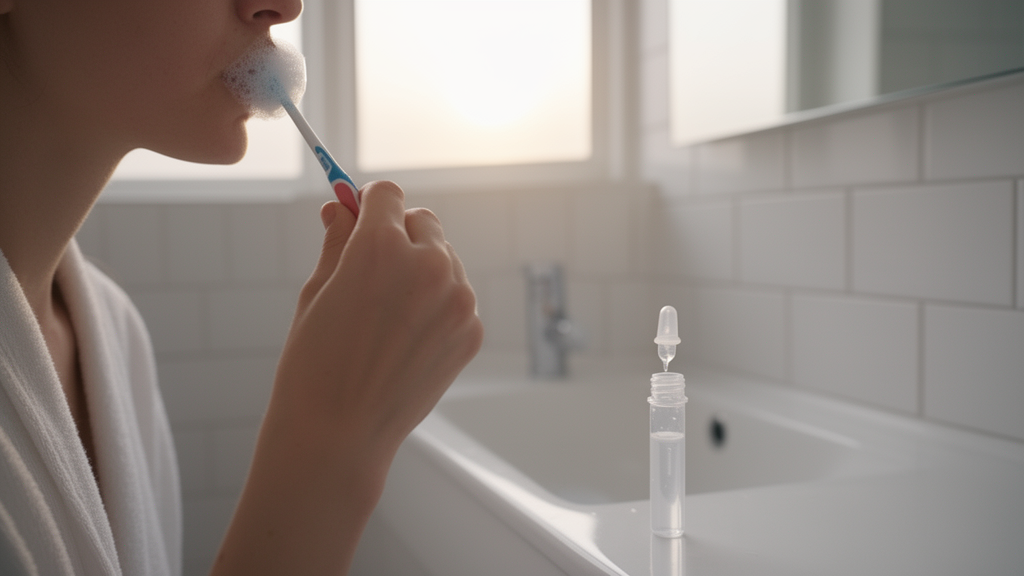
Something as ordinary as brushing your teeth could decide whether your saliva sample delivers a bounty of usable DNA or a disappointing trickle. A new pilot study from researchers in South Korea reports that pre-sampling habits, particularly tooth brushing, can reshape both the quantity and the composition of genomic DNA recovered from saliva. In a carefully controlled single-donor experiment, brushing emerged as the single most influential factor, accounting for nearly two-thirds of the variation in DNA yield, while simultaneously shifting the balance between human and bacterial DNA in the recovered material. The findings, published in Genomics & Informatics, offer some of the first systematic, quantitative guidance on a question that matters to anyone collecting saliva for genomic analysis.
Saliva has become one of the most attractive biospecimens in genomics. It is non-invasive, easy to collect, and rich in epithelial cells and leukocytes that serve as sources of genomic DNA for whole-genome sequencing, single-nucleotide polymorphism detection, and structural variant analyses. Yet the amount and quality of DNA that can be extracted from a saliva sample can vary dramatically depending on what the donor did before spitting into the tube. Despite the growing use of saliva in clinical and research settings, systematic guidance on everyday habits such as brushing, gargling, or drinking water before collection has been lacking, and previous studies have generally examined individual variables in isolation rather than comparing them within a single experimental framework.
To fill that gap, the team, led by Sangsoo Park, Hyoungjin Choi, and Jong Bhak, designed a factorial experiment testing eight pre-sampling conditions defined by three factors: tooth brushing, mouthwash gargling, and water intake, each either performed or not performed. All samples came from one healthy adult donor, with each condition sampled in triplicate. The brushing procedure used a standard toothbrush for three minutes; gargling involved 20 milliliters of Listerine Cool Mint mouthwash for 30 seconds; and the water condition involved drinking 500 milliliters. Saliva was collected one hour after completion of the assigned procedures in every case, a timing control intended to remove variability related to when the sample was taken relative to the intervention.
From each condition, five milliliters of whole saliva were processed. Salivary cells were isolated by dilution with phosphate-buffered saline, gentle mixing, and repeated centrifugation and washing steps, with wide-bore pipette tips used to minimize mechanical shear. Genomic DNA was then extracted from the cell pellets using a Qiagen Puregene Blood Core Kit following the manufacturer’s protocol, through sequential lysis with proteinase K, RNA removal, protein precipitation, isopropanol precipitation, ethanol washing, and hydration. DNA was quantified with both Qubit fluorometry, which specifically measures double-stranded DNA, and NanoDrop spectrophotometry, with purity assessed through the A260/280 absorbance ratio.
The statistical analysis applied a three-way analysis of variance to the full factorial design, using Qubit fluorometry data as the primary outcome because of its specificity for double-stranded DNA. The result was striking: brushing accounted for 62.9 percent of the total variation in DNA yield, making it by far the dominant factor. Gargling had a smaller but statistically significant effect at 5.6 percent, while water intake alone showed no significant effect, contributing only 1.8 percent of the variation. Across the eight conditions, samples collected without brushing consistently produced higher total DNA yields than those collected after brushing, and the interaction terms between factors each explained roughly five percent of the variation.
One of the more intriguing results concerned how gargling interacted with the other factors. Under no brushing, gargling reduced yield when no water had been consumed, with total DNA dropping from 2570 to 1457 nanograms, but increased yield when water had been consumed, rising from 1587 to 2086 nanograms. The researchers suggest this reversal may occur because hydration stimulates salivary flow and rehydrates the oral mucosa, allowing gargling to promote the shedding of fresh epithelial cells rather than simply washing existing cells away. Under brushing, however, mechanical abrasion had already dislodged much of the epithelial layer, and gargling reduced yield regardless of water intake. The authors caution that this mechanism remains tentative, since the study design cannot cleanly separate effects of this size from day-to-day biological variation.
Purity, by contrast, was remarkably stable. The A260/280 ratio, a standard spectrophotometric measure of nucleic acid purity, remained within the acceptable range of 1.8 to 2.0 across all eight conditions, with no condition-specific deviations. This indicates that pre-sampling interventions primarily influence the amount and variability of recovered DNA rather than its measured purity, at least as assessed by this ratio.
The most consequential findings came from the team’s quantitative PCR analysis of the human-to-bacterial DNA ratio. Because fluorometric quantification counts all double-stranded DNA, including bacterial DNA, a high crude yield might simply reflect a heavy microbial burden rather than more human genetic material. To disentangle this, the researchers used qPCR targeting the single-copy human nuclear gene RPPH1 and universal bacterial 16S rRNA primers, converting the cycle threshold differences into human DNA proportions through an eleven-point human-to-bacterial DNA ratio standard curve measured in triplicate and fitted with a logistic model that achieved an R-squared of 0.9981. The human DNA fraction ranged from 37.9 percent to 89.9 percent across the eight conditions. Brushing-positive conditions showed markedly higher human fractions than brushing-negative conditions, with means of 72.3 percent versus 48.5 percent, and the highest value of 89.9 percent recorded when brushing, gargling, and water intake were all performed. This pattern is consistent with brushing mechanically removing bacterial biofilm and dental plaque that would otherwise be co-extracted with human DNA.
But here lies the trade-off at the heart of the study. When the researchers calculated the absolute amount of human genomic DNA, multiplying total yield by the human fraction, the values ranged from 142 to 1234 nanograms, and the rankings ran in opposite directions to the purity rankings. The highest-purity condition, with brushing, gargling, and water intake, yielded the least absolute human DNA at 142 nanograms, while the no-intervention condition, with none of the three behaviors performed, yielded the most at 1234 nanograms. Non-brushing conditions recovered roughly two to three times more absolute human DNA on average than brushing conditions, because the modest gain in human fraction from brushing never compensated for the substantial loss in total yield. The practical implication depends on the goal: if maximizing the sheer quantity of human DNA, for instance when input mass is limiting for library preparation, brushing should be avoided; if maximizing human DNA purity, for instance to reduce microbial reads in whole-genome or exome sequencing and improve human-genome coverage efficiency, brushing is preferable despite the yield cost.
The authors are careful to frame these results as preliminary. All samples came from a single healthy donor without notable oral conditions such as gingivitis or xerostomia, and inter-individual differences in oral epithelial turnover, salivary flow and viscosity, and baseline microbial load are expected to influence both yield and human fraction, meaning the specific values and rankings reported here may not transfer to other individuals and effects strong in this donor could be weaker, absent, or even reversed in others. Moreover, the eight conditions were tested on separate days rather than in a balanced, randomized crossover design, so treatment effects are confounded with day-to-day variation in diet, systemic hydration, gingival status, and circadian rhythm, and smaller effects in particular cannot be cleanly separated from this background. The team emphasizes that a validation cohort of multiple donors, ideally with a randomized crossover design, is required before any pre-sampling condition can be recommended as a general standard. Within those constraints, the study delivers a quantitative account of how brushing, gargling, and water intake jointly shape salivary genomic DNA, and establishes a qPCR-based workflow for human DNA quantification that can be applied directly to the larger multi-donor studies needed to define broadly applicable sampling recommendations. For now, the message for anyone about to spit into a collection tube is clear: what you do in the hour beforehand matters more than you might think.
Subject of Research: How pre-sampling behaviors such as tooth brushing, gargling, and water intake affect salivary genomic DNA yield and human DNA fraction
Article Title: Pre-sampling conditions affect salivary genomic DNA yield and human DNA fraction: a single-donor pilot study
Article References: Park, S., Choi, H., & Bhak, J. (2026). Pre-sampling conditions affect salivary genomic DNA yield and human DNA fraction: a single-donor pilot study. Genomics & Informatics, 24(1), Article 15. https://doi.org/10.1186/s44342-026-00077-4
Image Credits: AI Generated
DOI: 10.1186/s44342-026-00077-4
Keywords: saliva, genomic DNA, tooth brushing, gargling, water intake, DNA yield, DNA purity, qPCR, human DNA fraction, oral microbiome, pilot study, ANOVA
News Source: Juliet Wilcox. (October 29, 2026). Brushing Teeth Before Saliva Test Cuts DNA Yield but Boosts Human Fraction. Scienmag.



