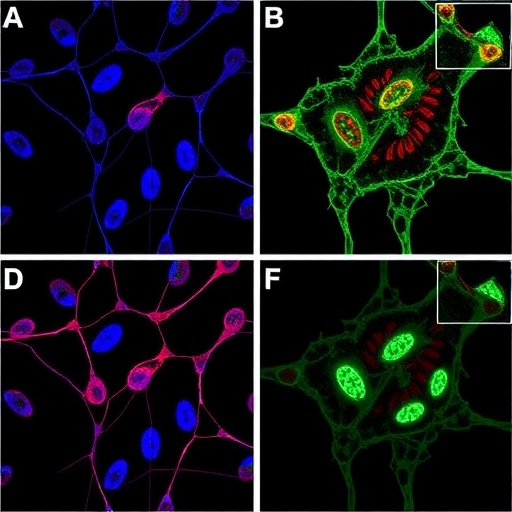
Recent advancements in molecular biology have unveiled a new layer of complexity in cancer risk, particularly with respect to breast cancer. A groundbreaking study led by a team of researchers, including Sivakumaran, Nair, and Bitar, explores the role of a long non-coding RNA (lncRNA) known as BRRIAR. This study highlights the lncRNA’s capabilities to modulate interferon signaling pathways both in cis and in trans, which could substantially influence breast cancer risk factors. The implications of these findings are far-reaching, suggesting that BRRIAR could serve as a significant player in the landscape of breast cancer genetics.
LncRNAs have emerged as critical regulators of gene expression, often acting as molecular scaffolds that facilitate interactions between proteins and other nucleic acids. However, the specific functions and mechanisms of lncRNAs are still being uncovered. In this study, researchers focus on BRRIAR, a lncRNA that has recently attracted attention due to its potential involvement in cancer biology. The team investigated how BRRIAR can influence the immune response, particularly by modulating the signaling pathways associated with interferons, which are essential components of the body’s defense against infections and tumors.
Breast cancer remains one of the leading causes of cancer-related deaths among women worldwide. Despite advances in treatment and early detection, the heterogeneity of the disease continues to pose significant challenges. Researchers have been on a quest to elucidate the genetic variations and environmental factors contributing to breast cancer risk. In this context, the study of BRRIAR lncRNA arises as a promising avenue for understanding genetic predispositions to the disease.
The researchers utilized various methodologies, including RNA sequencing and chromatin immunoprecipitation assays, to investigate how BRRIAR interacts with other cellular components. Their findings revealed that BRRIAR not only acts within the nucleus to influence gene expression in a localized manner (in cis) but also can affect gene expression in distant regions of the genome (in trans). This capability indicates a sophisticated regulatory mechanism through which BRRIAR exerts its influence on cellular processes related to breast cancer.
Moreover, the research team explored the relationship between BRRIAR expression and interferon signaling pathways. Previous studies have established that interferon signaling is crucial for the immune system’s response to cancer cells. By dissecting the interactions between BRRIAR and components of the interferon signaling axis, the researchers identified a potential mechanism through which lncRNAs could modulate tumor immunology, paving the way for new therapeutic strategies.
The implications of these findings extend beyond basic scientific inquiry. If BRRIAR can indeed alter the susceptibility to breast cancer through its role in interferon signaling modulation, it opens the door to developing targeted interventions. This could involve either enhancing the function of BRRIAR or inhibiting its expression in patients with high-risk genetic backgrounds, ultimately leading to personalized medicine approaches in oncology.
Furthermore, the study highlights the significance of lncRNAs in cancer biology and underlines the need for long-term research efforts in this area. While various genetic factors have been identified in breast cancer susceptibility, many remain poorly understood, adding complexity to cancer prevention and treatment strategies. The exploration of how BRRIAR interacts with known cancer-related pathways may eventually lead to breakthroughs that could change how breast cancer is approached at both clinical and research levels.
To substantiate their findings, the research team conducted extensive validations, including patient cohort studies that examined the correlation between BRRIAR expression levels and clinical outcomes in breast cancer cases. Preliminary data suggested that high levels of BRRIAR might be indicative of altered immune responses in patients, further corroborating its significant role in cancer biology. This correlation between BRRIAR expression and patient prognosis showcases the potential for lncRNAs to act as biomarkers for breast cancer risk.
In a world where cancer remains a pressing health concern, studies like this provide a glimmer of hope. Understanding the interplay of genetic factors such as lncRNAs could lead to improved risk assessment tools and more effective treatment modalities. The insights generated from this research could drive a paradigm shift in how clinicians approach breast cancer prevention, diagnosis, and management, emphasizing the importance of personalized and targeted treatments.
In conclusion, the findings from Sivakumaran and colleagues’ study on BRRIAR lncRNA unravel a new dimension of breast cancer risk. By elucidating the molecular underpinnings of interferon signaling modulation, this research raises critical questions regarding the integration of such genetic factors into broader cancer risk assessments. As the scientific community continues to investigate the multifaceted relationships between lncRNAs and cancer, the hope is that this will ultimately lead to more effective strategies for managing and preventing one of the most challenging cancers affecting women today.
The journey into the realm of lncRNAs is still in its early stages, yet the revelations about BRRIAR suggest a blueprint for future research endeavors. With ongoing studies aimed at further defining the functional roles of lncRNAs, we are on the brink of potentially transformative advancements in understanding cancer biology. The pathway of BRRIAR is just one example of how intricate cellular communications might hold the key to unlocking new frontiers in cancer research and treatment methodologies.
Subject of Research: Role of BRRIAR lncRNA in breast cancer risk modulation through interferon signaling.
Article Title: BRRIAR lncRNA alters breast cancer risk by modulating interferon signaling in cis and in trans.
Article References:
Sivakumaran, H., Nair, S., Bitar, M. et al. BRRIAR lncRNA alters breast cancer risk by modulating interferon signaling in cis and in trans.
Mol Cancer 25, 5 (2026). https://doi.org/10.1186/s12943-025-02510-8
Image Credits: AI Generated
DOI: https://doi.org/10.1186/s12943-025-02510-8
Keywords: breast cancer, BRRIAR, lncRNA, interferon signaling, cancer risk, molecular biology, personalized medicine, biomarkers, tumor immunology.
Tags: breast cancer geneticsbreast cancer treatment advancementsBRRIAR lncRNACancer biology mechanismscancer risk factorsgene expression regulationimmune response modulationinterferon signaling in breast cancerlncRNA functions in cancerlong non-coding RNA researchmolecular biology advancementstumor defense mechanisms