• HOME
  • NEWS
  • EXPLORE
    • CAREER
      • Companies
      • Jobs
    • EVENTS
    • iGEM
      • News
      • Team
    • PHOTOS
    • VIDEO
    • WIKI
  • BLOG
  • COMMUNITY
    • FACEBOOK
    • INSTAGRAM
    • TWITTER
Thursday, March 26, 2026
BIOENGINEER.ORG
No Result
View All Result
  • Login
  • HOME
  • NEWS
  • EXPLORE
    • CAREER
      • Companies
      • Jobs
        • Lecturer
        • PhD Studentship
        • Postdoc
        • Research Assistant
    • EVENTS
    • iGEM
      • News
      • Team
    • PHOTOS
    • VIDEO
    • WIKI
  • BLOG
  • COMMUNITY
    • FACEBOOK
    • INSTAGRAM
    • TWITTER
  • HOME
  • NEWS
  • EXPLORE
    • CAREER
      • Companies
      • Jobs
        • Lecturer
        • PhD Studentship
        • Postdoc
        • Research Assistant
    • EVENTS
    • iGEM
      • News
      • Team
    • PHOTOS
    • VIDEO
    • WIKI
  • BLOG
  • COMMUNITY
    • FACEBOOK
    • INSTAGRAM
    • TWITTER
No Result
View All Result
Bioengineer.org
No Result
View All Result
Home NEWS Science News

Bristol innovation challenges regular touchscreens with new spray-on technique

Bioengineer by Bioengineer
June 24, 2020
in Science News
Reading Time: 2 mins read
0
IMAGE
Share on FacebookShare on TwitterShare on LinkedinShare on RedditShare on Telegram

IMAGE

Credit: Oliver Hanton

Bristol innovation challenges regular touchscreens with new spray-on technique

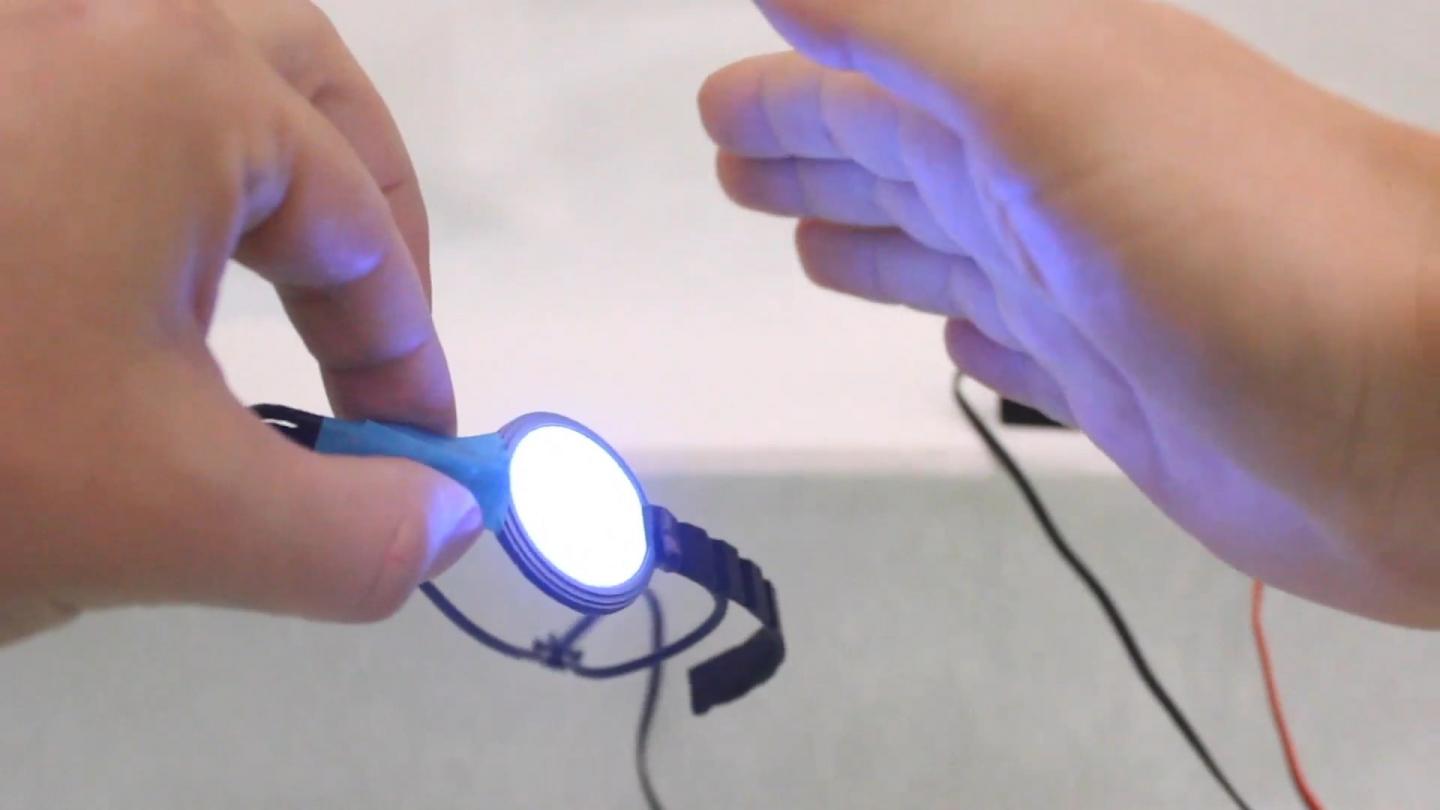
A team at Bristol has challenged the idea that touchscreens are limited to 2D and rectangular shapes by developing an interactive display that can be sprayed in any shape.

Inspired by the way an artist creates graffiti on a wall and using a novel combination of sprayable electronics and 3D printing, the technique, called ProtoSpray, allows the creation of displays on surfaces that go beyond the usual rectangular and 2D shapes.

“We have liberated displays from their 2D rectangular casings by developing a process so people can build interactive objects of any shape. The process is very accessible: it allows end-users to create objects with conductive plastic and electroluminescent paint even if they don’t have expertise in these materials,” said Ollie Hanton, PhD student and lead author of the research.

Mr Hanton’s paper on the innovation was presented and received an honourable mention at the ACM Conference on Human Factors in Computing Systems (CHI) – generally considered the most prestigious academic conference in the field of human-computer interaction.

The aim of the EPSRC-funded research was to broaden the scope of how people can interact with digital technologies.

The ProtoSpray process, developed in collaboration with the MIT media lab, opens up potential for makers, hobbyists and researchers to develop interactive objects of different (arbitrary) shapes.

“3D printers have enabled personal fabrication of objects but our work takes this even further to where we print not only plastic but also other materials that are essential for creating displays. Using 3D printing of plastics and spraying of materials that light up when electricity is applied, we can support makers to produce objects of all shapes that can display information and detect touch.

“Our vision is to make screen/display a fundamental expressive medium in the same way people currently use ink, paint, or clay,” said Mr Hanton.

Dr Anne Roudaut, Associate Professor in Human-Computer Interaction at the University of Bristol, who supervised the research, said the next step would be to create a machine that can both 3D print and spray automatically onto the 3D printed objects.

###

Media Contact
Shona East
[email protected]

Related Journal Article

http://dx.doi.org/10.1145/3313831.3376543

Tags: Computer ScienceMultimedia/Networking/Interface DesignTechnology/Engineering/Computer Science
Share12Tweet8Share2ShareShareShare2

Related Posts

Starburst Winds Drain Supernova Energy Quickly

Starburst Winds Drain Supernova Energy Quickly

March 26, 2026
Decoding the Phosphorus Puzzle: How Microplastics and Hydrochar Transform Nutrient Dynamics in Rice Paddies

Decoding the Phosphorus Puzzle: How Microplastics and Hydrochar Transform Nutrient Dynamics in Rice Paddies

March 26, 2026

Microtubules Found to Actively Ensure Accurate Chromosome Distribution During Cell Division

March 25, 2026

Aversive Learning Hijacks Brain Sugar Sensor

March 25, 2026
Please login to join discussion

POPULAR NEWS

  • blank

    Revolutionary AI Model Enhances Precision in Detecting Food Contamination

    96 shares
    Share 38 Tweet 24
  • Imagine a Social Media Feed That Challenges Your Views Instead of Reinforcing Them

    1003 shares
    Share 397 Tweet 248
  • Uncovering Functions of Cavernous Malformation Proteins in Organoids

    54 shares
    Share 22 Tweet 14
  • Promising Outcomes from First Clinical Trials of Gene Regulation in Epilepsy

    51 shares
    Share 20 Tweet 13

About

We bring you the latest biotechnology news from best research centers and universities around the world. Check our website.

Follow us

Recent News

In-Sensor Cryptography Links Physical Process to Digital Identity

Can Psychosocial Factors Influence Cancer Risk?

Depression Factors in Elderly: Pre vs. Post-COVID Analysis

Subscribe to Blog via Email

Success! An email was just sent to confirm your subscription. Please find the email now and click 'Confirm' to start subscribing.

Join 78 other subscribers
  • Contact Us

Bioengineer.org © Copyright 2023 All Rights Reserved.

Welcome Back!

Login to your account below

Forgotten Password?

Retrieve your password

Please enter your username or email address to reset your password.

Log In
No Result
View All Result
  • Homepages
    • Home Page 1
    • Home Page 2
  • News
  • National
  • Business
  • Health
  • Lifestyle
  • Science

Bioengineer.org © Copyright 2023 All Rights Reserved.