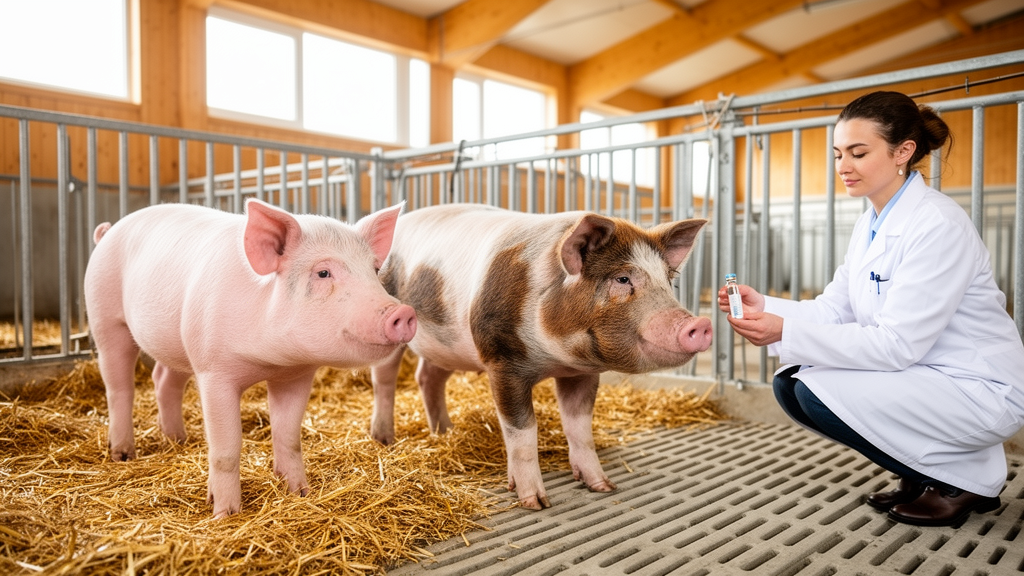
The research, published in the journal Animal Microbiome, compared a commercial breed with a traditional breed raised under conventional and organic conditions, and found that breed primarily shaped gene expression in the intestinal lining while the housing system primarily shaped the gut microbial community.
Fifty-four samples overlapped between the two datasets and were used for all integrated host–microbiome analyses. The researchers used RNA sequencing to profile host gene expression, 16S sequencing to profile microbial communities, and a DIABLO-based integration approach to link the two data layers.
In the transcriptome, breed was the dominant source of variation. German Saddleback pigs, by contrast, displayed a profile focused on lipid metabolism, which the authors interpret as a shift toward energy storage as an adaptation.
The housing system told a different story. It was the main driver of microbial composition in the jejunal digesta. Pigs kept in the organic system, referred to as ECO in the study, carried enriched fermentative taxa such as Lactobacillus and Campylobacter, a pattern the authors attribute presumably to outdoor exposure. Pigs in the conventional system, CON, had fewer Lactobacillus but more Clostridium.
When the researchers examined breed–housing combinations, they identified distinct adaptive strategies. The modern German Landrace breed responded strongly to housing conditions at both the transcriptional and microbial levels, whereas the traditional German Saddleback breed, although also transcriptionally responsive, maintained a more stable microbial community phenotype across the two environments.
The integrated host–microbiome analysis added a further layer. It identified a core set of host genes, including PCSK9 and SCD, that were strongly correlated with housing-specific microbes. The authors describe this pattern as defining a lipid–inflammation axis, linking host lipid metabolism genes with the microbial communities shaped by each housing system.
The study was carried out in the context of sustainable pig farming, which the authors frame as a balance between animal welfare, productivity and social acceptance. Organic systems offer pigs enriched environments and serve as a model for sustainable production, but, the authors note, they require an understanding of how breed, the intestinal microbiome and housing interact. The comparison of a commercial and a traditional breed under both conventional and organic conditions was designed to address that gap.
The authors conclude that breed and rearing environment jointly shape the porcine jejunal transcriptome and microbiota through distinct strategies, and that the data provide molecular insight into how traditional and modern breeds may differentially respond and potentially adapt to divergent husbandry systems, with implications for health and productivity. The article was published on 21 October 2026 as an open-access research paper, and the version shared at publication is the accepted manuscript, subject to further edits before the final version of record replaces it.
Subject of Research: Effects of breed and housing system on jejunal gene expression and digesta microbiota in pigs
Article Title: Breed and housing system shape jejunal transcriptome and digesta microbiota in German Landrace and Saddleback pigs
Article References: Khan, H. W., Iqbal, M. A., Reyer, H., Trakooljul, N., Hadlich, F., Oster, M., Kuhla, B., Keiler, J., Wimmers, K., & Ponsuksili, S. (2026). Breed and housing system shape jejunal transcriptome and digesta microbiota in German Landrace and Saddleback pigs. Animal Microbiome. https://doi.org/10.1186/s42523-026-00652-8
Image Credits: AI Generated
DOI: 10.1186/s42523-026-00652-8
Keywords: pigs, jejunum, transcriptome, microbiota, German Landrace, German Saddleback, organic farming, conventional housing, RNA sequencing, 16S sequencing, host-microbiome interaction, animal microbiome
News Source: Juliet Wilcox. (October 28, 2026). Breed and Housing System Shape Gut Genes and Microbes in Pigs. Scienmag.