• HOME
  • NEWS
  • EXPLORE
    • CAREER
      • Companies
      • Jobs
    • EVENTS
    • iGEM
      • News
      • Team
    • PHOTOS
    • VIDEO
    • WIKI
  • BLOG
  • COMMUNITY
    • FACEBOOK
    • INSTAGRAM
    • TWITTER
Monday, May 25, 2026
BIOENGINEER.ORG
No Result
View All Result
  • Login
  • HOME
  • NEWS
  • EXPLORE
    • CAREER
      • Companies
      • Jobs
        • Lecturer
        • PhD Studentship
        • Postdoc
        • Research Assistant
    • EVENTS
    • iGEM
      • News
      • Team
    • PHOTOS
    • VIDEO
    • WIKI
  • BLOG
  • COMMUNITY
    • FACEBOOK
    • INSTAGRAM
    • TWITTER
  • HOME
  • NEWS
  • EXPLORE
    • CAREER
      • Companies
      • Jobs
        • Lecturer
        • PhD Studentship
        • Postdoc
        • Research Assistant
    • EVENTS
    • iGEM
      • News
      • Team
    • PHOTOS
    • VIDEO
    • WIKI
  • BLOG
  • COMMUNITY
    • FACEBOOK
    • INSTAGRAM
    • TWITTER
No Result
View All Result
Bioengineer.org
No Result
View All Result
Home NEWS Science News Biology

Breakthrough in understanding mitochondria

Bioengineer by Bioengineer
August 30, 2017
in Biology
Reading Time: 2 mins read
0
Share on FacebookShare on TwitterShare on LinkedinShare on RedditShare on Telegram
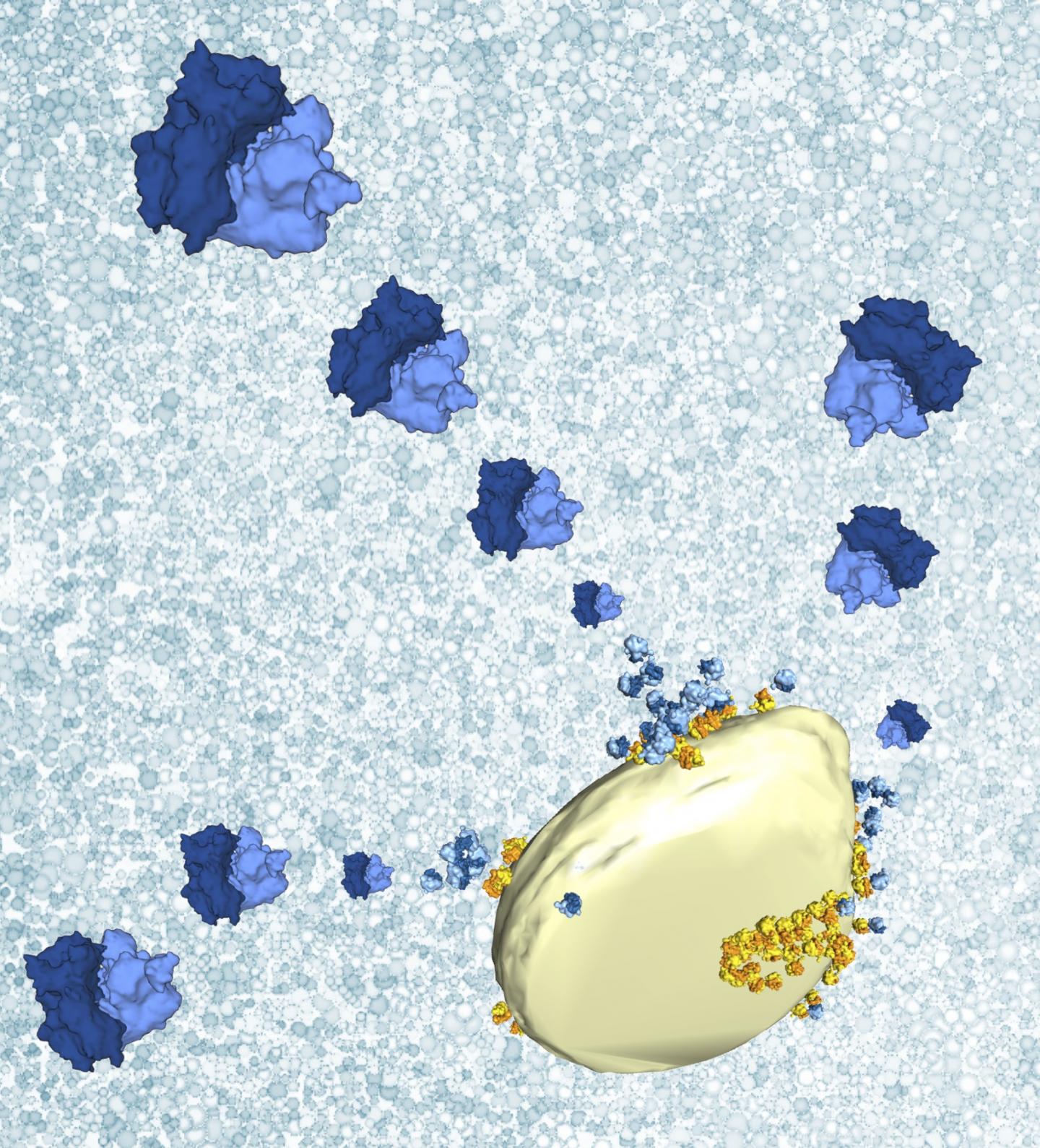
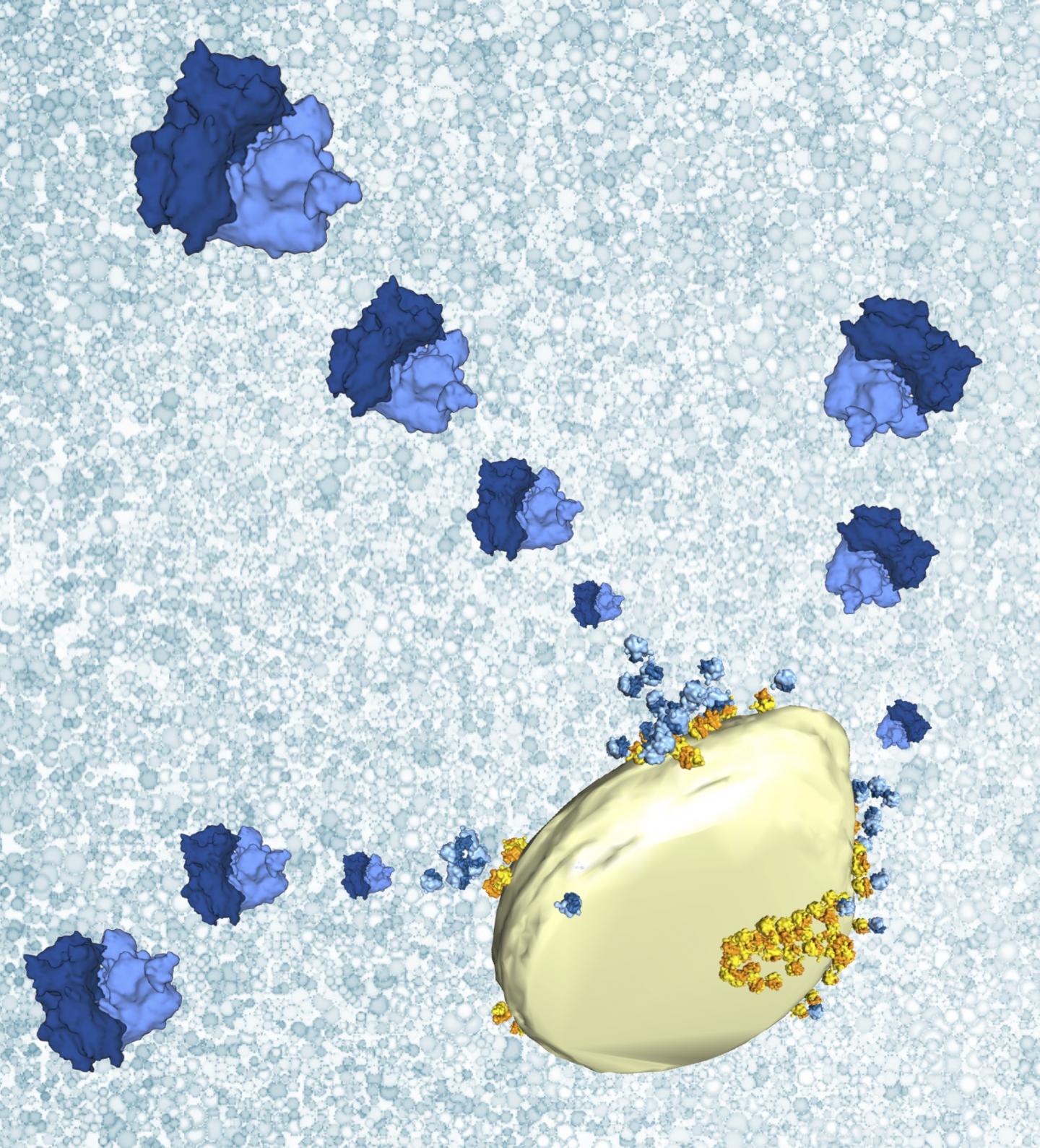
IMAGE

Credit: University of Exeter

Scientists have made a breakthrough in understanding how mitochondria – the "powerhouses" of human cells – are made.

Mitochondria, which exist within human cells but have their own DNA, need many different proteins to function – but the process of how they get these has never been imaged in detail.

Now a study led by Dr Vicki Gold, of the University of Exeter, has shown that some ribosomes – the tiny factories of cells which produce proteins – are attached to mitochondria. This can explain how proteins are pushed into mitochondria whilst they are being made.

The findings open new avenues for studying protein targeting and mitochondrial dysfunction, which has been implicated in diseases including cancer and neurodegenerative disorders such as Parkinson's.

"Proteins are responsible for nearly all cellular processes. The cell has to make a huge variety of proteins and target them to the precise location where they are needed to function," said Dr Gold, of Exeter's Living Systems Institute.

"In the case of mitochondria, proteins have to cross the boundary of two membranes to get inside them.

"We looked for – and were able to image at unprecedented detail – ribosomes attached to mitochondria."

The images were taken using cutting-edge technology called cryo-electron microscopy.

Dr Gold and her colleague Dr Bertram Daum have both come from Germany to set up a cryo-electron microscopy facility at the University of Exeter.

Having made the latest discovery by studying healthy cells, Dr Gold now plans to see how the process works in unhealthy cells.

"Mitochondria are the energy factories of the cell, so when they don't function properly it can lead to a huge range of health problems," she said.

"In many cases these are age-related disorders like Parkinson's disease.

"Our findings may help us understand these conditions better, which is an important step towards better treatments."

Dr Gold, who began the research while at the Max Planck Institute of Biophysics in Frankfurt, Germany, worked with co-authors Piotr Chroscicki, Piotr Bragoszewski and Agnieszka Chacinska – all of the International Institute of Molecular and Cell Biology in Warsaw, Poland.

The paper, published in the journal EMBO Reports, is entitled: "Visualization of cytosolic ribosomes on the surface of mitochondria by electron cryo?tomography" and will be featured on the front cover of the October issue.

###

Media Contact

Alex Morrison
[email protected]
44-013-927-24828
@uniofexeter

http://www.exeter.ac.uk

Related Journal Article

http://dx.doi.org/10.15252/embr.201744261
Share12Tweet8Share2ShareShareShare2

Related Posts

How Wasp Societies Conquer Intense Leadership Conflicts — Biology

How Wasp Societies Conquer Intense Leadership Conflicts

May 25, 2026
Tiny Blue Octopus from the Galápagos Islands: Small Enough to Fit in the Palm of Your Hand — Biology

Tiny Blue Octopus from the Galápagos Islands: Small Enough to Fit in the Palm of Your Hand

May 25, 2026

Rising Sightings of Blue and Fin Whales in the South East Atlantic

May 23, 2026

New Maps Reveal How European Landscapes Can Simultaneously Promote Climate Action and Biodiversity Conservation

May 22, 2026
Please login to join discussion

POPULAR NEWS

  • ESMO 2025: mRNA COVID Vaccines Enhance Efficacy of Cancer Immunotherapy

    315 shares
    Share 126 Tweet 79
  • New Study Reveals Plants Can Detect the Sound of Rain

    734 shares
    Share 293 Tweet 183
  • Research Indicates Potential Connection Between Prenatal Medication Exposure and Elevated Autism Risk

    847 shares
    Share 339 Tweet 212
  • Common Food Preservatives Associated with Elevated Blood Pressure and Increased Heart Disease Risk

    56 shares
    Share 22 Tweet 14

About

We bring you the latest biotechnology news from best research centers and universities around the world. Check our website.

Follow us

Recent News

Emotional, Behavioral Challenges in Neurofibromatosis Type 1

Lanthanide Nanocrystals Unlock Room-Temperature Organic Phosphorescence

Fixation Duration Driven by Memory, Not Processing

Subscribe to Blog via Email

Enter your email address to subscribe to this blog and receive notifications of new posts by email.

Join 82 other subscribers
  • Contact Us

Bioengineer.org © Copyright 2023 All Rights Reserved.

Welcome Back!

Login to your account below

Forgotten Password?

Retrieve your password

Please enter your username or email address to reset your password.

Log In
No Result
View All Result
  • Homepages
    • Home Page 1
    • Home Page 2
  • News
  • National
  • Business
  • Health
  • Lifestyle
  • Science

Bioengineer.org © Copyright 2023 All Rights Reserved.