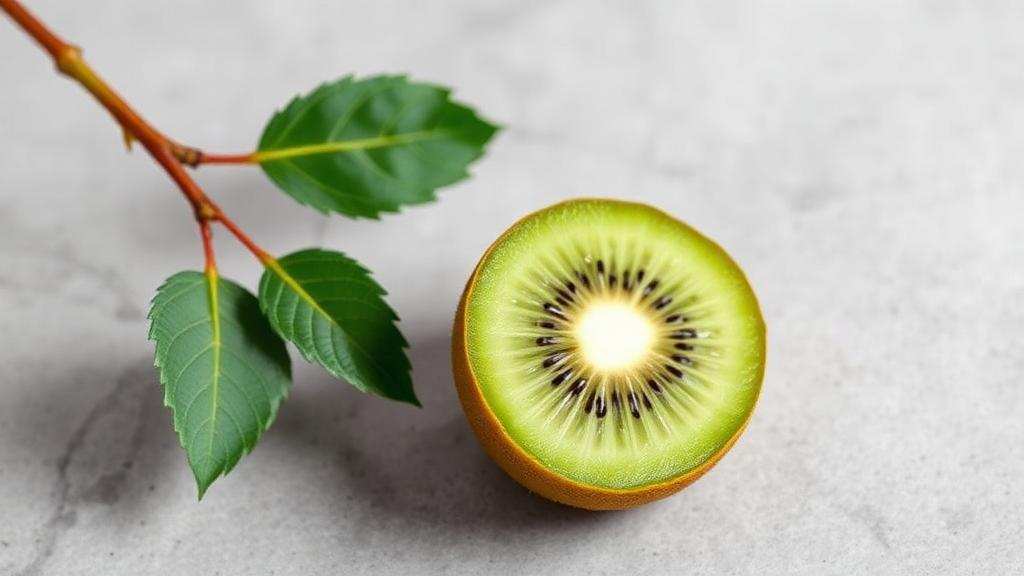
Gray mold, caused by the necrotrophic fungus Botrytis cinerea, is one of the most devastating postharvest diseases of kiwifruit, capable of destroying fruit during storage and transport and inflicting substantial economic losses across the global supply chain. A new study published in BMC Plant Biology by Jingting Luo, Lingyu Li, Dingge Zhang and colleagues at Chongqing University of Arts and Sciences provides a detailed metabolomic account of how 24-epibrassinolide, a biologically active brassinosteroid, enhances the resistance of harvested kiwifruit to this pathogen. The work, published open access on 10 October 2026, integrates physiological measurements with time-resolved metabolomic profiling to reveal that the compound does not act through a single defensive switch but instead orchestrates a coordinated, temporally structured reprogramming of fruit metabolism.
Brassinosteroids are steroidal plant hormones that regulate a broad spectrum of growth and stress responses, including cell elongation, photosynthesis, and immunity. Exogenous application of 24-epibrassinolide, often abbreviated EBR, has previously shown promise in reducing disease symptoms in a variety of crops, but the metabolic mechanisms underlying this effect in kiwifruit had remained poorly characterized. Because postharvest fruit cannot rely on the inducible immune systems of growing plants in the same way, and because chemical fungicides face increasing regulatory and consumer pressure, understanding how hormone priming reshapes the fruit’s own chemical arsenal is of considerable practical interest. The new study addresses this gap by treating harvested kiwifruit with EBR, challenging the fruit with B. cinerea, and then tracking the resulting metabolic changes at 24, 48, and 72 hours after infection.
The physiological outcome was clear: EBR treatment significantly reduced lesion development compared with untreated controls. This visible protection provided the starting point for the molecular analysis. The researchers employed an integrated physiological and metabolomic approach, profiling the full complement of differentially accumulated metabolites at each of the three time points. They identified 35 differentially accumulated metabolites at 24 hours, 64 at 48 hours, and 57 at 72 hours, a pattern that itself hints at the dynamics of the response: a modest early shift, a pronounced mid-stage surge, and a sustained but slightly attenuated late phase as the fruit begins to recover metabolically.
To make sense of these hundreds of changing compounds, the team performed KEGG pathway enrichment analysis, which maps individual metabolites onto known biochemical networks. Four core pathways emerged as the backbone of the EBR-induced response: phenylpropanoid and flavonoid biosynthesis, amino acid metabolism, purine and cytokinin signaling, and cuticular and lipid metabolism. Each of these pathways contributes a distinct layer of defense, and their coordinated activation suggests that EBR primes the fruit to deploy chemical barriers, physical barriers, and signaling molecules in a structured sequence rather than as a diffuse stress reaction.
The phenylpropanoid and flavonoid pathways are among the most intensively studied branches of plant chemical defense. They generate a diverse array of secondary metabolites, including lignin precursors, antimicrobial phenolics, and antioxidant flavonoids, many of which directly inhibit fungal growth or reinforce cell walls against penetration. Their enrichment in the EBR-treated fruit indicates that the hormone steers metabolic flux toward the production of antifungal compounds, effectively arming the fruit’s chemical frontline before and during fungal attack. Because B. cinerea is a necrotroph that feeds on dead tissue and exploits oxidative damage, the antioxidant dimension of flavonoid accumulation may be particularly significant, blunting the reactive oxygen bursts that the pathogen uses to kill host cells.
Amino acid metabolism formed the second pillar of the response. Changes in free amino acid pools can influence resistance in several ways: some amino acids serve as precursors for defensive secondary metabolites, others act as signaling molecules that modulate hormone crosstalk, and still others alter the nutritional environment presented to the pathogen. A pathogen attempting to colonize fruit encounters not only preformed and induced antimicrobials but also a host whose nitrogen economy has been rearranged, potentially limiting the availability of the nutrients the fungus needs to establish infection. The study’s finding that amino acid metabolism is a core enriched pathway suggests that EBR treatment extends beyond simple toxin production and touches the fundamental resource allocation of the fruit under siege.
The third pillar, purine and cytokinin signaling, points to the communication layer of the defense response. Purine metabolism underpins energy transfer and nucleotide availability, while cytokinins are hormones classically associated with cell division but increasingly implicated in stress signaling and defense regulation. Their involvement indicates that EBR-treated fruit are not merely accumulating defensive chemicals but actively reconfiguring their signaling networks, coordinating the timing and magnitude of the response across tissues. This signaling activation was most prominent at the mid-stage of the trajectory, consistent with the 48-hour time point showing the largest number of differentially accumulated metabolites.
The fourth pillar, cuticular and lipid metabolism, addresses the physical dimension of defense. The cuticle is the waxy outer layer of the fruit surface and constitutes the first barrier any pathogen must breach. Lipid metabolism also supplies the building blocks for cuticular components and for signaling lipids involved in stress responses. By enriching this pathway, EBR treatment appears to reinforce the fruit’s physical armor at the same time that it stocks the chemical arsenal within. The authors note that this combination of chemical and physical barriers, together with signaling activation and metabolic reallocation, constitutes a potential coordinated defense response rather than a collection of isolated effects.
Perhaps the most conceptually important contribution of the study is its temporal analysis, which uncovered a triphasic metabolic trajectory. In the first phase, at 24 hours, the fruit exhibits early chemical defense priming, laying down the initial metabolic groundwork for resistance. In the second phase, at 48 hours, defense amplification takes hold, with signaling activation and a broad surge in differentially accumulated metabolites corresponding to the peak of the response. In the third phase, at 72 hours, the fruit enters metabolic recovery, as the defensive buildup subsides and resources are presumably reallocated back toward maintaining fruit quality. This staged architecture mirrors the priming-and-amplification logic seen in systemic immunity in growing plants and demonstrates that harvested fruit retain a remarkable capacity for organized, time-dependent metabolic defense when appropriately stimulated.
The practical implications extend in two directions. Scientifically, the study provides a comprehensive metabolomic framework for understanding EBR-mediated resistance, giving researchers a map of the pathways and candidate metabolites that can be targeted in future breeding, treatment optimization, or mechanistic studies. Agriculturally and commercially, the identification of specific defense-related metabolites offers potential biomarkers for selecting or verifying resistant fruit, and supports the development of EBR-based treatments as a component of postharvest disease management in kiwifruit, an approach that could reduce reliance on synthetic fungicides during storage. The work was financially supported by the National Natural Science Foundation of China, the Natural Science Foundation of Chongqing, and postgraduate research innovation projects at Chongqing University of Arts and Sciences, with Zhexin Li and Guohua Liu serving as corresponding authors. As the kiwifruit industry continues to grapple with postharvest losses, this study suggests that the fruit’s own metabolism, when nudged in the right direction at the right time, can be recruited as a powerful ally against one of its most persistent enemies.
Subject of Research: Metabolomic mechanisms of 24-epibrassinolide-induced resistance to gray mold in postharvest kiwifruit
Article Title: EBR-induced metabolic reprogramming contributes to kiwifruit resistance against gray mold
Article References: Luo, J., Li, L., Zhang, D., Wang, X., Zeng, T., Zhong, H., Gong, Z., Zhao, X., Peng, J., Luo, Z., Li, Z., & Liu, G. (2026). EBR-induced metabolic reprogramming contributes to kiwifruit resistance against gray mold. BMC Plant Biology. https://doi.org/10.1186/s12870-026-10140-5
Image Credits: AI Generated
DOI: 10.1186/s12870-026-10140-5
Keywords: kiwifruit, Botrytis cinerea, 24-epibrassinolide, brassinosteroids, gray mold, metabolomics, postharvest disease, plant immunity, phenylpropanoid pathway, flavonoids, disease resistance, plant hormones
News Source: Daisy Hatcher. (October 11, 2026). Brassinosteroid Treatment Rewires Kiwifruit Metabolism to Fight Gray Mold. Scienmag.