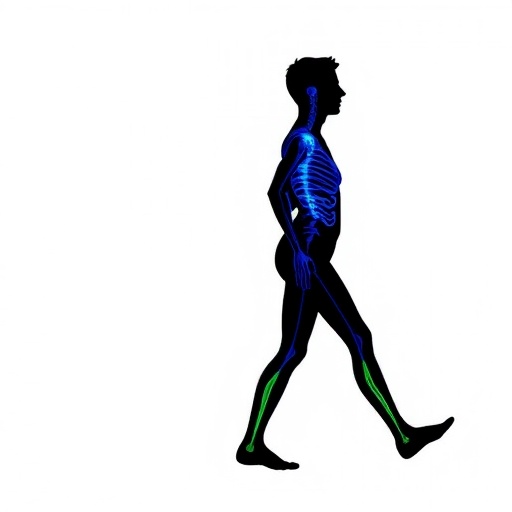
In a groundbreaking study published in the International Journal of Obesity, researchers have unveiled intricate links between overweight and obesity, gait abnormalities, and brain function. While it has long been understood that body weight impacts physical movement, this new research delves deeper into how the brain acts as a crucial intermediary in this relationship, offering fresh insights into the neurobiological pathways influenced by adiposity.
Gait, the pattern of walking, is governed not merely by musculoskeletal factors but also by complex neural circuits regulating balance, coordination, and motor control. Prior studies have demonstrated that excess body fat can alter gait performance, but the mechanisms behind these changes remained unclear. This investigation bridges that gap by incorporating neuroimaging data alongside precise anthropometric measurements, highlighting brain areas susceptible to obesity-related changes that, in turn, disrupt gait dynamics.
The research team employed advanced neuroimaging techniques to analyze brain structure and function in individuals across a spectrum of body weights. Their findings revealed that overweight and obese participants exhibited measurable alterations in areas of the brain responsible for sensorimotor integration and executive function. These neural changes correlated significantly with atypical gait patterns, including reduced walking speed and impaired balance, suggesting that adiposity impairs brain regions vital for coordinated movement.
Importantly, the study dissociates the direct mechanical effects of excess weight on gait from the neurological components. This distinction underscores a vital concept: brain health and motor performance are interlinked and influenced by metabolic factors associated with obesity. This neurocentric perspective challenges traditional rehabilitation and intervention strategies that focus predominantly on physical attributes without addressing brain-mediated control mechanisms.
Furthermore, the data imply that brain deterioration linked with adiposity could contribute to a vicious cycle, where impaired neural processing exacerbates gait abnormalities, increasing the risk of falls and further physical inactivity. The identification of specific brain biomarkers linked to body composition and gait heralds new potential for targeted therapies, including cognitive and neuromotor interventions, to mitigate mobility impairments in overweight populations.
The findings also raise provocative questions regarding early detection and preventive measures. Could monitoring brain health provide a window into impending gait abnormalities before they manifest clinically? The prospect of integrating neuroimaging biomarkers in routine screening presents an exciting frontier for managing obesity-related mobility issues.
This study not only enhances our fundamental understanding of how obesity influences motor function through brain pathways but also spotlights the need for holistic approaches to obesity treatment. Strategies that synergistically address weight management, neural health, and motor function may prove most effective in restoring gait normalcy and improving quality of life.
As obesity rates escalate worldwide, these novel insights emphasize the importance of considering neural mechanisms when tackling the physical consequences of excess weight. Unlocking the interplay between brain and body paves the way for innovative interventions aimed at preserving mobility and independence among at-risk populations.
This research marks a significant leap forward in unraveling the complex bi-directional relationship between adiposity and brain function, ultimately shaping the future landscape of obesity management and rehabilitation.
Subject of Research: The relationship between overweight/obesity, gait abnormalities, and brain function.
Article Title: Overweight/obesity and gait abnormality: what role does the brain play in the relationship?
Article References:
Wang, H., Wang, J., Xiao, Q. et al. Overweight/obesity and gait abnormality: what role does the brain play in the relationship?
Int J Obes (2026). https://doi.org/10.1038/s41366-026-02150-y
Image Credits: AI Generated
DOI: 08 July 2026
Tags: advanced neuroimaging techniques in obesity studiesbrain regions involved in gait controlbrain-body interactions in movement disordersimpact of adiposity on sensorimotor integrationinfluence of obesity on neural circuits governing balance and coordinationneural correlates of gait disturbancesneural pathways linking obesity and brain functionneurobiological mechanisms of gait impairment in obesityneuroimaging in obesity researchobesity and executive function deficitsobesity-related gait abnormalities