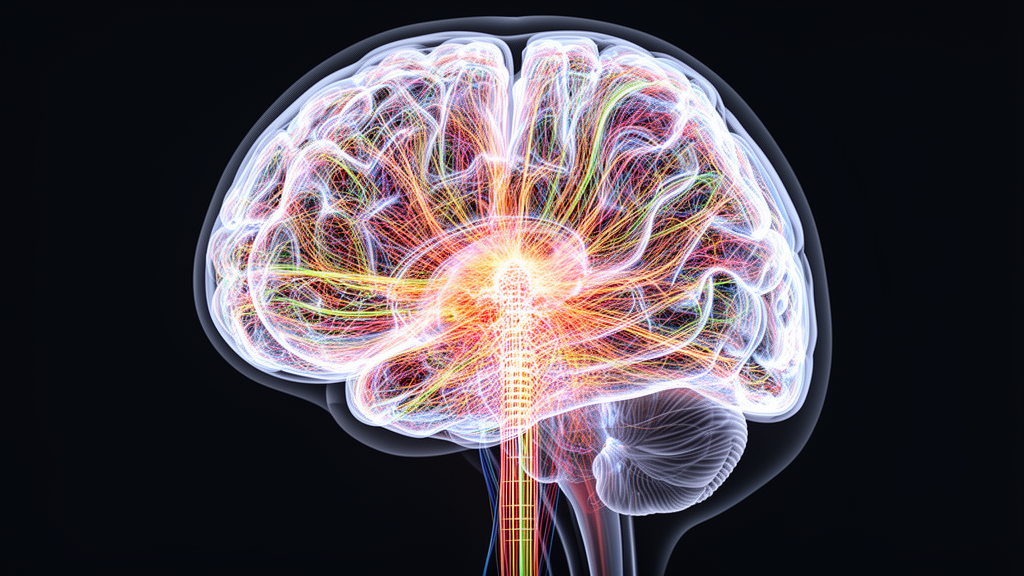
A new study reports a measurable shift in brain dynamics during the minutes before an epileptic seizure. Researchers analyzing intracranial electrocorticographic recordings from patients found that, in the preictal period, the brain's activity appeared to explore a constricted region of a network feature space, a change the authors interpret as a breakdown in the brain's ability to maintain normal coherence ahead of the transition into seizure. The team, led by Jeremy Goetz, John Beggs, Robert Worth, and Louis Nemzer, derived network measures such as mean node degree and mean clustering coefficient from thresholded correlation matrices built from patients' electrode data.
Their framing draws on the idea of the brain as a complex dynamical system approaching a phase transition: as a system nears such a transition, its dimensionality and resilience can drop. Notably, the study reports that the preictal period often showed reduced spatial synchronization compared with normal cognition, an apparently counterintuitive observation given that seizures themselves involve pathological neural synchronization. Specifically, the researchers observed a suppression of intermittent high-synchronization periods within the feature space during the minutes leading up to seizure onset.
In other words, the range of network configurations the brain typically cycled through narrowed, a constriction the authors describe as a loss of the system's normal dynamical range. This connects to the Critical Brain Hypothesis, which links the loss of healthy scale-free behavior to disorders including epilepsy, though the study's evidence for that broader hypothesis remains indirect and specific to the feature-space measures analyzed. Beyond description, the work converted this observation into a forecasting pipeline.
The preictal changes were used to predict the probability of seizure onset with a Support Vector Machine classifier, producing discrete predictions that were then combined into continuous, real-time seizure risk estimates through Bayesian updating. The authors describe the approach as computationally lightweight, and they position it as potentially more adaptable, quantitative, and interpretable than static seizure prediction methods. The findings, published in Neuroinformatics on 23 October 2026, remain preliminary in scope.
The analysis relied on intracranial electrode data from patients already undergoing monitoring, and the reported results concern feature-space behavior and algorithmic forecasts rather than demonstrated clinical benefit in managing seizures. The full methods and figures sit behind a subscription paywall, so independent assessment of predictive performance, dataset size, and generalizability will require the complete article. Even so, the central result stands as reported: in the minutes before a seizure, the repertoire of network states these patients' brains explored shrank, and that shrinkage carried information about impending onset.
Subject of Research: Preictal constriction of electrocorticographic network feature space as a biomarker for seizure prediction in epilepsy
Article Title: Electrocorticographic Network Feature Space Constriction as a Preictal Biomarker
Article References: Goetz, J., Beggs, J., Worth, R., & Nemzer, L. R. (2026). Electrocorticographic Network Feature Space Constriction as a Preictal Biomarker. Neuroinformatics, 24(4), Article 69. https://doi.org/10.1007/s12021-026-09824-y
Image Credits: AI Generated
DOI: 10.1007/s12021-026-09824-y
Keywords: epilepsy, seizure prediction, electrocorticography, brain networks, Critical Brain Hypothesis, Support Vector Machine, Bayesian updating, neuroinformatics, preictal state, phase transition, Electrocorticographic, Network
News Source: Cassandra Pierce. (October 23, 2026). Brain Networks Narrow Before Seizures, Offering a New Forecasting Signal. Scienmag.