


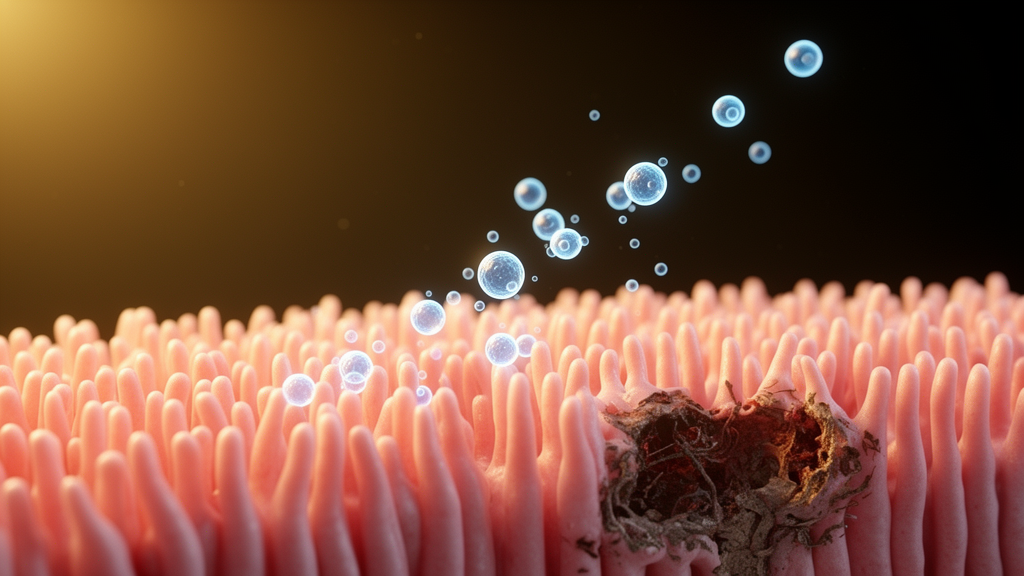
Supplementing young rats with bovine milk exosomes after a period of maternal protein malnutrition improved the structural recovery of the small intestine, with the strongest effects seen in the proximal jejunum, according to an open-access study published in Genes & Nutrition on 29 July 2026.
The experimental design separated the malnutrition exposure from the intervention. During both gestation and lactation, mother rats were fed either a protein-malnourished diet containing 8% protein or a standard AIN-93G control diet containing 18% protein. At weaning, the offspring of malnourished mothers were split into two groups: one received the AIN-93G diet supplemented with bovine milk exosomes for 14 days after weaning, while the other received the same diet without the supplement. Offspring of well-nourished mothers continued on the standard diet as a control group. The researchers then assessed intestinal histology and performed microarray gene-expression analyses on the offspring’s intestinal tissue.
The histological measurements showed the damage caused by early protein restriction. At weaning, maternal protein malnutrition had reduced intestinal villous length and muscular layer thickness compared with offspring of adequately nourished mothers.
Fourteen days after weaning, the supplemented group showed measurable improvement. Bovine milk exosomes improved histological parameters relative to malnourished offspring that received no supplement, and in the proximal jejunum these parameters were restored to the levels seen in control animals. The distal jejunum told a different story: there, both supplemented and unsupplemented malnourished groups primarily displayed catch-up growth, with both showing up-regulation of genes encoding cytoplasmic ribosomal proteins compared with controls, a molecular pattern consistent with accelerated protein synthesis during growth recovery rather than a supplement-specific effect.
The gene-expression results in the proximal jejunum pointed to a specific mechanism. In that tissue, the exosome-supplemented animals showed increased expression of genes encoding myosins involved in smooth muscle function, along with genes related to smooth muscle structure and extracellular matrix organization.
The authors conclude that bovine milk exosomes may represent a promising nutritional strategy to support intestinal recovery after maternal protein malnutrition, with offspring supplementation over a short period improving intestinal histological parameters, especially in the proximal jejunum, and up-regulating genes associated with extracellular matrix organization and smooth muscle function. Because the study was conducted in rats, with histology and microarray readouts rather than clinical outcomes, the findings establish a mechanism and a proof of concept in an animal model; the researchers frame the work as evaluating a potential nutritional strategy relevant to children exposed to maternal malnutrition, but translating these results to human infants would require further research.
Subject of Research: Bovine milk exosome supplementation and intestinal recovery in rat offspring after maternal protein malnutrition
Article Title: Bovine milk exosomes supplementation enhances jejunal histological recovery and up-regulates smooth muscle genes in rat offspring following maternal protein malnutrition
Article References: Origüela, V., Gázquez, A., López-Andreo, M. J., García-Martínez, J., Manzano, M., López-Pedrosa, J. M., & Larqué, E. (2026). Bovine milk exosomes supplementation enhances jejunal histological recovery and up-regulates smooth muscle genes in rat offspring following maternal protein malnutrition. Genes & Nutrition, 21(1), Article 25. https://doi.org/10.1186/s12263-026-00815-x
Image Credits: AI Generated
DOI: 10.1186/s12263-026-00815-x
Keywords: bovine milk exosomes, maternal protein malnutrition, jejunum, intestinal histology, smooth muscle genes, extracellular matrix, rat offspring, microarray, catch-up growth, Genes & Nutrition, Bovine, milk
News Source: Daisy Hatcher. (October 29, 2026). Bovine Milk Exosomes Speed Gut Recovery in Rats After Maternal Protein Malnutrition. Scienmag.



