• HOME
  • NEWS
  • EXPLORE
    • CAREER
      • Companies
      • Jobs
    • EVENTS
    • iGEM
      • News
      • Team
    • PHOTOS
    • VIDEO
    • WIKI
  • BLOG
  • COMMUNITY
    • FACEBOOK
    • INSTAGRAM
    • TWITTER
Sunday, June 28, 2026
BIOENGINEER.ORG
No Result
View All Result
  • Login
  • HOME
  • NEWS
  • EXPLORE
    • CAREER
      • Companies
      • Jobs
        • Lecturer
        • PhD Studentship
        • Postdoc
        • Research Assistant
    • EVENTS
    • iGEM
      • News
      • Team
    • PHOTOS
    • VIDEO
    • WIKI
  • BLOG
  • COMMUNITY
    • FACEBOOK
    • INSTAGRAM
    • TWITTER
  • HOME
  • NEWS
  • EXPLORE
    • CAREER
      • Companies
      • Jobs
        • Lecturer
        • PhD Studentship
        • Postdoc
        • Research Assistant
    • EVENTS
    • iGEM
      • News
      • Team
    • PHOTOS
    • VIDEO
    • WIKI
  • BLOG
  • COMMUNITY
    • FACEBOOK
    • INSTAGRAM
    • TWITTER
No Result
View All Result
Bioengineer.org
No Result
View All Result
Home NEWS Science News Biology

Boutte receives grant to study mycobacterial cell wall division, regulation

Bioengineer by Bioengineer
April 16, 2019
in Biology
Reading Time: 2 mins read
0
IMAGE
Share on FacebookShare on TwitterShare on LinkedinShare on RedditShare on Telegram

Dangerous germs

IMAGE

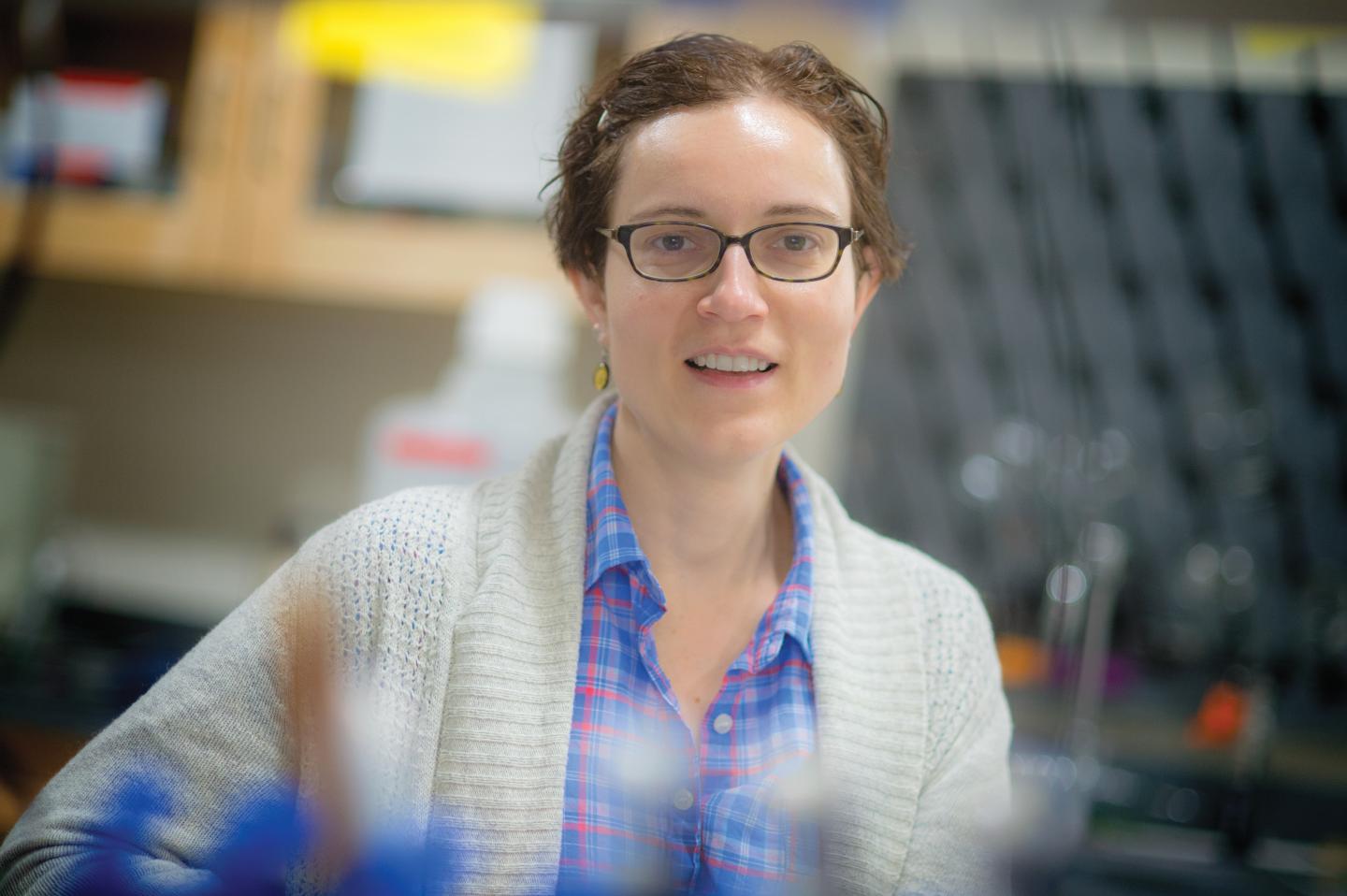
Credit: UT Arlington

A biologist at The University of Texas at Arlington is creating a comprehensive molecular model of mycobacterial cell wall regulation to better understand how mycobacteria respond to stress.

Cara Boutte, assistant professor of biology, received a three-year, $300,000 Academic Research Enhancement Award for a project titled “Environmental regulation of cell growth and division in mycobacteria.” The grant comes from the National Institute of General Medical Sciences, a division of the National Institutes of Health.

Mycobacteria are a type of germ that is difficult to kill with antibiotics and has taken a devastating toll on human health. One species causes tuberculosis, and another causes leprosy.

Mycobacteria have both a cell wall structure and a mode of growth that are distinct from well-studied model organisms and use several different regulatory mechanisms that are not well understood.

“The rationale behind this research is that knowledge of the signaling events that allow mycobacteria to respond to stress will lead to a better understanding of mycobacterial infection physiology and mechanisms of antibiotic tolerance, which could lead to the development of new anti-mycobacterial drugs,” Boutte said.

The project will promote a better understanding of how mycobacterial pathogens survive during infection stress and antibiotic treatment, Boutte said. The research will characterize two systems by which mycobacteria regulate cell growth and division in response to stress and will describe new mechanisms of cell wall regulation.

Bacterial cell elongation and division are acutely responsive to stress. This adaptability promotes survival in changeable environments. Changes in growth and division require that the enzymes that build the cell wall are regulated in response to environmental signals. This regulation changes cell wall chemistry, cell size and antibiotic tolerance, but is poorly understood.

“This lack of knowledge about how mycobacterial cells alter their cell wall in stress contributes to the continued failure to design antibiotic regimens that quickly clear mycobacterial infections,” Boutte said. “We believe the results of our work will illuminate cell wall regulatory mechanisms that are likely to be important for infection and antibiotic tolerance in pathogenic mycobacteria.”

The research furthers UTA’s mission to make significant impact in the field of health and the human condition, one of the main pillars of the University’s Strategic Plan 2020: Bold Solutions | Global Impact.

“This project has important implications for public health because mycobacteria have developed immunity to many kinds of antibiotics,” said Clay Clark, professor and chair of the UTA Department of Biology. “Dr. Boutte and her students could add significantly to our understanding of how mycobacteria survive antibiotic treatment and help scientists develop more effective treatments.”

###

Assisting in the project are graduate students Angela Freeman and Neda Habibi and undergraduate students Heather Lake and Susana Pimental, all of whom work in Boutte’s lab.

— Written by Greg Pederson

Media Contact
Herb Booth
[email protected]

Original Source

https://www.uta.edu/news/releases/2019/04/Boutte-cell-wall-grant.php

Tags: BacteriologyBiologyCell Biology
Share12Tweet8Share2ShareShareShare2

Related Posts

Natural Hallucinogens: Evolution’s Ecological Tools, Not Mere Chemical Byproducts

June 25, 2026

This Famous Butterfly Revealed: Three Distinct Species Hidden in One

June 25, 2026

Scientists Attack Soybean Cyst Nematode by Starving Its Food Source

June 25, 2026

Decoding the Secret Code of a Crucial Immune Sensor

June 24, 2026
Please login to join discussion

POPULAR NEWS

  • Saying Goodbye to PGY-6: Pediatric Fellowship Realities

    103 shares
    Share 41 Tweet 26
  • Multi-Hospital Study Reveals Long Covid Burden Is Twice as High as Current Estimates

    92 shares
    Share 36 Tweet 23
  • Detection of EDCs in Breast Milk and Infant Urine Up to Six Months Highlights Early Exposure Risks

    77 shares
    Share 31 Tweet 19
  • New Drug Candidate Developed at McMaster Shows Potential for Treating Brain Cancer

    58 shares
    Share 23 Tweet 15

About

We bring you the latest biotechnology news from best research centers and universities around the world. Check our website.

Follow us

Recent News

Tracking Lanthanide-Labeled Microplastics in Plants

POSTECH Researchers Slash Cost of Reconstituted Cell-Free Systems by 95%

AI and Physics Collaborate to Design Advanced Hydrogen Storage Materials

Subscribe to Blog via Email

Success! An email was just sent to confirm your subscription. Please find the email now and click 'Confirm' to start subscribing.

Join 82 other subscribers
  • Contact Us

Bioengineer.org © Copyright 2023 All Rights Reserved.

Welcome Back!

Login to your account below

Forgotten Password?

Retrieve your password

Please enter your username or email address to reset your password.

Log In
No Result
View All Result
  • Homepages
    • Home Page 1
    • Home Page 2
  • News
  • National
  • Business
  • Health
  • Lifestyle
  • Science

Bioengineer.org © Copyright 2023 All Rights Reserved.