A targeted chemical investigation of edible bovine offal sold across Gaborone, Botswana, has determined that while veterinary drug residues are widespread in beef tripe, all observed concentrations remain strictly below international maximum residue limits. The research, carried out by investigators evaluating thirty tissue samples sourced directly from municipal slaughter facilities and local retail butcheries, provides the first documented baseline in Botswana utilizing liquid chromatography coupled with tandem mass spectrometry to evaluate antibiotic persistence in gastrointestinal tissues. Across the thirty specimens, laboratory extractions revealed persistent trace amounts of the tetracycline antibiotic doxycycline in every single analyzed sample, while other antimicrobials, including beta-lactams, fluoroquinolones, and sulfonamides, appeared intermittently. Although the measured quantities did not violate regulatory thresholds established by international food authorities, the frequent presence of pharmacologically active compounds in tissues destined for human consumption highlights critical vulnerabilities in livestock withdrawal management and underscores the urgent necessity of establishing systematic residue surveillance across commercial meat chains.
The study specifically focused on green edible beef offal, comprising the muscular compartments of the bovine stomach system known locally as mogodu and ntshothwane. In Botswana and across Southern Africa, edible offal represents an economically vital and culturally prominent source of dietary animal protein, frequently prepared in traditional staple dishes such as serobe, mokoto, and mala le mogodu. Because conventional muscle cuts remain financially prohibitive for many lower-income households, edible offals serve as accessible nutritional alternatives rich in high-quality proteins, essential fatty acids, vitamin B12, and key amino acids including proline, hydroxyproline, glycine, tryptophan, and tyrosine. While agricultural researchers have historically documented veterinary drug residues in skeletal muscle tissues, the physiological accumulation of pharmaceuticals within gastrointestinal organs has received substantially less analytical scrutiny. The muscle walls of the rumen, reticulum, and omasum undergo evisceration, ingesta removal, pillar trimming, and sectioning before entering commercial trade, yet chemical residues ingested orally as feed additives or administered parenterally during clinical herd management can persist within these matrix walls if slaughter occurs prior to complete systemic clearance.
Sample collection occurred across the South-East district of Botswana, gathering thirty separate tripe samples representing distinct animals from four regional abattoirs and eighteen independent butcheries spread through diverse urban sectors, including Ledumang, Old Naledi, Phakalane, Sebele, Gaborone West, and the central railway station commercial sector. Twelve samples originated from abattoirs, reflecting three animals from each of the four facilities, while eighteen samples were collected as individual specimens from separate butchery counters. Logistical and financial constraints inherent to a three-year doctoral research program restricted the immediate geographical sampling frame to the South-East district rather than encompassing all eighty-four red meat slaughter establishments operating across Botswana’s sixteen administrative districts. Following rapid collection into sterile ziplock bags, samples were transported under chilled refrigeration at four degrees Celsius and preserved at minus twenty degrees Celsius. Laboratory processing and instrumental quantifications were initiated within six to eight hours of collection to prevent hydrolytic degradation or chemical breakdown of unstable pharmaceutical moieties within the offal matrix.
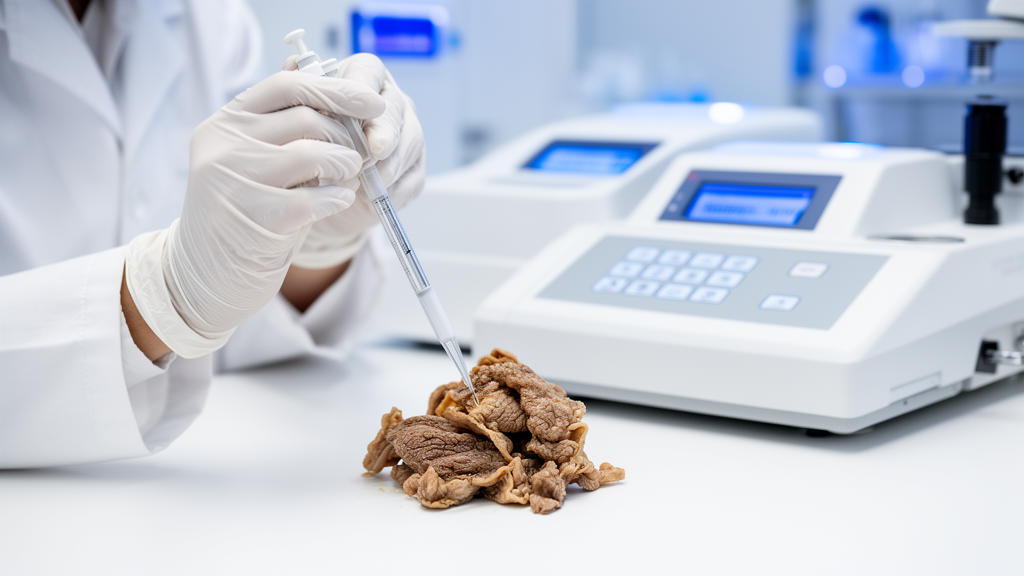
To achieve high analytical sensitivity across complex biological matrices containing significant lipid and mucosal components, the research team implemented a rigorous sample preparation protocol adapted for multiresidue mass spectrometry. Homogenized two-gram aliquots of minced tripe were subjected to chemical extraction using acetonitrile, anhydrous magnesium sulphate, and sodium chloride, agitated on multi-axis homogenizers, and subsequently chilled to minus forty degrees Celsius to precipitate and freeze out co-extracted lipids. The resulting supernatant underwent dispersive solid-phase clean-up utilizing additional magnesium sulphate alongside bulk octadecylsilane sorbent, followed by nitrogen-stream evaporation on a concentration workstation in the presence of dimethyl sulfoxide. The reconstituted extracts were filtered through nylon syringe membranes into high-performance liquid chromatography vials. Instrumental separation and detection were executed on an ultra-high-performance liquid chromatographic platform interfaced with a triple-quadrupole mass spectrometer using multiple reaction monitoring, operating under electrospray ionization parameters optimized to resolve forty-three distinct antibiotic compounds spanning sixteen therapeutic classes.
Method performance and data integrity were systematically validated in accordance with the regulatory standards outlined in European Commission Implementing Regulation 2021/808. Analytical linearity was confirmed through matrix-matched standard curves spanning six concentrations from zero to twice the respective maximum residue limits, yielding coefficients of determination between 0.9889 and 0.9995 across all examined analytes. Analytical trueness, evaluated through extensive recovery experiments on fortified blank matrices in the absence of certified reference materials, ranged from 72.4 percent for cefquinome to 114.8 percent for penicillin G, satisfying the required recovery benchmarks of eighty to one hundred and twenty percent for compounds analyzed at concentrations exceeding ten micrograms per kilogram. Precision assessments yielded within-laboratory repeatability coefficients of variation between 3.3 percent and 13.1 percent, remaining well below the theoretical thresholds defined by the empirical Horwitz relationship. Decision limits for confirmation, representing the concentration threshold demonstrating statistical certainty of limit exceedance at an alpha error of five percent, spanned from 26.1 micrograms per kilogram for cefalonium up to 1075 micrograms per kilogram for cefalexin.
Quantitative screening of the tripe samples revealed that doxycycline was present across all thirty specimens, recording a mean detected concentration of 0.3 micrograms per kilogram. This universal detection indicates wide use of this antibiotic by farmers, mirroring broader trends linked to wide accessibility and low cost. Aside from doxycycline, beta-lactam antimicrobials demonstrated notable detection frequencies; cloxacillin appeared in 37 percent of analyzed samples, while penicillin G was detected in 23 percent of samples at an average concentration of 1.4 micrograms per kilogram, and penicillin V averaged 1.2 micrograms per kilogram across positive matrices. These observed penicillin concentrations remained substantially below the regulatory maximum residue limit of 50 micrograms per kilogram established for bovine tissues. The widespread low-level detection of these compounds provides critical empirical insight into ongoing veterinary treatment patterns within the commercial herds supplying the southern agricultural distribution corridors of Botswana.
While background residue levels remained exceptionally modest in most tissues, five of the thirty examined specimens exhibited elevated concentrations of specific therapeutic drugs, though none breached statutory limits. Ampicillin was quantified at 36.9 micrograms per kilogram in sample S4 and 32.4 micrograms per kilogram in sample S6, both derived from abattoir sources, remaining beneath the international maximum residue limit of 50 micrograms per kilogram. Fluoroquinolone contamination was observed in two butchery specimens, with enrofloxacin reaching 17.0 micrograms per kilogram in sample S13 and 24.7 micrograms per kilogram in sample S17, safely under the maximum residue limit of 200 micrograms per kilogram. Furthermore, sample S28 contained the sulfonamide sulfamethazine at 23.8 micrograms per kilogram, well below its corresponding limit of 200 micrograms per kilogram. Statistical evaluation via a two-by-two contingency chi-square test demonstrated no significant difference in the prevalence of elevated residue concentrations between samples obtained directly from slaughterhouses and those acquired from retail butcheries, yielding a test statistic of 0.286 and a probability value of 0.593.
The quantitative findings carry notable implications for dietary safety and consumer toxicology, particularly when evaluated against toxicological benchmarks and typical culinary practices. Enrofloxacin has an acceptable daily intake threshold of 6.2 micrograms per kilogram, and consuming excessive amounts can lead to negative health implications such as chromosomal damage. Sulfamethazine has an acceptable daily intake of 50 micrograms per kilogram, and its adverse health effects on humans include skin reactions, blood dyscrasias, and carcinogenicity. Thermal stability investigations cited within the study demonstrate that while cooking processes can modify chemical residues, responses vary dramatically by compound: quinolones such as enrofloxacin exhibit high heat stability and resist thermal decomposition even during prolonged boiling, though some residue migrates into surrounding cooking broth through fluid exudation. Conversely, boiling, roasting, and microwave preparation have been documented to effectively reduce sulfonamide residues in animal tissues, whereas ampicillin exhibits gradual degradation during cold storage.
Comparing these results to broader African and international surveillance data reveals that beef tripe distributed in Gaborone maintains a comparatively favorable safety profile. Studies conducted in Ethiopia, Nigeria, and Kenya have routinely identified tetracyclines, fluoroquinolones, and sulfonamides in meat and visceral organs at concentrations frequently surpassing legal thresholds, often attributed to uncontrolled access to veterinary drugs and widespread disregard for statutory pre-slaughter withdrawal periods.
The study authors emphasize that despite the reassuring finding that all detected residues complied with existing maximum residue limits, the persistent presence of sub-inhibitory antimicrobial concentrations in consumer foodstuffs creates significant long-term biological risks. To protect public health, the researchers advocate for establishing an integrated national residue surveillance initiative utilizing routine mass spectrometry screening at red meat facilities, comprehensive educational outreach to train livestock farmers regarding strict adherence to mandatory drug withdrawal intervals, and improved veterinary oversight of therapeutic administrations. Future analytical investigations must overcome current budgetary limitations to expand surveillance across all sixteen national districts and evaluate additional visceral matrices under a coordinated One Health framework to safeguard the pastoral food economy.
Subject of Research: Liquid chromatography-tandem mass spectrometry quantification of veterinary antibiotic residues in retail and abattoir edible beef tripe in Gaborone, Botswana
Article Title: Quantification of antibiotic residues from green edible beef offal (tripe) from abattoirs and butcheries in Gaborone, Botswana
Article References: Motlhanka, K., Setlhoka, M. D., Zhou, N., Mochankana, E., Malambane, G., Machete, J., Tshepho, R., & Mareko, M. H. D. (2025). Quantification of antibiotic residues from green edible beef offal (tripe) from abattoirs and butcheries in Gaborone, Botswana. Food Safety and Risk, 12(1), Article 12. https://doi.org/10.1186/s40550-025-00124-y
Image Credits: AI Generated
DOI: 10.1186/s40550-025-00124-y
Keywords: veterinary antibiotics, beef tripe, Gaborone Botswana, liquid chromatography tandem mass spectrometry, maximum residue limits, doxycycline, ampicillin, enrofloxacin, sulfamethazine, penicillin G, food safety, antimicrobial resistance, withdrawal periods, offal consumption, bovine tissue, Commission Implementing Regulation EU 2021 808
News Source: Alan Morgan. (November 14, 2026). Botswana Beef Tripe Tests Detect Antibiotic Residues Below International Limits. Scienmag.